To avoid bringing roaches to a new home, deal with any infestation before you pack, start with clean new boxes or lidded plastic bins instead of used cardboard, inspect and clean the items most likely to hide roaches (kitchen goods, small appliances, furniture, anything from storage), and check the new home before you unpack. The reason this works is that the most common indoor species, the German cockroach, does not move house on its own. UF/IFAS Extension states that German cockroaches "do not enter structures from outdoors" and are "spread entirely by humans," and a 2014 genetic study of German cockroach populations from within buildings to across continents concluded that long-distance spread is driven by human-mediated dispersal, meaning the movement of infested materials.
The earlier version of this guide claimed these steps "reduce the risk of roach transfer by up to 90%." We could not find any study or agency source behind that number, so it has been removed. What the evidence supports is the mechanism: roaches ride in what you carry. If you want the risk side of the question, our guide on how likely it is to bring roaches when you move explains why no reliable percentage exists.
Step One: Find Out If You Have Roaches Before You Pack
Whether a move carries roaches depends mostly on what is in your current home. If you have none, your risk comes mostly from used items and outside boxes. If you have them, treat your belongings as a possible transport route.
- Put sticky monitors along walls and floor edges, in cabinets, and around the refrigerator, stove, and sinks. The University of Minnesota advises placing them tight against edges where walls meet floors and around the refrigerator, stove, and sinks.
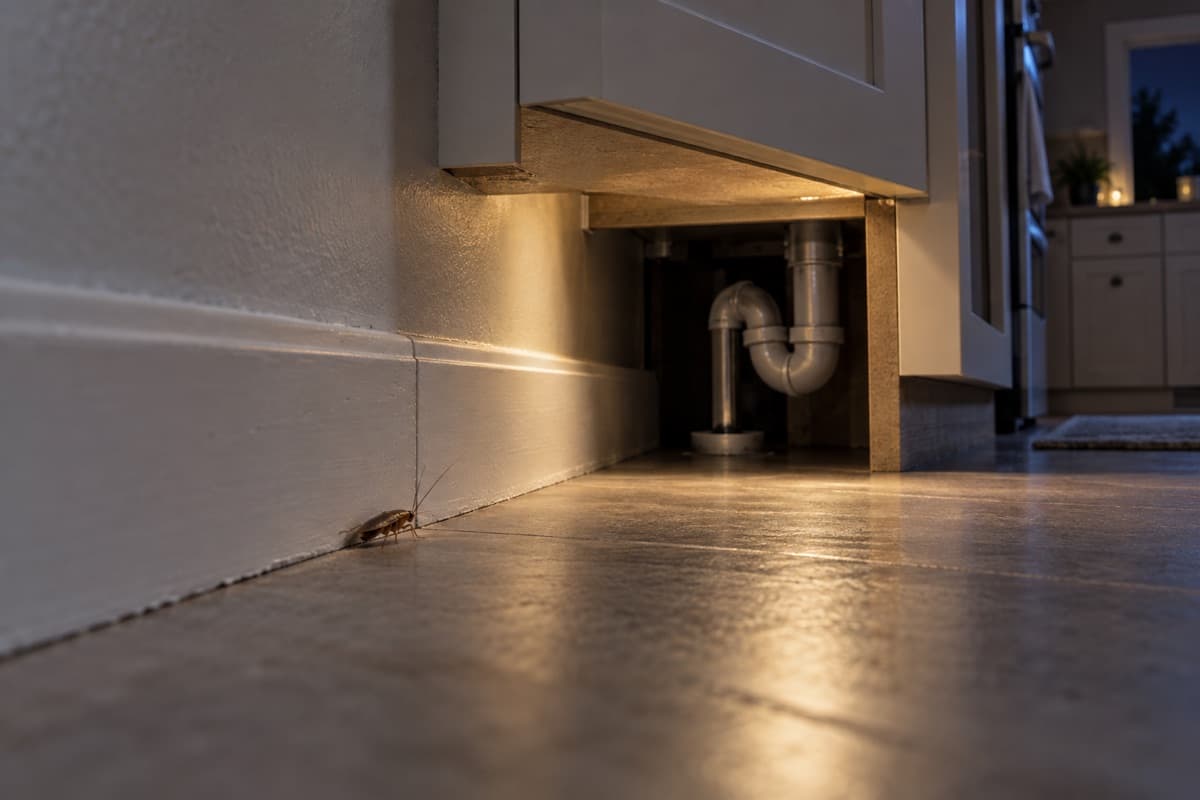
- Check with a flashlight under the sink, behind and beneath appliances, inside cabinet corners and hinges, and in drawers. Our guide to how to know if you have roaches covers what counts as confirmation.
- Read the monitors after a week or two. UF/IFAS says several life stages on the monitors suggest an established infestation, while a few adults suggest a recent introduction.
If you do have roaches, start baiting well before the move, ideally weeks ahead so the treatment has time to work. Our step-by-step plan for getting rid of roaches explains the bait-first approach that extension entomologists recommend. Follow the product label exactly. Do not use foggers, which UC IPM advises against because they can repel and scatter cockroaches, and do not apply insecticide, dust, or sprays to boxes or to belongings you are about to pack.
Step Two: Choose Boxes And Packing Materials Carefully
Cardboard is the main packing risk. The University of Minnesota says "corrugated cardboard boxes are a good source of cockroach infestations" and advises using boxes and packing material from a place free of cockroaches when moving. UF/IFAS adds that German cockroaches thrive in cardboard and suggests plastic bins for storage that will last beyond three to six months. Penn State notes that German cockroaches are commonly introduced on boxes, grocery bags, suitcases, and the like.
Practical choices:
- Use new cardboard boxes or lidded plastic bins. Plastic is easier to inspect and wipe, and it has no corrugated folds. For a long-distance move, renting reusable bins is one option.
- Avoid boxes from grocery stores, restaurants, warehouses, or a friend's kitchen. You do not know where they have been. Purdue Extension advises checking for cockroaches before bringing home containers such as paper bags from the store.
- Keep packing materials off the kitchen floor. Stack empty boxes in a room without food.
- Tape and label boxes as you go, and keep them closed. Roaches hide in dark openings.
- Do not put powders, oils, or cotton balls with essential oils in boxes. The old version of this guide suggested those. We could not find extension support for scented cotton balls, and dusts should not be sprinkled around packed belongings.
Step Three: Inspect The Items That Matter Most
Not everything carries the same risk. Focus on the places roaches hide and lay eggs.
- Small kitchen appliances and electronics. The University of Kentucky notes German cockroaches congregate in clocks, toaster ovens, and other heat-producing electronic equipment. Check toasters, microwaves, coffee makers, and similar items before packing. Never spray them or open sealed electrical parts.
- Refrigerators and other large appliances. UC IPM specifically directs readers to look at undersides of furniture and in refrigerator and other appliance motors for egg cases that may have been brought in. If you are taking a refrigerator, unplug it and vacuum the compressor area and floor, and read our guide on getting roaches out of a refrigerator motor area before you put anything on it. If you are buying one used, inspect it first.
- Furniture. Turn pieces over and check seams, screw holes, and undersides. Our guide to telling if your furniture has roaches lists the signs. UC IPM also directs readers to check items recently in storage.
- Kitchen goods and pantry items. Wash dishes, pots, and utensils that were stored in cabinets with any activity before packing. Keep dry food in sealed containers, and consider discarding open packages from an infested cabinet. That last point is our precaution, not a sourced rule.
- Bags and luggage. UF/IFAS advises inspecting the belongings people bring in, including backpacks, purses, and clothing, and the University of Minnesota says to examine bags, boxes, and luggage for cockroaches or their egg capsules.
Look for live roaches, dark pepper-like droppings, shed skins, and egg cases. If you find a problem, isolate the item in a sealed bag or bin, clean it, and do not take it until it is confirmed clean.
Step Four: Moving Day
- Ask the movers to keep boxes off floors where you have seen roaches while loading, and keep food items in sealed bins rather than open boxes.
- Consider telling the moving company if you have active roaches. That is a courtesy and a practical judgment, not a rule we found in a source, but it gives them the chance to handle your items separately.
- Do not leave boxes sitting open in the truck or on the floor of a kitchen.
Step Five: Check The New Home Before You Unpack
A new home may already have roaches, so inspect before your belongings go in.
- Look first. Use a flashlight in the kitchen and bathroom: under the sink, behind and under the refrigerator and stove, inside cabinets, along baseboards. Rutgers lists door moldings, cabinet hinges, cabinet corners, drawers, and the back of the refrigerator as common hiding places.
- Set sticky monitors before you unpack, in the same spots you would use at home, and leave them a week. UF/IFAS advises placing them near heat-producing appliances and along walls.
- Clean cabinets with soapy water and rinse. UF/IFAS notes that no-rinse cleaners spread allergens instead of removing them. Let the cabinets dry before shelving anything.
- Seal gaps. UF/IFAS recommends caulking around sinks, cabinets, and fixtures, and Kentucky says to seal where pipes or wires pass through walls or floors.
- Fix water problems. Report leaks to your landlord or repair them, since moisture supports roaches.
- Unpack kitchen boxes in a cleared space, break down the cardboard promptly, and take it outside. Since cardboard is a hiding place, do not store empty boxes in the kitchen.
- Put food in sealed containers from day one.
If you rent, document any roaches you find in photos and notify the landlord in writing. In multi-unit buildings, Rutgers Extension notes that cockroaches spread through common utilities, shared walls, and hallways, so a unit-by-unit fix is often not enough. Our guide on what to do if your neighbors have roaches covers this situation.
If You Find Roaches After The Move
Do not assume you carried them. Roaches may have been in the new home already, or in a shared wall. Either way, the response is the same:
- Confirm with monitors to see how many and which sizes.
- Bait in small pea-sized dots in hiding places, following the label. UF/IFAS says to do this rather than using sprays, because repellent products contaminate bait. Keep bait away from food contact surfaces, and away from children and pets, as the label directs.
- Wash and rinse surfaces, remove cardboard, and repair leaks.
- Isolate suspect items in sealed bins.
- Call a pro if you see roaches during the day, if monitors show several life stages, or if baiting for a few weeks does not lower the counts. UF/IFAS recommends contacting pest management in those cases. Ask the company how it will treat and what you need to do beforehand.
Frequently Asked Questions
Can roaches crawl into moving boxes on their own?
It is plausible: corrugated cardboard offers hiding places, so open boxes left in an infested room can pick up hitchhikers. The bigger documented route is boxes packed in an infested home or reused from elsewhere. That is why the advice is to use new boxes or plastic bins and to keep them away from active areas.
Are plastic bins really better than cardboard?
Extension guidance points that way. UF/IFAS says German cockroaches thrive in cardboard and recommends plastic bins for longer storage, and Minnesota says corrugated cardboard is a good source of infestations. Plastic still can carry roaches if they are already inside when you close it, so inspect and clean contents either way.
Should I bomb my old apartment before I leave?
No. UC IPM advises avoiding foggers, NC State researchers say bug bombs are ineffective because they do not reach the cracks where roaches hide, and applying pesticide in a way the label does not describe is not allowed. If you have roaches, use bait as the label directs.
What about diatomaceous earth or essential oils in the boxes?
We do not recommend them. The extension guides we reviewed do not list them as a way to prevent roaches in boxes. Rutgers and Kentucky both describe boric acid as more effective than diatomaceous earth, and dusts should be used only as the label directs, not scattered through packed household goods.
Does the move distance matter?
The evidence we found does not give a distance-based risk. Human-mediated spread is documented from the building scale to across continents, so a short move is not automatically safe if your belongings carry roaches.
Sources
- UF/IFAS Extension, Assessment-Based Pest Management of German Cockroaches (ENY989/IN1190): spread by humans, cardboard, monitoring, caulking, cleaning, and bait guidance.
- Vargo et al., *PLOS ONE* (2014), Hierarchical Genetic Analysis of German Cockroach Populations from within Buildings to across Continents: human-mediated dispersal.
- University of Minnesota Extension, Cockroaches: moving-specific guidance, cardboard, and monitor placement.
- Penn State Extension, German Cockroaches: introduction routes.
- University of Kentucky Entomology, Cockroach Elimination in Homes and Apartments (EF-614): introduction routes, heat-producing equipment, sealing.
- UC IPM, Cockroaches: inspecting appliances and stored items, foggers.
- Purdue Extension, E-241: checking store containers.
- Rutgers NJAES, German Cockroach (FS1322): harborages, spread through shared utilities, boric acid and diatomaceous earth.
- NC State Extension, German Cockroach Surveillance and Management: sprays and bait placement.
- NC State News, How Do I Get Rid of Cockroaches? (2025): why bug bombs fail and how German cockroaches are carried in.