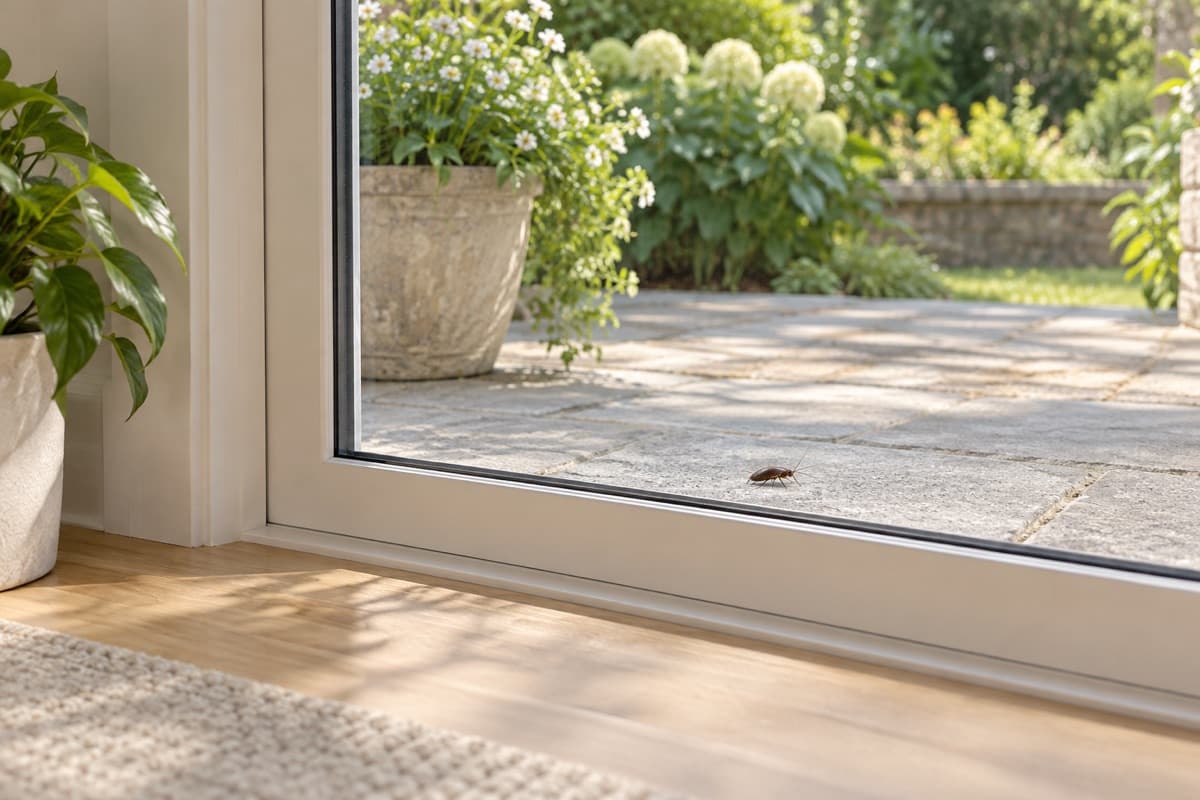
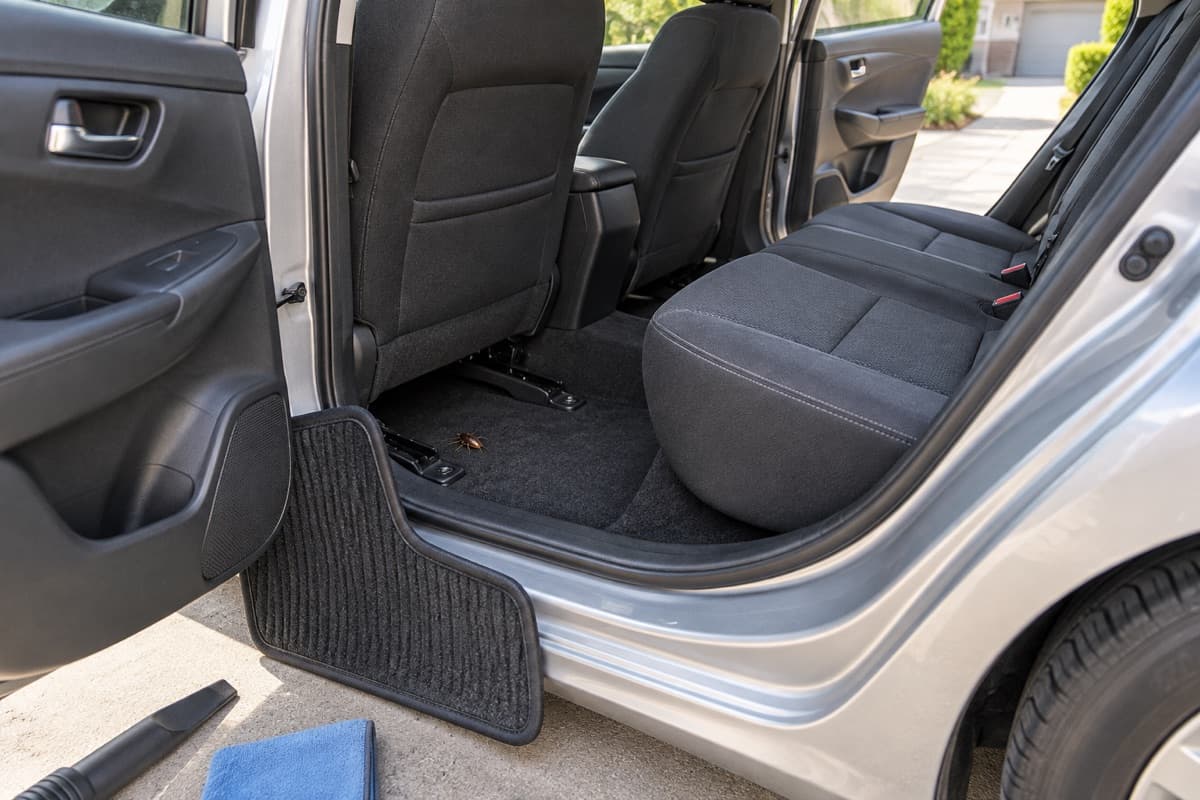
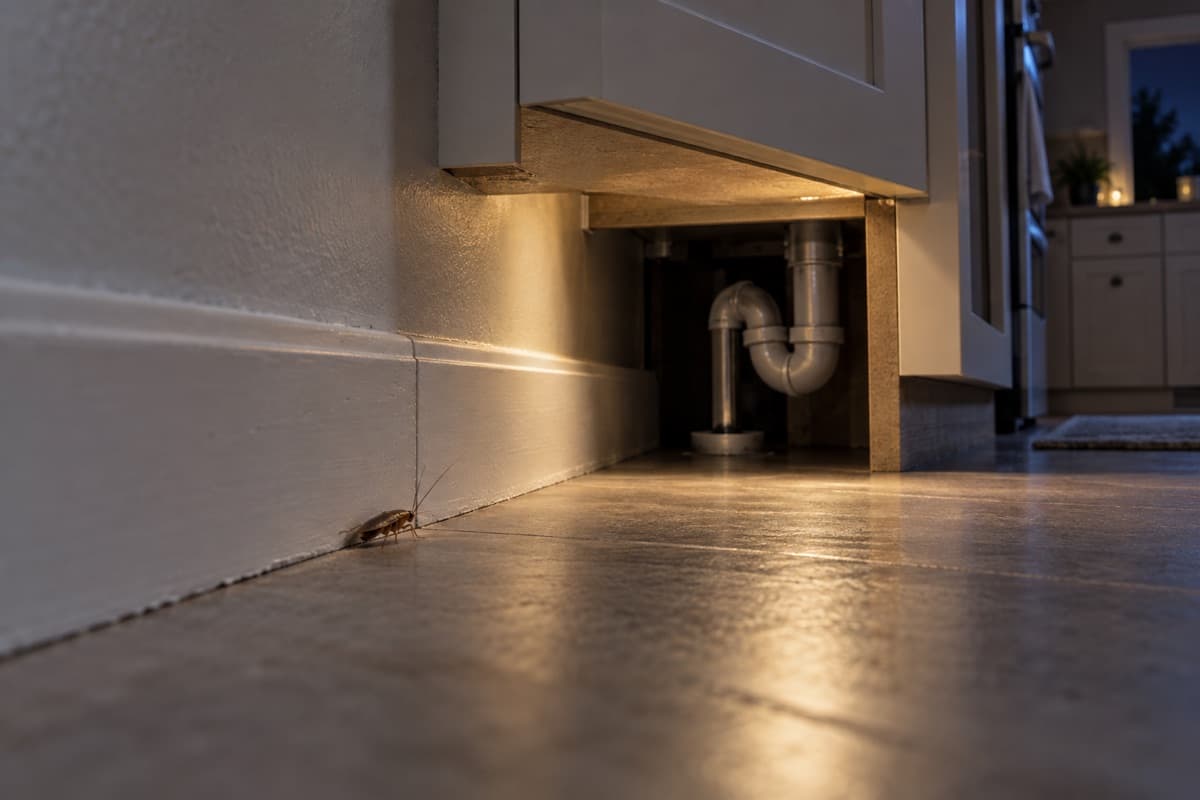
Furniture with roaches in it carries physical evidence you can find with a flashlight: dark pepper-like droppings and smears in seams and screw holes, shed skins, and egg cases glued to undersides and hidden panels. UF/IFAS Extension lists the places cockroaches hide in a home and includes "the underside of tables and chairs" and "radio and TV cabinets" alongside the usual kitchen spots. Pull cushions and drawers, turn the piece over, and look into every joint and staple line. Then confirm with sticky traps, which UC IPM calls "the best way to detect and monitor cockroach populations." One important caveat: with the German cockroach, the species behind most household infestations, furniture in a living room or bedroom is usually a secondary harborage. The population is almost always centered in the kitchen or bathroom, and treating only the sofa will not end it.
The earlier version of this article told readers to tap wooden furniture and listen for hollow sounds "that might indicate roach tunnels," and to listen at night for scratching inside a sofa. Cockroaches do not bore into wood or build tunnels; that description belongs to termites and carpenter ants. Neither test detects roaches, and both waste time that a flashlight inspection would use better. This version drops them, along with the suggestion that bay leaves, cucumber slices, and essential oils will keep roaches out of furniture.
The Signs That Actually Mean Something
Work through these in order of how much they tell you.
- Droppings. For small species, these look like ground pepper or coffee grounds, concentrated in corners, seams, and screw recesses rather than scattered evenly. Larger species leave cylindrical pellets with ridges down the sides. UC IPM describes looking for "accumulations of fecal matter (e.g., dark spots or smears)" and notes those deposits contain natural attractants. Research published in *PNAS* in 2015 found that feces-associated volatile compounds "function as powerful attractants and arrestants in all life stages of the German cockroach," which is why they keep returning to the same spot and why cleaning the residue matters. Our guide to the black dots roaches leave behind covers how to distinguish them from mouse droppings and dirt.
- Smears. In damp areas, droppings become dark irregular streaks rather than distinct specks. Look along the top edge of a drawer box and where a cushion deck meets the frame.
- Egg cases. A cockroach egg case, or ootheca, is a hardened purse-shaped capsule, and UF/IFAS notes it "is usually dropped or glued to some surface." Penn State describes the German cockroach capsule as light brown and under a quarter inch; UC IPM gives about 3/8 inch and dark red-brown for Oriental cockroaches. Glued cases on furniture are the strongest single sign, because they mean reproduction there, not just transit.
- Shed skins. Cockroaches molt repeatedly as they grow, leaving pale, hollow, intact-looking husks. UC IPM lists "cast skins" among the signs in infested areas. Several sizes of skin in one place means multiple growth stages, which means an established population rather than a stray.
- Live insects in daylight. UF/IFAS puts it bluntly in its assessment guidance: seeing cockroaches during the day means "the population is large and will require multiple control tactics."
- Odor. Penn State notes that German cockroaches "produce odorous secretions" that create "a characteristic odor in the general region of the infestation" when populations are high. It is a corroborating sign, not a diagnostic one, and it takes a substantial population to produce. See what roaches actually smell like if you are trying to place it.
Two things that are not signs: sounds from inside upholstery, and small holes in wood. Neither is a cockroach behavior.
Which Roach You Have Changes Where To Look
Furniture is not equally attractive to every species, and this affects your search.
German cockroach. UF/IFAS says it is "usually found in the kitchen and bathroom, although it may be found all over the house." It wants warmth, humidity, and a food source within a short walk. Adults can hide in a crack 1/16 inch wide, according to UC IPM, and prefer "narrow spaces where surfaces touch them on both sides." In a home where German cockroaches have spread to living room furniture, the kitchen situation is already severe.
Brownbanded cockroach. This is the species most genuinely associated with furniture. Penn State describes it hiding "on the upper walls of cabinets, and inside pantries, closets, dressers, and furniture in general," as well as behind picture frames, and notes the female carries her egg case about 30 hours before fastening it to walls, ceilings, and protected hidden areas. It tolerates drier, warmer conditions than the German cockroach, so it turns up in bedrooms, offices, and dressers far from any sink.
American and Oriental cockroaches. UF/IFAS describes these larger species as preferring "damp, warm locations" in garages, sewers, attics, and storerooms before entering the home. They are more likely to be found under a basement workbench or in patio furniture than in a bedroom dresser.
Pepper-sized droppings point to a small species, so concentrate on the kitchen. Large ridged pellets point to drains, crawlspaces, and exterior entry points.
How To Inspect a Piece of Furniture
Do this in a well-lit room, or outdoors on a tarp if you can carry the piece. Give one piece 10 to 15 minutes.
- Get a bright flashlight and a thin tool. A flat-blade screwdriver, a putty knife, or an old credit card lets you open seams and lift staple flaps without tearing fabric.
- Empty it. Remove every cushion, drawer, and shelf. Pull drawers all the way out and set them aside; check the drawer backs and the cavity behind them, which is dark, enclosed, and rarely disturbed.
- Turn it over. The underside is the highest-yield surface on almost any piece. On upholstered furniture, that means the dust cover, the stapled edges, the corner blocks, and the inside faces of the legs. UF/IFAS specifically flags "hollow-legged tables and chairs that are not sealed" as harborage to look for.
- Read the seams. Run the light along every welt cord, zipper channel, and place where two fabric panels meet. Open zippered cushion covers and inspect the inside of the cover and the foam surface.
- Check the hardware. Screw holes, cam-lock fittings, dowel holes, and the gap behind a headboard's mounting plate all satisfy the crevice-width preference exactly.
- Look at what is next to the furniture, not just the furniture. Heat matters. UF/IFAS advises focusing inspection on "equipment where heat is generated," and a sofa pushed against a warm wall, a dresser over a floor register, or a media console full of electronics gives roaches the temperature they prefer.
- Wear gloves and consider a mask. EPA notes that "droppings or body parts of cockroaches and other pests can trigger asthma." Disturbing accumulated debris puts it in the air.
Confirm With Traps Before You Treat
Inspection tells you what has happened. Traps tell you what is happening now, and they cost a few dollars.
Place unbaited sticky traps flat against the floor-wall junction and in corners near the furniture, not out in the open. UC IPM advises placing them at "junctions of floors and walls and close to sites where cockroaches are suspected"; NC State's guidance is to "place the boards along walls, intersections, and in corners." Put traps inside the furniture too: the back corner of an empty drawer, under a sofa near a leg, on the floor of a media cabinet.
Number and date each trap, leave them a week, then compare counts. UF/IFAS reads the results this way: "One to a few adults indicates that you are most likely dealing with a new introduction," while "the presence of all life stages of German cockroaches is an indication that you are dealing with an established infestation." Nymphs matter most, because they do not travel far from where they hatched.
A trap that catches nothing near the furniture but a lot near the dishwasher tells you where the real problem is. For how many to set and where, see our roach trap monitoring plan.
What To Do With Infested Furniture
Vacuum it first. UF/IFAS recommends a HEPA vacuum "to remove heavy infestations before treatment," noting it "provides immediate control." UMN Extension calls vacuuming "very effective in removing cockroaches and egg cases when combined with other methods." Use a crevice tool on every seam, under cushions, in drawer cavities, and along the underside. Glued egg cases often need to be scraped loose rather than suctioned. Remove the bag or empty the canister into a sealed plastic bag and put it outside immediately. A HEPA filter matters here because of the allergen load, not because the roaches will escape.
Wash what can be washed. Zippered cushion covers, slipcovers, throws, and cushions from outdoor furniture go through a hot wash and a full dryer cycle.
Freeze small pieces. For items that fit, UMN Extension's method is direct: "Place them in a plastic bag, close it up, and put the bag in the freezer. In winter, you can set the bag outside when temperatures are near 0 degrees F. Leave the bag in the cold for 5 days." That works for drawers, shelves, small side tables, lamps, and clocks. It does not work for a sofa.
Treat the room, not the fabric. The durable fix is bait in the cracks and crevices roaches travel through, plus sealing the gaps. Do not apply gel bait or residual spray to upholstery, mattresses, or any surface people sit or sleep on unless the label specifically permits it. NPIC's standing advice is to "always read and follow the label directions carefully," and using a product in a way the label does not allow is a violation of federal law. Bait goes behind and under the furniture, along baseboards, and in the kitchen where the population lives. The full sequence is in our guide to getting rid of roaches.
Discard only in a few cases. A piece is worth losing when the frame is enclosed and unreachable, when foam is soaked with droppings, or when the item has little value. Wrap it in plastic before carrying it through the house and mark it so no one takes it off the curb. Most furniture is salvageable, and reupholstering to kill roaches is almost never necessary, since they live in crevices rather than embedded in the padding.
What Not To Do
- Do not set off a fogger. UC IPM says total-release foggers "don't reach the crevices where cockroaches harbor and breed and can be hazardous due to flammability and exposure concerns," and UMN Extension makes the same point. Foggers also deposit pesticide residue on the fabric you sit on. We go through the arithmetic in how many roach foggers you need, and the answer is usually none.
- Do not spray the furniture down with an aerosol. Penn State notes that residual sprays and aerosol foggers are of little value against German cockroaches and may disperse them, making control harder. NPIC adds that some pesticides "might repel cockroaches, rather than kill them." Spraying can push a contained harborage into three new ones.
- Do not rely on repellents. Bay leaves, cucumber peel, coffee grounds, and essential oils are not supported as a way to clear or protect furniture. None of the extension sources reviewed here recommend them.
- Do not move infested furniture to another room to isolate it. Move it outside, or leave it where it is and treat around it.
- Do not skip the kitchen. Cleaning the sofa while the population lives behind the refrigerator buys a brief improvement and no result.
Keeping It Out of Furniture
Prevention here is mostly about removing what makes furniture attractive: crevices, warmth, and crumbs.
- Stop eating on upholstered furniture, or at least confine it. EPA's pest guidance is to "clean dishes, crumbs and spills right away" and "keep counters, sinks, tables and floors clean and free of clutter."
- Vacuum under and behind furniture monthly, not just the visible floor. Pull pieces away from the wall.
- Cap hollow furniture legs and seal open dowel and bolt holes with a dab of caulk.
- Cut clutter inside storage furniture. Cardboard boxes and stacked paper in a dresser or ottoman are both shelter and food.
- Inspect anything used before it comes inside. Turn it over on the driveway and run the same checklist. Used furniture, moving boxes, and secondhand appliances are the usual way a roach-free household acquires a problem, which is covered in how to avoid bringing roaches when you move.
- Leave two or three monitoring traps out afterward. They will flag a reintroduction months before you would see one.
DIY or Call a Pro
Handle it yourself when traps catch a handful of adults and no nymphs, the evidence is confined to one or two pieces, and the kitchen inspection comes back clean. Vacuum, freeze what fits, bait the perimeter, and re-trap in two weeks.
Call a professional when you are catching nymphs and all life stages, when you see roaches during the day, when the building shares walls with other units, or when the same furniture reinfests after a thorough cleaning. Shared-wall housing rarely resolves through one unit's effort, because the population moves through wall voids and utility chases. A professional also has access to a wider range of bait formulations, which matters where resistance has developed.
If someone in the home has asthma, move it up the priority list. EPA lists cockroach droppings and body parts among asthma triggers, and a population in furniture people sit on daily is a continuous exposure.
Frequently Asked Questions
Can roaches live inside a couch permanently?
Yes, if it offers crevices, warmth, and a food supply within reach; crumbs in the cushion deck are enough. They live in the seams, frame corners, and under the dust cover rather than inside the foam, which is why vacuuming and crevice treatment beat anything aimed at the padding.
What do roach eggs look like on furniture?
A cockroach ootheca is a hard, dry capsule shaped like a small purse or bean, ridged along one edge. UF/IFAS notes it is "usually dropped or glued to some surface." Penn State describes the German cockroach capsule as light brown and under a quarter inch; UC IPM gives about 3/8 inch and dark red-brown for Oriental and American species. On furniture, look on undersides, inside drawer cavities, and in the recess where a leg meets the frame.
Will a steam cleaner kill roaches in upholstery?
Heat can kill insects on contact, and steam is useful for cleaning fabric surfaces. But steam only reaches what the nozzle touches, and roaches are in enclosed crevices the nozzle does not enter. Treat steam as a cleaning step after vacuuming, not as the control method. Moisture also raises humidity temporarily, so dry the piece thoroughly.
Do roaches damage furniture?
They do not bore into wood or chew structural damage. What they do is stain: droppings and secretions leave dark marks that can be hard to remove from light fabric and unfinished wood, and a heavy long-term population leaves an odor in porous material. The damage is cosmetic and olfactory, not structural.
Should I throw out a mattress with roaches?
Usually not, if the count is low. Vacuum every seam and the entire surface, encase the mattress in a zippered cover, and treat the room and the bed frame instead. Do not apply pesticide to a mattress unless the label explicitly allows it. If droppings are extensive and the mattress is old, replacement is reasonable, but it will not help unless the room is treated too.
Why do I find roaches in a bedroom dresser with no food in it?
That pattern fits the brownbanded cockroach, which Penn State describes as preferring dressers, closets, pantries, and "furniture in general," often higher on a wall than a German cockroach and away from water. It tolerates dry conditions and feeds on very little: paper, glue, starch in fabric sizing. Confirm the species from the droppings and trap catches before deciding where to bait.
Can I tell how bad the infestation is from what I find in furniture?
Roughly. A few droppings and no other evidence suggests transit. Droppings plus shed skins in several sizes means reproduction nearby. Glued egg cases mean reproduction in that piece. Daytime sightings mean a large population. UF/IFAS frames the range as a few adults meaning a new introduction, versus all life stages present meaning an established infestation.
Sources
- UF/IFAS Extension, Cockroaches and Their Management (ENY-214/IG082) — where cockroaches hide indoors, including the underside of tables and chairs and TV cabinets; species differences between German and the larger peridomestic roaches; egg cases dropped or glued to surfaces.
- UF/IFAS Extension, Assessment-Based Pest Management of German Cockroaches (ENY-989/IN1190) — hollow unsealed furniture legs as harborage, focusing inspection on heat-generating equipment, HEPA vacuuming before treatment, and reading trap results as new introduction versus established infestation.
- UC IPM, Pest Notes: Cockroaches — the 1/16-inch crevice figure, egg case sizes and colors by species, fecal spots and cast skins as signs, sticky traps as the best detection method, HEPA vacuum guidance, and why total-release foggers fail.
- Penn State Extension, German Cockroaches — adult size and markings, egg capsule description, the characteristic odor at high population levels, and the limited value of residual sprays and aerosol foggers.
- Penn State Extension, Brown-Banded Cockroaches — this species' preference for dressers, closets, pantries, upper cabinet walls, and furniture generally, and where females fasten egg cases.
- University of Minnesota Extension, Cockroaches — the five-day freezing method for small infested items, vacuuming as effective removal of roaches and egg cases, and why foggers and bombs do not reach harborage.
- NC State Extension, German Cockroach Surveillance and Management — glue board placement along walls, intersections, and corners, and sanitation as the foundation that makes baiting work.
- EPA, Asthma Triggers: Gain Control — cockroach droppings and body parts as asthma triggers, and the recommended sanitation and lower-risk pest management steps.
- National Pesticide Information Center, Cockroaches — IPM before pesticides, sealing cracks and crevices, repellency and resistance issues, and following label directions.
- Wada-Katsumata et al., *PNAS* (2015), Gut bacteria mediate aggregation in the German cockroach — why cockroaches return to the same harborage: feces-associated volatile compounds act as attractants and arrestants for all life stages.