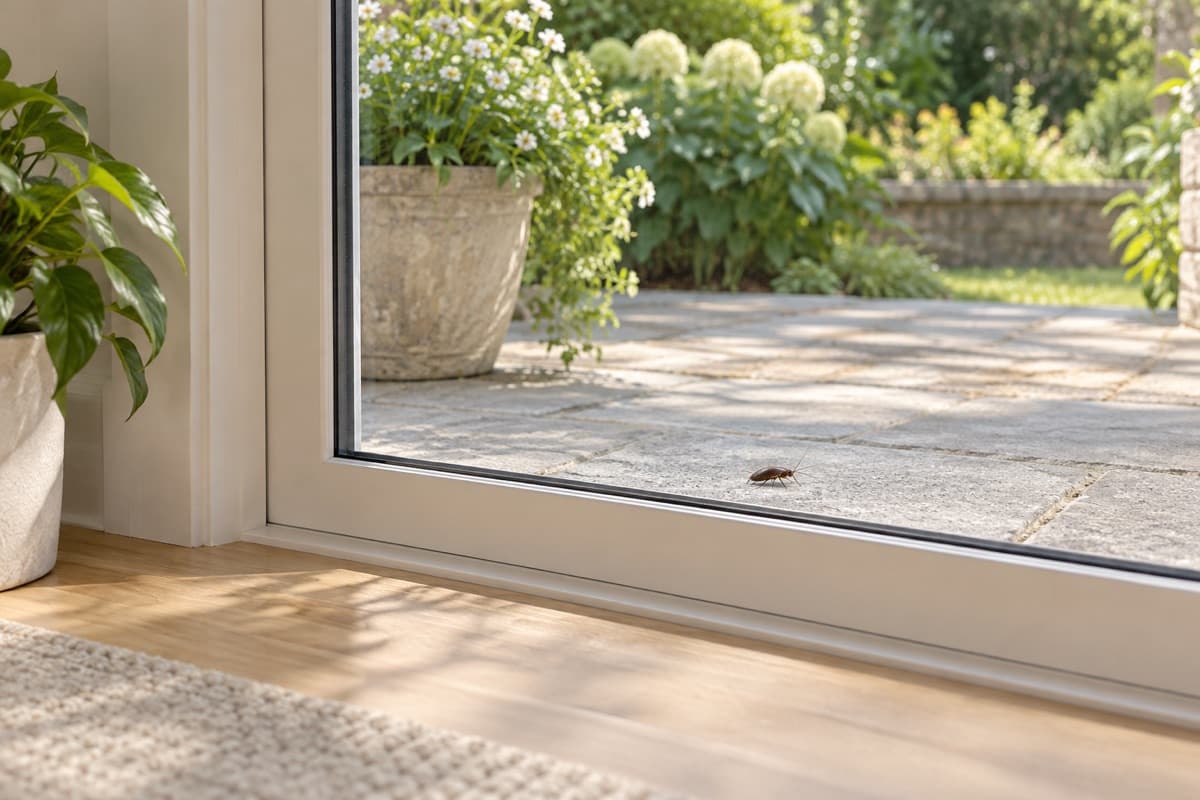
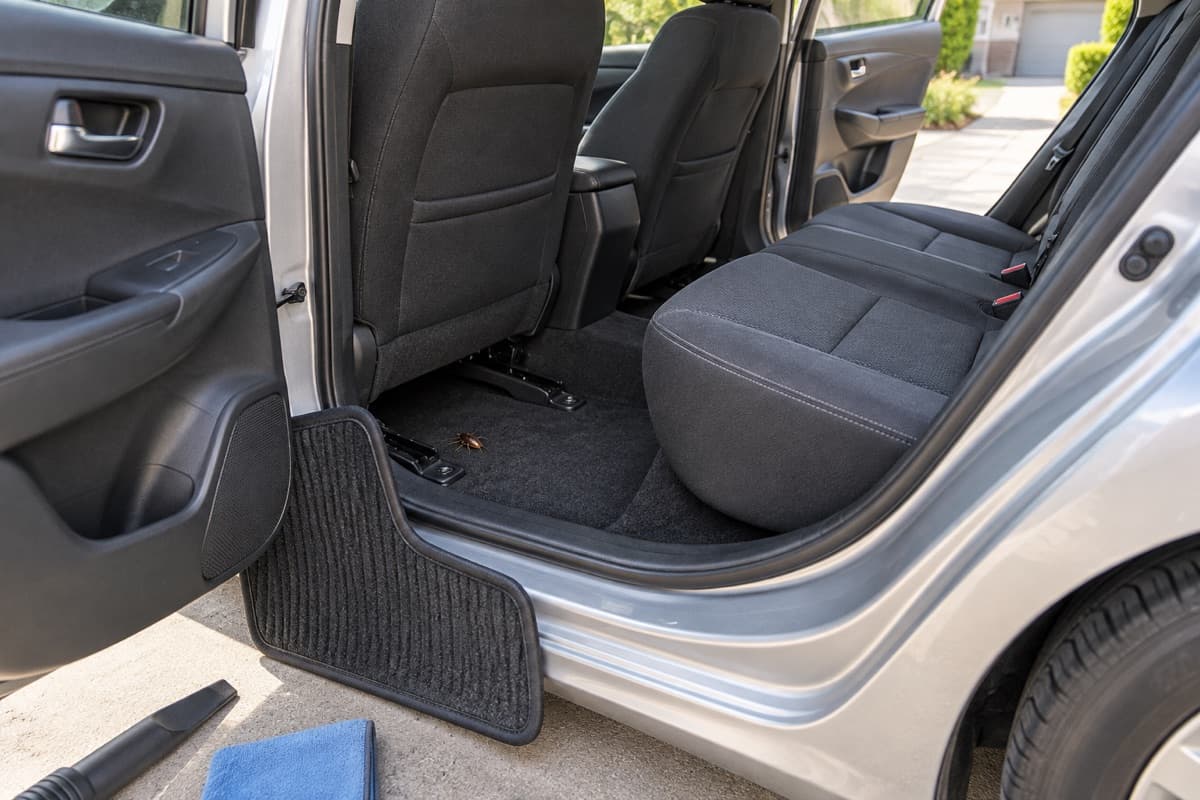
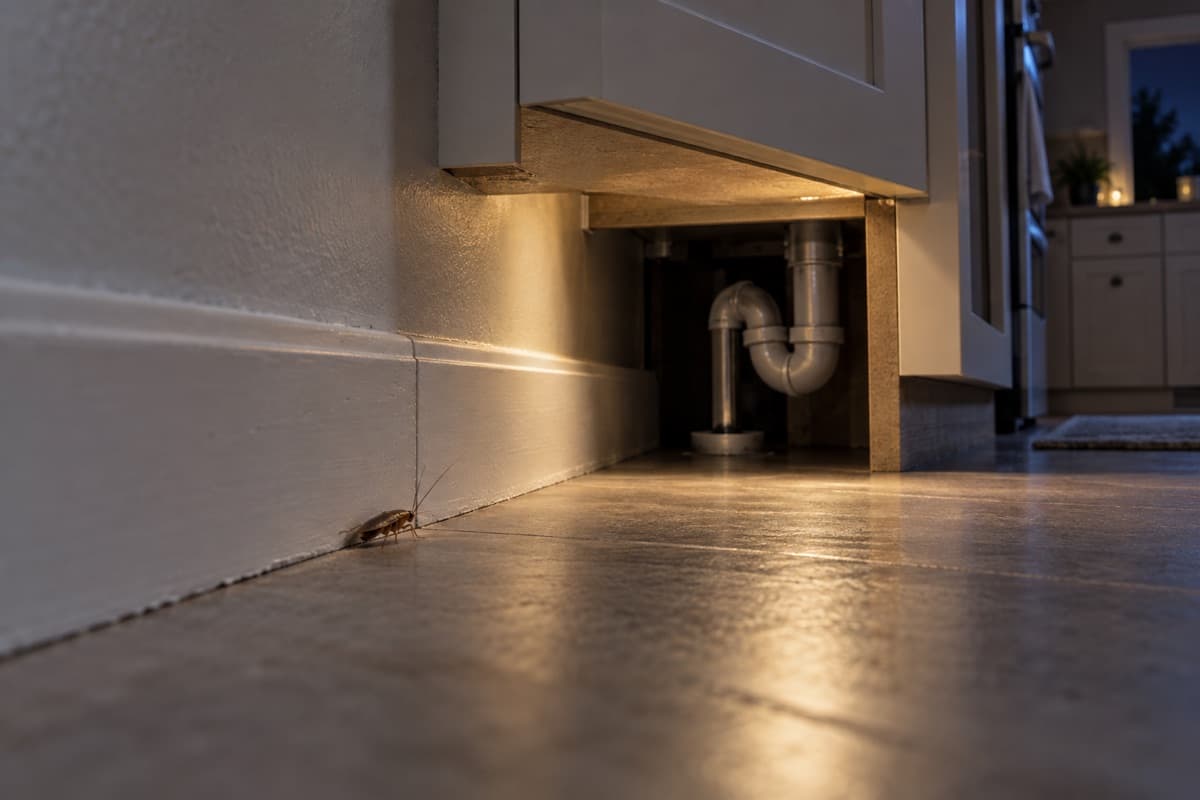
There is no credible statistic for how often a move transfers a cockroach infestation, and anyone quoting a percentage is guessing. What the evidence does support is that German cockroaches spread over any real distance only because people carry them. A hierarchical genetic study of German cockroach populations found that roaches move freely within a building but are genetically distinct between nearby buildings, meaning long-distance spread depends on human transport. So the practical risk comes down to whether your current home has German cockroaches. If it does, treat a transfer as likely and plan around it. If it does not, your main exposure is used furniture, secondhand appliances, and boxes that came from somewhere infested.
The earlier version of this article said the chance of bringing roaches when you move is "less than 5%." We could not find any research, survey, or agency source behind that figure, so we have dropped it. The sections below replace it with what extension entomologists and published research actually say.
Why There Is No Real Percentage
Nobody has run the study that would produce one. It would require tracking a large, representative sample of households before and after moving, with monitoring in both homes, and controlling for whether the destination was already infested. That work does not exist.
What does exist is strong evidence about the mechanism. German cockroaches cannot survive away from human structures, and population genetics research shows a clear pattern: within a single apartment, cockroaches form one interbreeding population; between apartments in the same building they are measurably differentiated; and between separate buildings the differences are larger still. Yet genetic differences across whole cities and continents are far smaller than that pattern alone would predict, which the authors attribute to human transportation moving cockroaches around.
NC State Extension puts the same point plainly: the German cockroach is transported through human activities, such as food and equipment dispersal.
Translated into a moving day: roaches do not follow your truck. They ride in it.
The One Question That Sets Your Risk
Before you think about packing tape, find out whether you currently have German cockroaches. A lot of people moving out of an apartment have a light infestation they have never noticed, because early populations stay inside wall voids, cabinet corners, and appliance motors.
Set sticky monitors three to four weeks before the move. Place them tight against edges where walls meet floors, under the kitchen sink, in the back corners of lower cabinets, beside and behind the refrigerator and range, in the bathroom vanity, and near the water heater. Check them weekly and write down counts.
HUD's inspection standard for housing quality lists the places its inspectors check for cockroach evidence, and it is a good home checklist: the kitchen sink, kitchen cabinets, voids between and under appliances and cabinets, the ceiling-wall junction, the bathroom, tops of doors, the circuit breaker panel, around outlets and switches, and water heaters. Evidence counts as a live or dead roach, shed skins, droppings that look like small black specks or smears, or brown oblong egg cases 5 to 9 mm long.
If you find nothing over a month of monitoring, your transfer risk is genuinely low. If you find anything, see how to know if you have roaches and plan on treating before you pack, not after you arrive.
Why One Hitchhiker Is Enough
A single cockroach in a box is not a coin flip you can shrug off, because of how the species reproduces. A German cockroach egg case holds 30 to 40 eggs, according to UF/IFAS Extension, and the female carries it with her until it is close to hatching, so she is effectively transporting the next generation rather than leaving it behind. The complete life cycle runs about 100 days at room temperature, with nymphs developing in roughly 60 days.
That is why extension guidance focuses on egg cases rather than just adults. University of Minnesota Extension advises examining bags, boxes, and luggage brought into your home for cockroaches or their egg capsules, and specifically recommends that when moving, you use boxes and packing material from a place free of cockroaches.
For how a handful of insects turns into a visible problem, see how a roach infestation starts.
The Items That Actually Carry Roaches
Risk is not spread evenly across your belongings. In rough order:
- Appliances with warm motor compartments. Refrigerators, microwaves, dishwashers, and window air conditioners are the classic harborage. The motor area is warm, dark, enclosed, and almost never cleaned. If you are moving a refrigerator out of an infested kitchen, see getting roaches out of a refrigerator motor before it goes on the truck.
- Small kitchen appliances. Coffee makers, toasters, toaster ovens, and air fryers collect crumbs and residue in places you cannot see, and they hold warmth.
- Electronics. Cable boxes, game consoles, and the backs of televisions offer the same warm, enclosed voids.
- Cardboard boxes, especially used ones. Corrugated cardboard provides exactly the narrow, dark gap German cockroaches prefer, and boxes from a grocery store, a liquor store, or a friend's basement have an unknown history. Purdue Extension advises checking for cockroaches before bringing home containers such as paper bags from the store.
- Upholstered and secondhand furniture. Seams, staple channels, and the underside of a couch are all plausible harborage. If you are buying used on your way into a new place, work through how to tell if furniture has roaches first.
- Paper clutter. Stacks of magazines, files, and paper bags are harborage and get packed wholesale.
Clothing, bedding, dishes, and books are lower risk on their own, though books and paper stored in an infested cabinet deserve a shake-out.
How To Pack If Your Current Home Has Roaches
If monitoring turns up cockroaches, you are not doomed, but a normal move will very likely take them with you. Build extra time in.
- Bait for at least four to six weeks before moving. Gel bait placed in small pea-size dabs at cracks, cabinet corners, and appliance voids is the workhorse. Judge progress by monitor counts, not by sightings.
- Do not use a total release fogger. A 2019 BMC Public Health study found no reduction in cockroach populations two weeks or a month after label-directed fogger use in 20 infested homes, while gel bait eliminated populations in the comparison homes. Foggers also left insecticide residue on kitchen surfaces at a median of roughly 85 times baseline.
- Use new plastic bins or new cardboard, and assemble boxes at the last moment rather than letting flattened cardboard sit against baseboards for weeks.
- Pack clean. Wash dishes and cookware, empty and wipe out small appliances, and let everything dry before it goes in a box. Food residue and moisture are what keep a stowaway alive.
- Leave food out of the load where you can. Move open dry goods into sealed hard containers, or discard them. Never pack an open cereal box or bag of flour from an infested kitchen.
- Stage clean items away from the problem. Pack a room, seal it, and move the sealed boxes to a room or garage with no history of activity.
- Clean appliances before loading. Pull the toe kick and rear panel where you can safely do so, vacuum the motor compartment and coils, and check the drip pan. EPA notes that a strong vacuum can pick up live cockroaches, egg cases, and droppings.
- Consider leaving the worst items behind. An old microwave or a heavily infested dresser is rarely worth the risk of seeding a new home.
Follow every pesticide label exactly, and keep bait out of reach of children and pets or use enclosed stations. Our step-by-step packing guide, how to make sure you don't bring roaches when moving, goes deeper on the sequence.
Moving Trucks, Movers, and Storage Units
This is where online advice outruns the evidence. We found no research measuring how often rental trucks or moving crews transfer cockroaches, and we are not going to invent a number.
What is reasonable: a truck that just carried someone else's infested kitchen is a plausible, if brief, source of exposure, and a storage unit in a building with a pest problem is a longer one. Sensible, low-cost precautions are to look in the corners and along the wall seams of the truck before loading, keep boxes closed rather than open-topped, avoid leaving loaded boxes in a shared storage area longer than necessary, and unload into the new home rather than into an unsealed garage full of other people's cardboard.
Spraying insecticide inside a rental truck is not a good idea. Most consumer sprays are pyrethroids, and apartment-collected German cockroaches have been found to be on average about 200-fold resistant to cypermethrin, a common pyrethroid. You would be putting residue on the surfaces your belongings touch for very little benefit.
What To Do In Your First 60 Days
Set monitors in the new home on day one, before you unpack. This does two things: it catches anything you brought, and it establishes whether the place was already infested when you arrived.
- Place traps under the kitchen sink, in lower cabinet corners, beside the range and refrigerator, and in the bathroom vanity. Date them.
- Break down and remove boxes immediately. Do not let empty cardboard pile up in a closet or garage for a month.
- Check the appliance voids again after everything is in place, including the gap between the range and the cabinet.
- Fix drips right away. German cockroaches cluster near plumbing and favor warm, humid areas, and water matters more to them than crumbs.
- Expect a lag. If a small number of roaches came with you, it can take weeks before they are numerous enough to see. Monitors will show them before your eyes do.
If a trap catches cockroaches in the first month, start gel bait immediately and keep monitoring. Early populations are far easier to eliminate than established ones. Then move to the longer-term routine in how to keep roaches away for good.
Did I Bring Them, Or Were They Already There?
Often you cannot tell, and it matters less than people think. Two clues help:
- Timing. Roaches appearing within days of moving into an empty unit more likely predate you, especially in a multi-unit building, where infestations cluster among neighboring apartments. Roaches appearing six to eight weeks in are more consistent with a small founding group that has had time to breed.
- Location. Activity concentrated in the boxes and items you brought points one way. Activity in wall voids, shared plumbing chases, and the unit's own cabinetry, with none near your belongings, points the other.
If you rent, report any sighting in writing regardless of who you think is responsible. Landlord obligations vary by state and city, and the record matters.
When To Call A Professional
Get a licensed pest control professional involved if:
- Your current home has an established infestation and your move date is less than a month away. There is not enough time to bait it down yourself.
- You are seeing roaches during the day or in more than one room, in either home.
- Monitor counts are not falling after three to four weeks of consistent baiting.
- You live in an apartment building, where treatment works best when adjoining units are handled together.
- Someone in the household has asthma. Cockroach allergen is a recognized asthma trigger.
Ask whether the company will inspect appliances and packed items, not just spray baseboards, and ask how they will verify the result.
Frequently Asked Questions
What are the odds I will bring roaches when I move?
There is no trustworthy number, and the honest answer is that it depends almost entirely on whether your current home is infested. If monitoring over three to four weeks catches nothing, the risk is low. If it catches anything, assume a normal move would carry them with you and treat before you pack.
Can roach eggs survive a move in boxes?
Yes. A German cockroach egg case holds roughly 30 to 40 eggs, and females carry the case until shortly before hatching, so a single female in a box can start a new population. Extension guidance specifically recommends inspecting boxes, bags, and luggage for egg capsules, not just for adults.
Are plastic bins better than cardboard for a move?
For this purpose, yes. Corrugated cardboard has the narrow, dark gaps cockroaches seek out, and used boxes carry unknown history. Rigid bins with tight lids are easier to inspect, easier to wipe out, and do not sit around absorbing moisture. New cardboard is an acceptable second choice.
Should I spray the moving truck or my boxes with insecticide?
No. Consumer pyrethroid sprays perform poorly against resistant German cockroach populations and would leave residue on surfaces that touch your belongings and hands. Inspection, cleaning, and vacuuming do more, and gel bait in the home does more still.
How long before I know if I brought roaches?
Plan on monitoring for two to three months. Small numbers take weeks to become visible, which is why sticky traps placed on move-in day are more reliable than waiting to spot one. Check and date the traps weekly.
Do movers bring roaches?
There is no research quantifying this. It is plausible that a truck or equipment that recently handled an infested home could carry a stray insect, but it is a far smaller risk than moving your own infested appliances. Look over the truck interior before loading and focus your effort on your own belongings.
Is it worth taking used furniture or appliances into a new home?
It can be, with inspection. Use a bright flashlight on seams, staple channels, undersides, drawer runners, and motor compartments, and look for droppings, shed skins, and egg cases as well as live insects. If an item shows evidence, do not bring it inside to "deal with later."
Sources
- Vargo, Crissman, Booth, Santangelo, Mukha, and Schal, *PLOS ONE* (2014) — genetic structure of German cockroach populations within buildings, between buildings, and across cities, and the role of human-mediated dispersal.
- UF/IFAS Extension: German cockroach — egg case containing 30 to 40 eggs, nymphal development, and the roughly 100-day life cycle.
- University of Minnesota Extension: Cockroaches — examining bags, boxes, and luggage for egg capsules, using boxes from an uninfested source when moving, and moisture preferences.
- Purdue Extension: A Practical Guide to Cockroach Control in Multi-Family Housing Units — checking containers brought home from the store, and bait placement.
- NC State Extension: The German cockroach — transport through human activities and movement between connected units.
- HUD: NSPIRE Infestation Standard — where inspectors look for cockroach evidence and what counts as evidence, including egg case size.
- DeVries, Santangelo, Crissman, Mick, and Schal, *BMC Public Health* (2019) — total release foggers ineffective against cockroaches, with heavy surface residue.
- DeVries, Santangelo, Crissman, Suazo, Kakumanu, and Schal, *Journal of Economic Entomology* (2019) — pyrethroid resistance in apartment-collected German cockroaches.
- EPA: Pest Control Resources for Housing Managers — vacuuming to remove live cockroaches, egg cases, and droppings, and eliminating food and water.