Unplug the refrigerator, vacuum out the dust and debris around the coils and compressor area, clean the floor and walls around it, and put roach bait on the floor or wall near the appliance rather than on or inside it. Do not spray, dust, foam, or pour liquids into the motor and compressor compartment, and do not put insecticide on wiring, the control board, or the cooling parts. Guidance from the Pacific Northwest National Laboratory's Building America program and GE Appliances is to unplug before cleaning condenser coils, and the label for a widely used professional roach gel, Advion Cockroach Gel Bait, says not to use it "in or on electrical equipment where a possibility of shock hazard exists." If roaches are inside the sealed compartment, behind panels, or near damaged wiring, call an appliance technician and a pest professional.
This guide replaces an earlier version that told readers to apply diatomaceous earth or boric acid powder around the motor area and to spray essential oils there. That was the wrong advice for an electrical component, and we have removed it.
Why Roaches Collect Around Refrigerators
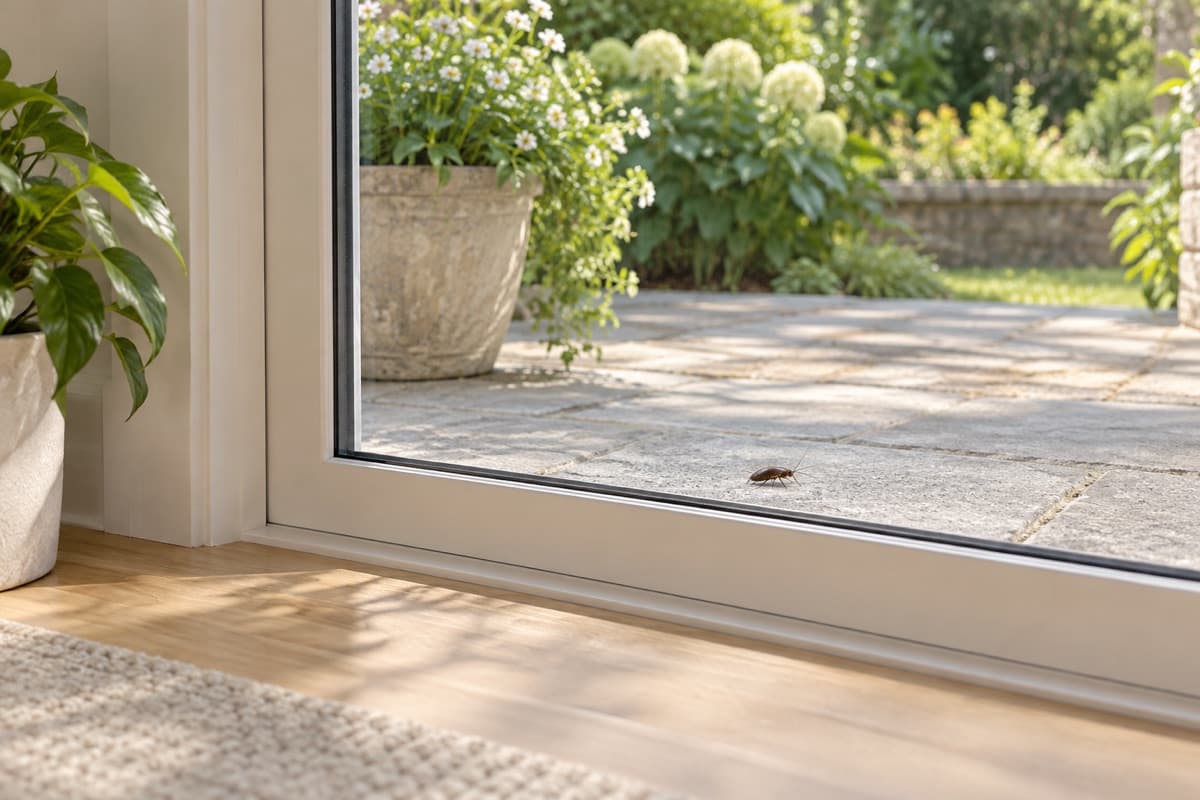
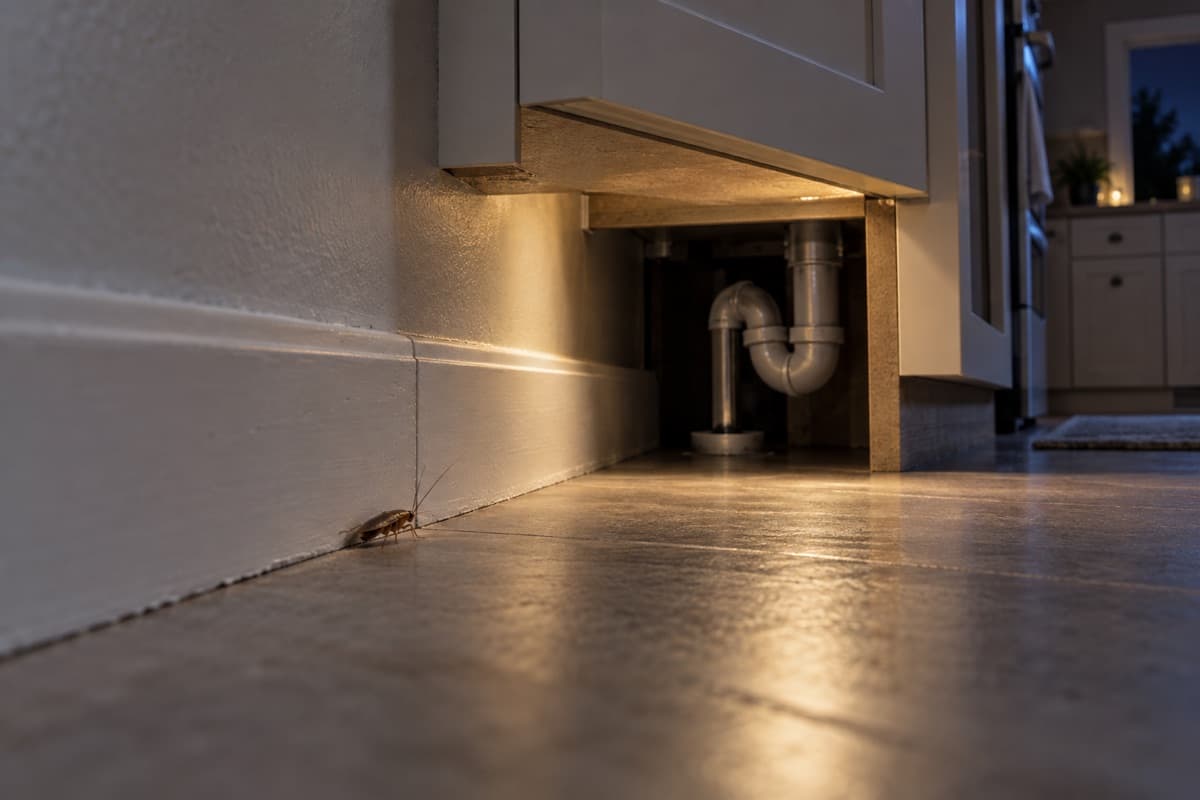
Refrigerators generate heat, and the space around them is dark and often carries dust, crumbs, and moisture. Rutgers Extension notes that German cockroach populations are largest around the stove and refrigerator. The University of Kentucky lists "beneath and behind refrigerators, dishwashers, and stoves" as preferred hiding places and says German cockroaches also gather in heat-producing electronic equipment such as clocks and toaster ovens. UC IPM specifically tells readers to check refrigerator and other appliance motors for egg cases when inspecting appliances and furniture that have been in storage or were recently brought in. NC State Extension also names the underside of refrigerators among conducive habitats.
Two points follow. First, a refrigerator is usually a harborage, not the source of the problem. If roaches are at the compressor, they are probably also in the cabinets, at the sink, and along the walls. Second, the refrigerator is only one of the places you need to treat, so read our step-by-step plan for getting rid of roaches alongside this guide.
What To Do Now
- Confirm the activity. Use a flashlight along the floor and lower edges, and put sticky monitors near the appliance. UF/IFAS says to place monitors near appliances that generate heat, along walls, and record where insects turn up. Several sizes of roach on one monitor point to an established infestation.
- Look for warning signs of electrical trouble. A burning smell, sparks, a tripped breaker, a compressor that runs constantly or not at all, or visibly chewed or damaged wiring are reasons to stop, leave the refrigerator unplugged, and have a technician inspect it. We could not find a source that documents what roaches do to refrigerator electronics, so we treat any of these signs as a repair issue, whatever the cause.
- Unplug it and plan the time. PNNL advises finishing coil cleaning within about two hours so food does not spoil. Keep the doors closed, and move perishables to a cooler if you expect to take longer.
- Pull the unit forward carefully if it is on wheels or the manual describes how to move it, and have a vacuum ready before you do. Roaches will scatter.
- Vacuum, do not spray. Use a hose with a brush or crevice attachment on the floor, the wall behind, the sides, and the accessible coil area. Seal the vacuum contents in a bag and take them outside. A HEPA-filtered vacuum is better, because roach droppings and body parts are allergens; our guide to cleaning roach droppings safely covers the details.
- Wash the surrounding surfaces. Use soapy water on the floor and wall, then rinse and dry. UF/IFAS notes that no-rinse cleaners spread allergens rather than removing them.
- Restore the appliance carefully. Let everything dry completely before you plug in and slide it back. Do not block ventilation grilles.
- Place bait near the unit, not in it (details below), then keep checking monitors.
Cleaning The Coils And Drip Pan Area
PNNL recommends cleaning the condenser coils behind or below the refrigerator every 6 to 12 months. GE advises more often if you have shedding pets or the area is dusty. The process is the same in both sources:
- Unplug the refrigerator. For top-mounted coils, GE says you can instead disconnect at the circuit breaker.
- Find the coils, usually behind the front grille at the bottom on newer models or on the back on older ones.
- Remove dust with a vacuum and a coil brush or soft brush. GE warns that condenser fins have sharp edges, so wear gloves and long sleeves.
- PNNL says stubborn dust can be wiped with a damp rag and a few drops of dish soap, and the coils should then air dry. Wring the cloth out well, keep it on the coil fins and outer surfaces, and keep water away from wiring, the compressor terminals, and the control board. If you are unsure, vacuum only.
Some refrigerators have a drip pan that collects defrost water, which evaporates from it. GE explains that on its newer models the pan is fixed and not easily accessible, while older ones have a removable pan behind the grille. Whether you can reach yours varies by brand and model, so check the owner's manual. Standing water and residue in a pan are moisture and food for pests, and a leak or a blocked drain is worth repairing. UF/IFAS lists refrigerator and freezer drains among the moisture sources to fix.
The old guide said to clean the motor area every three months and monthly if you had roaches before. We have replaced that with the manufacturer-supported 6-to-12-month coil interval, plus extra vacuuming of the floor and surrounding area as part of your normal kitchen cleaning.
Bait: The Safe Way To Use It Near A Refrigerator
Baits are the standard tool because roaches carry the bait back to where they hide. UF/IFAS advises placing many pea-sized dots in hiding places rather than large amounts, and NC State Extension agrees that small placements in numerous locations work better. The label decides exactly where. Two Advion labels show the pattern:
- The gel bait label allows placement "behind and under appliances," but also says "Do not use this product in or on electrical equipment where a possibility of shock hazard exists." It also says not to apply it to surfaces that food contacts and to place it where children and pets cannot reach.
- The label for Advion Cockroach Bait Arena says to place arenas under or near kitchen appliances, along walls or corners, and not in locations recently treated with other pest control products because spray residues can make the bait less palatable.
In practice, that means:
- Put bait on the floor and wall surfaces beside and behind the refrigerator, in corners, and along the paths you saw roaches take.
- Do not put gel on or inside the compressor, fan motor, wiring, relay, or control board. If the roaches are in there, that is when to call for help.
- Choose enclosed, tamper-resistant stations wherever children or pets can reach. The EPA says bait stations pose a low exposure risk when kept out of reach of children and pets and used according to label directions.
- Do not spray near bait. UF/IFAS says repellent products in a baited area contaminate the bait and render it ineffective.
- Replace bait as the label directs. UF/IFAS advises reapplying every one to two weeks until monitor catches drop to zero. Our guide to how to tell if roach bait is working helps you read the results.
What Not To Do
- Do not spray, mist, or pour anything into the compressor or motor area. That includes insecticides, essential-oil mixes, vinegar, bleach, and soapy water.
- Do not put boric acid, diatomaceous earth, or other dust on or around the motor, fan, wiring, or controls. eXtension's German cockroach guide warns that insecticide dusts can become airborne and contaminate off-target sites. Some extension guides, including Purdue's, describe boric acid behind refrigerators as part of a general control program, but those are broad guides, not instructions for treating an appliance's electrical compartment. The Advion label language above is the safer reference point.
- Do not use foggers or bug bombs. UC IPM advises avoiding foggers, bombs, and aerosol sprays because they can repel and scatter cockroaches without killing them.
- Do not open sealed panels or work on wiring. Our guide to cleaning roach droppings off circuit boards explains, with sources, why refrigerators are in the "do not open" category.
- Do not use any pesticide in a way the label does not describe. The EPA says the label must be read and followed when using a pesticide product.
- Do not rely on bay leaves, cucumber, coffee grounds, or baking soda near the appliance. We did not find any of them recommended as a control in the extension guides we reviewed.
Preventing A Return
- Vacuum coils and the surrounding floor on the schedule above and whenever you move the unit.
- Keep the kitchen floor free of crumbs and spills, and store food in sealed containers.
- Repair leaks and drain problems, and empty and clean any accessible pan or water tray according to the owner's manual.
- Caulk cracks along nearby baseboards and around cabinets, as Rutgers and UF/IFAS advise, but do not stuff material into the refrigerator's ventilation openings.
- Keep sticky monitors near the refrigerator, sink, and stove, and check them weekly.
- Inspect any used refrigerator before it comes in. UC IPM points to appliance motors as a place egg cases can travel. Our guide on avoiding roaches when moving covers what to inspect.
- If other appliances are involved, see our guide to roaches in a dishwasher for another example of treating around an appliance rather than in it.
When To Call A Professional
Call a licensed pest management professional if roaches are inside the sealed compartment, behind panels, or coming from an area you cannot reach, if you see them during the day, if monitors show several life stages, or if bait has not reduced counts after a few weeks. Call an appliance technician if there are signs of electrical damage, if the unit behaves abnormally, or if you need the compressor compartment cleaned. Ask a pest company how it handles electrical equipment, and expect it to follow the label. The EPA advises choosing companies with integrated pest management experience.
Frequently Asked Questions
Can roaches damage a refrigerator?
They can leave droppings and debris in a warm, dark place, which is a reason to clean it and to have it inspected if it runs strangely. The earlier version of this article said roach droppings are acidic and can corrode electrical parts and start fires. We could not verify that claim in a source we could open, so we dropped it. The safest response to a malfunction is to unplug the unit and call a technician.
Is it safe to use roach bait next to a refrigerator?
Yes, if you follow the product label. Place it near the appliance in cracks and along the floor, keep it away from food contact surfaces, and keep it out of the reach of children and pets. Do not apply it to electrical parts.
Can I use boric acid or diatomaceous earth under the refrigerator?
Some extension guides describe light boric acid dust in voids behind and under appliances, and Rutgers and Kentucky both rank boric acid above diatomaceous earth for cockroaches. But those recommendations do not extend to the motor compartment, wiring, or vents, and dusts can drift. Read the label, keep it away from anything electrical, and let a professional handle it if you are unsure.
How often should I clean the coils?
PNNL says every 6 to 12 months, and GE says more often if you have shedding pets or a dusty room.
Should I throw out the refrigerator?
Usually not. Our judgment, not a sourced figure, is that cleaning and baiting around the unit plus treating the wider kitchen resolves most cases. Replace it only if a technician finds damage that is not worth repairing.
Sources
- PNNL Building America Solution Center, Clean Refrigerator Condenser Coils: unplug, 6-to-12-month interval, cleaning steps, two-hour timing.
- GE Appliances, Refrigerator: Cleaning Condenser Coils: unplug, more frequent cleaning with pets or dust, sharp fins.
- GE Appliances, Locating Your Drip Pan: drip pan function and accessibility.
- EPA-accepted label, Advion Cockroach Gel Bait (EPA Reg. No. 100-1484): electrical-equipment restriction, food contact, children and pets.
- EPA-accepted label, Advion Cockroach Bait Arena (EPA Reg. No. 100-1486): placement near appliances and spray-residue caution.
- UF/IFAS Extension, Assessment-Based Pest Management of German Cockroaches: monitors, bait practice, sanitation, moisture.
- Rutgers NJAES, German Cockroach (FS1322): refrigerator harborage, boric acid and diatomaceous earth comparison.
- University of Kentucky Entomology, Cockroach Elimination in Homes and Apartments: harborage in heat-producing equipment.
- UC IPM, Cockroaches: appliance motors, foggers.
- NC State Extension, German Cockroach Surveillance and Management: refrigerator habitat, small bait placements.
- Purdue Extension, E-241: boric acid in general control programs.
- eXtension, German Cockroach Pest Control: dust cautions.
- EPA, Smart Pest Control to Protect Your Health: bait stations, labels, IPM.