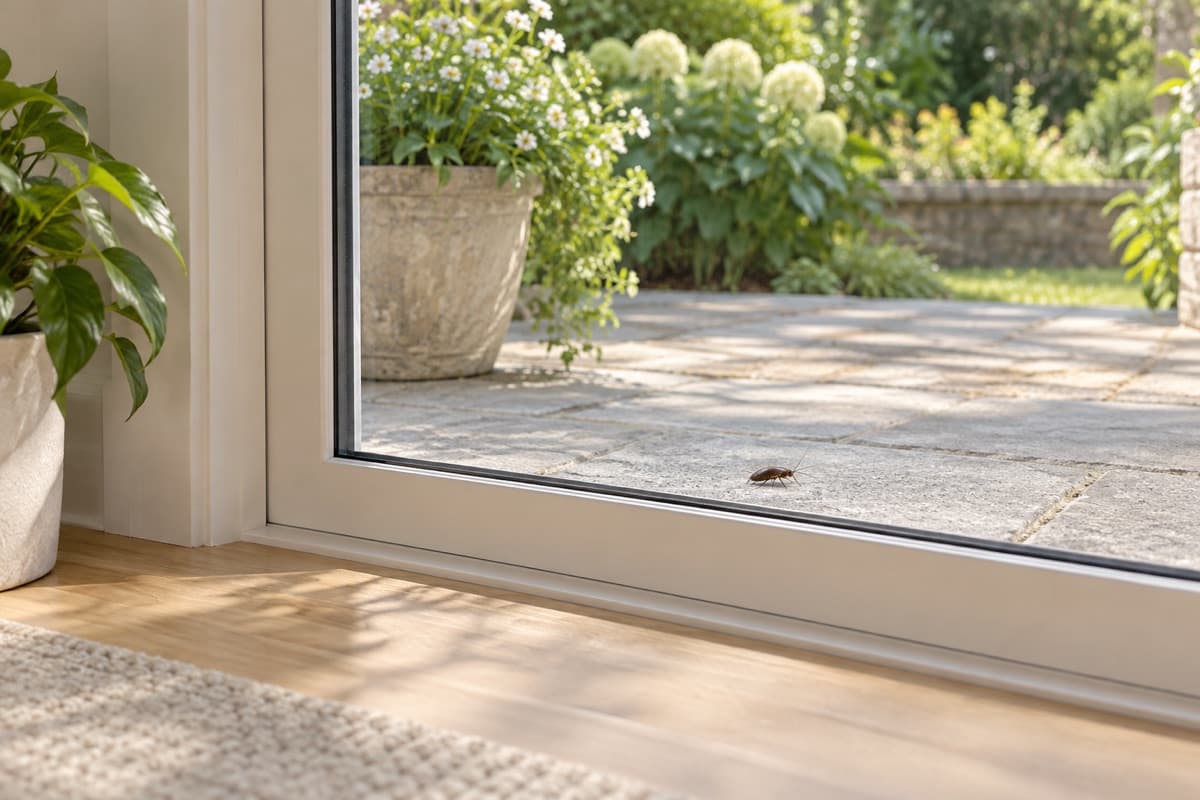
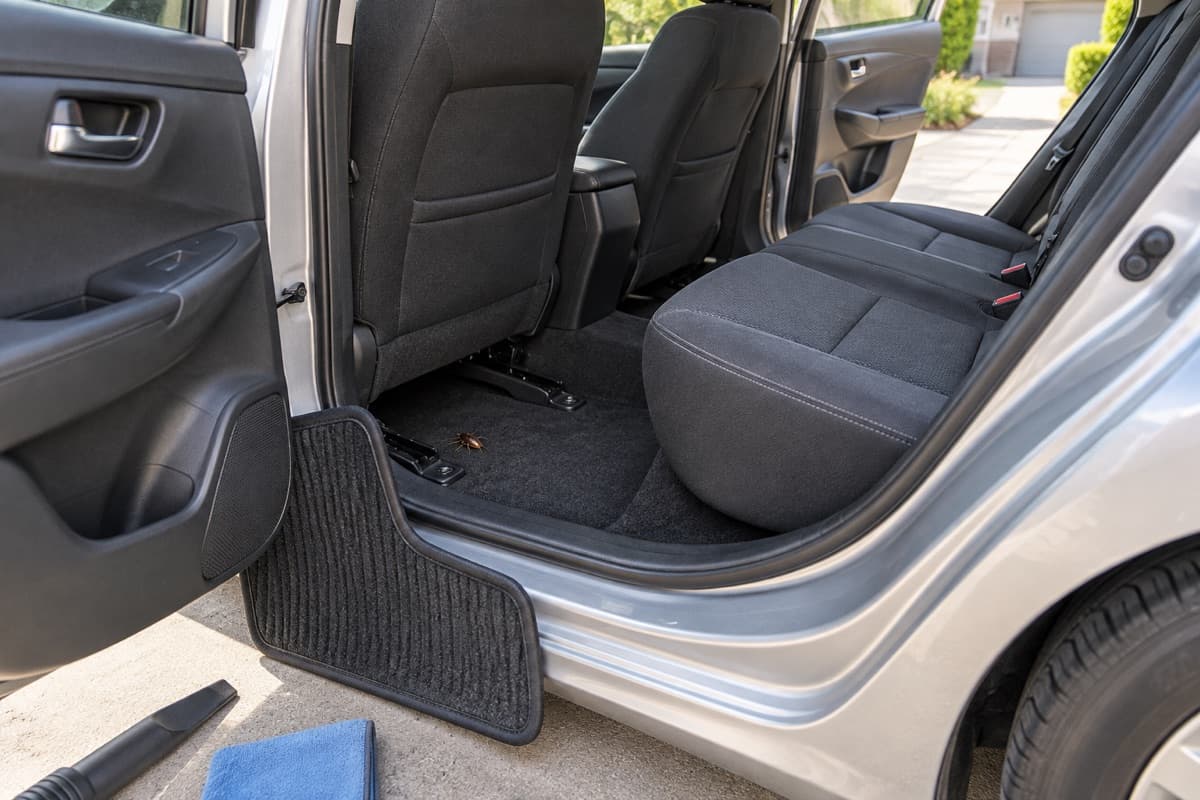
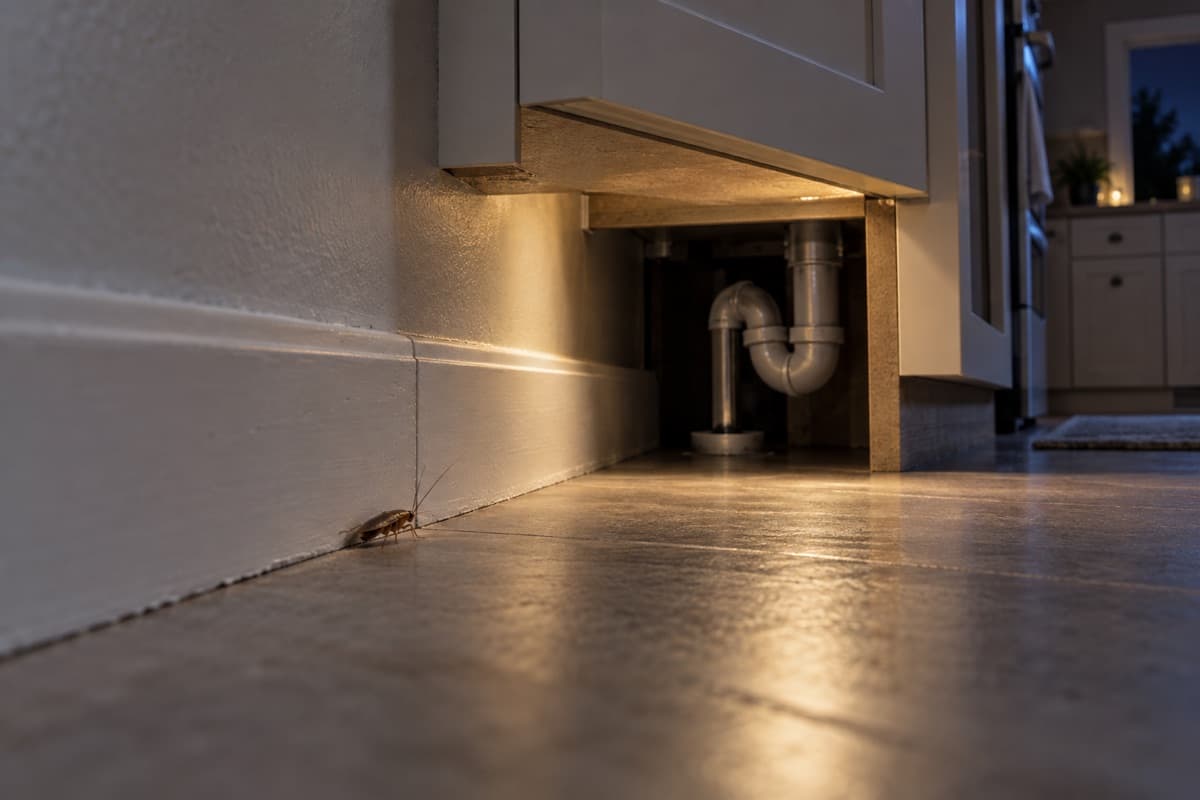
Apply Advion Cockroach Gel Bait as small spots of about 0.5 grams each — roughly a quarter inch across — placed into cracks, crevices, and voids where cockroaches actually hide, not on open surfaces. The EPA-approved label sets the rate by linear footage, not by room: 1 to 3 spots per 10 linear feet for light to moderate infestations, and 3 to 5 spots per 10 linear feet for heavy ones. Many small placements beat a few large ones. Do not apply it to surfaces recently treated with residual sprays, do not spray over it afterward, do not put it on food-contact or routinely washed surfaces, and do not treat areas that are easily accessible to children and pets. Then inspect your placements and apply fresh bait as needed — the label gives no fixed reapplication calendar.
That last point is worth flagging, because much of the published advice on this product — including the older version of this page — states a confident "reapply every 2 to 3 months." That interval does not appear on the label. The label says to inspect placements periodically for consumption and attractiveness and reapply as needed. The difference matters: if roaches are eating your bait, two months is far too long to wait.
Everything below comes from the EPA-accepted master label for Advion Cockroach Gel Bait, EPA Reg. No. 100-1484, the product's Safety Data Sheet, and peer-reviewed work on how indoxacarb moves through a cockroach population. Where something is a manufacturer claim rather than a label direction, it is marked as such.
What Advion Is And How Indoxacarb Works
Advion Cockroach Gel Bait is a yellow gel containing 0.6% indoxacarb, an oxadiazine insecticide classified as an IRAC Group 22A sodium channel blocker. The label lists control of German, American, Australian, Smoky-Brown, Brown, Asian, Oriental, and Brown-Banded cockroaches.
Indoxacarb is a pro-insecticide — on its own, a relatively weak nerve poison. Once a cockroach eats it, the insect's own esterase and amidase enzymes strip a carbomethoxy group off the molecule and convert it into the metabolite DCJW, a potent blocker of voltage-dependent sodium channels. Blocked channels mean nerves stop firing, and the insect becomes uncoordinated and paralyzed. Mammals largely do not perform that conversion efficiently, and the Merck Veterinary Manual's entry on oxadiazine toxicosis describes the same bioactivation-inside-the-insect mechanism. Syngenta calls this the "MetaActive" effect and states that the active ingredient "is only activated once ingested by the target pest."
The delay between eating and dying is not a flaw — it is the whole strategy. A roach that dies instantly at the bait dot kills one roach. A roach that eats, wanders back into harborage, and then dies there becomes a delivery vehicle.
The horizontal transfer part is real, and it is well documented
Researchers have measured this directly. In a 2008 Journal of Economic Entomology study on horizontal transfer of indoxacarb bait in the German cockroach, excretions from a single bait-fed adult killed 38 of 50 nymphs (76%) within 72 hours, and those dead nymphs then transferred enough indoxacarb to kill 16 of 20 adult males (81%) within another 72 hours. A broader review of bait transfer in cockroach aggregations reports indoxacarb producing roughly 85% secondary, 34% tertiary, and 15% quaternary mortality, and notes it was the only bait in its comparison producing substantial quaternary kill — a fourth ripple out from the original feeder.
The mechanisms are coprophagy (young nymphs eating adult droppings), emetophagy (eating fluids regurgitated by a dying roach), necrophagy, and contact with contaminated bodies. First-instar nymphs mostly stay in harborage and rarely reach your bait dot, but they eat adult feces as a normal part of their diet — that is how the bait reaches roaches that never visit it.
One finding from the 2008 study has a direct practical consequence: transfer worked best when recipients met freshly symptomatic donors in the absence of alternative food. Competing food does not just slow bait uptake; it weakens the secondary kill too.
Inspect And Clean Before You Place A Single Dot
The label is explicit that infested areas "must be carefully inspected to determine overall infestation levels, locations of harborage areas, and most appropriate application points." Placement accuracy is most of the outcome.
- Put down plain sticky monitors in cabinet corners, under the sink, behind the trash can, beside and under the refrigerator, and along the dishwasher. Number and date them, leave them a few nights, and see where catches concentrate — that is where your bait goes. Our guide on tracing where roaches are coming from covers the inspection sequence.
- Remove competing food. Degrease under and behind the stove, clean the refrigerator drip pan and coils, wipe cabinet interiors, take the trash out nightly, store dry goods in hard containers, and stop leaving pet food out overnight. UC IPM notes plainly that baits take longer to give satisfactory control when cockroaches have access to food, and that removing other food sources greatly enhances their effect.
- Fix water sources. Leaks under sinks, a sweating toilet base, condensate lines, and damp cabinet floors keep a population alive independent of anything you bait with.
- Vacuum the harborage with a HEPA vacuum to pull out roaches, droppings, shed skins, and egg cases, then empty the canister outdoors.
Cleaning is not a substitute for baiting. It is what makes baiting work.
How Much To Apply, According To The Label
The label gives rates by linear footage of treated area, not by room, so ignore any source that tells you "one tube per kitchen."
- Light to moderate infestation: 1 to 3 spots per 10 linear feet.
- Heavy infestation: 3 to 5 spots per 10 linear feet.
- Spot size: each spot must equal about 0.5 grams, approximately 1/4 inch in diameter. People commonly describe this as pea-sized, and that is close enough in practice, but the label's own measure is the quarter-inch dot.
- Bead option: at any infestation level, a bead may be used instead — a small thin bead less than 1/8 inch wide and about 2 inches long, appropriate for gaps between construction elements and longer cracks.
The label also states directly that "several small applications distributed within an area are more effective than 1 or 2 applications of large quantities." A German cockroach forages over a short range. Twelve small dots spread across a kitchen reach twelve harborage clusters; one big blob reaches one.
Where The Label Says To Put It
The label directs application "to areas frequented by cockroaches such as between different elements of construction, between equipment and floors, openings leading into voids and hollow spaces in floors, walls, ceilings, equipment legs and bases, around plumbing pipes, doors and windows, and behind and under appliances, cabinets, sinks, closets." The indoor list adds cracks and crevices along walls or floors, under tables and within their framing, around sinks, near garbage collection areas, attics, crawl spaces, and cracks and crevices in cabinets.
In practice that means cabinet top corners and back edges, hinge recesses, the underside lip of the sink and its floor penetrations, behind and beneath the refrigerator near the motor and drip pan, the dishwasher's side gaps, under and behind the range away from anything hot, the seam where countertop meets backsplash, pipe and wire penetrations, and around the toilet base and vanity.
In food-handling areas of commercial kitchens and similar establishments, the label restricts application to crack-and-crevice treatment only, applied by placing the dispenser tip approximately 1/2 inch into cracks, crevices, holes, and similar openings.
Advion is also labeled for outdoor use as a spot or thin bead at entry sites — around windows and doors, between construction elements, sewer areas, adjacent trees harboring cockroaches, along walls, and at garbage holding areas — placed so as to reduce the potential for later human contact. One environmental restriction matters: the product is toxic to fish and aquatic invertebrates, and the label prohibits application to impervious surfaces leading directly to storm drains or gutters.
Where the label says not to put it
- Not where children and pets can easily reach it. The label carries this in capital letters on the front panel: "DO NOT TREAT AREAS THAT ARE EASILY ACCESSIBLE TO CHILDREN AND PETS," and repeats it in the use instructions.
- Not on surfaces that food contacts, and do not allow open food to contact the gel.
- Not on routinely washed surfaces such as cracks and crevices in tabletops and food-preparation surfaces, because the bait can simply be washed away.
- Not on surfaces above 120–130°F, which causes the bait to liquefy and lose effectiveness. The label's examples include parts of stoves, ovens, grills, fume hoods, heat lamps, coffee urns, steam tables, toasters, fryers, dishwashers, and hot water pipes.
- Not in or on electrical equipment where a shock hazard exists.
- Not on surfaces recently treated with residual sprays.
If gel does end up on an exposed surface, the label's instruction is to first remove as much of it as possible, then wash with soap and water.
What To Expect After You Bait
The label makes no speed-of-kill claim, and neither will we. What the research supports is that mortality accumulates over roughly 72 hours per transfer step, so population-level decline plays out over a couple of weeks as the ripples compound.
Expect to see more roaches in the first few days, particularly at night. That is normal foraging around a new food source, not failure. Judge progress by your sticky monitors and by bait consumption, not by sightings. Our walkthrough on telling whether roach bait is actually working covers what the monitor counts should look like week over week.
When To Reapply
The label's direction is to "inspect Advion Cockroach Gel Bait placements periodically for consumption or attractiveness and reapply as needed." There is no stated interval, so use triggers instead of a calendar:
- Gone or visibly reduced. Heavy consumption can empty a placement in days. Replace it and add more nearby — consumption tells you that you found the harborage.
- Hardened, crusted, or dried. Gel loses palatability as it dries; UC IPM notes deposits harden over time.
- Liquefied or run. That means heat, and that placement was in the wrong spot.
- Monitors still catching roaches after two to three weeks with bait untouched — a placement, competing-food, or aversion problem.
Once monitors go quiet, leaving a few placements in high-risk spots and checking them monthly is reasonable maintenance.
Six Reasons Advion Fails
Most Advion failures are application failures, and nearly all of them are covered by the label.
- Spraying over it. The label prohibits this in both directions. Repellent sprays contaminate the bait, drive roaches away from the placement, and push them deeper into voids; total-release foggers are the worst version. If you have already sprayed an area, clean it and bait elsewhere.
- Competing food. Grease behind the stove, crumbs under the dishwasher, an open trash can, and overnight pet food all outcompete a quarter-inch dot — and the 2008 transfer study found indoxacarb translocated best when no alternative food was available.
- Bait on open surfaces instead of in cracks. Exposed gel dries faster, is easier for people and pets to contact, and sits away from harborage. Roaches feed near shelter.
- Too few placements, too large. The label prefers many small spots. This is the most common DIY mistake.
- Surfaces that get wiped, washed, or heated. Bait on a counter edge, a weekly-wiped shelf, or a warm appliance housing is gone or degraded before it works.
- Dust and residue. Gel placed into a crack full of construction dust, grease film, or diatomaceous earth becomes unattractive. Clean the crevice first, and do not layer dusts on top of placements.
Child And Pet Safety, As The Label States It
The label's signal word is CAUTION, and the front panel carries both "KEEP OUT OF REACH OF CHILDREN" and the instruction not to treat areas that are easily accessible to children and pets. That instruction — placement out of reach — is the core of the product's safety design, not a footnote.
The precautionary statements direct you to avoid contact with skin, eyes, or clothing, to wash thoroughly with soap and water after handling, and warn that prolonged or repeated skin contact may cause allergic reactions in some people. The Safety Data Sheet classifies the formulation as a skin sensitizer (Category 1B), reports acute oral and dermal rat LD50 values above 5,000 mg/kg with the finished product non-irritating to rabbit eyes and skin, and states there is no specific antidote if it is ingested — treatment is symptomatic.
Practically: place gel inside cracks, hinge recesses, and voids, never on floors, open shelves, baseboard faces, or anywhere a crawling infant or a dog can reach. Wear gloves or wash up afterward. Wipe any gel off exposed surfaces and wash with soap and water. If a child or pet ingests gel, call poison control, your doctor, or your veterinarian, plus the 24-hour emergency number on the label, 1-800-888-8372, and bring the container with you.
The mammalian selectivity of indoxacarb is genuine, but "low-toxicity active ingredient" is not the same as "safe anywhere." Human and veterinary case reports of methemoglobinemia after significant indoxacarb ingestion do exist, which is part of why the label restricts placement rather than relying on the low hazard rating. If you want a broader comparison of options for households with animals, see our roundup of pet-safer roach control choices.
Storage, Shelf Life, And Disposal
The label's storage direction is short: store in a cool, dry place inaccessible to children and pets, and do not contaminate water, food, or feed by storage or disposal.
The label prints no expiration date or shelf life. Syngenta's FAQ states that shelf life depends heavily on storage, that ideal conditions are indoors with minimal temperature and humidity swings, and that under those conditions the gel "can last up to five years." Treat that as a manufacturer statement, not a label guarantee — a hot garage or shed is the wrong place for it. Judge a tube by what comes out: gel that has separated, hardened at the tip, darkened, or gone crumbly should be discarded rather than placed. Cap it tightly between uses.
For disposal, the label states the container is non-refillable and must not be reused. Offer for recycling if available, place empty dispensers in the trash, and if partially filled, wrap in newspaper and discard, or call your local solid waste authority.
Rotation And Pairing With An IGR
This is the part most DIY guidance skips, and it is the difference between knocking a population down and keeping it down.
Rotate active ingredients. The label's own Insect Resistance Management section states that Advion contains a Group 22A insecticide, that resistant individuals may dominate the population if the group is used repeatedly in the same treated areas, and instructs users to rotate Advion or other Group 22A insecticides with different groups that control the same pests. UF/IFAS's assessment-based German cockroach management guidance puts a number on it: rotating three to six baits with active ingredients from different IRAC classes reduces both insecticide resistance and bait aversion.
Resistance to indoxacarb in field populations is not theoretical. A 2013 Journal of Economic Entomology susceptibility monitoring study found that 13 of 14 U.S. field-collected German cockroach strains showed significant tolerance to indoxacarb in vial bioassays, and 7 of 14 in oral feeding bioassays. Notably, susceptibility was generally higher in the feeding assays, suggesting the gel bait route carries lower resistance risk than spray exposure — but the trend is there, and Advion has been the leading U.S. cockroach bait since 2006.
Bait aversion is a separate problem from chemical resistance. Some German cockroach populations have evolved to taste glucose as bitter — a behavioral change documented in taste neurons by NC State researchers — and reject sugar-containing bait matrices regardless of the active ingredient. Advion's inert ingredients are proprietary and we have not found published work testing glucose-averse roaches specifically against Advion, so we will not claim either way. The practical signal is simple: if bait sits untouched in the right places while monitors keep catching roaches, switch to a different matrix and a different active ingredient class rather than adding more of the same. Fipronil and hydramethylnon products are the usual alternates; our guide to Maxforce bait stations covers one of them.
Add an insect growth regulator. Indoxacarb kills, but it does not stop developing nymphs from maturing into reproducing adults, and it does not touch eggs inside an ootheca. An IGR such as hydroprene or pyriproxyfen disrupts development and sterilizes the next generation, which is what actually ends the cycle. UF/IFAS advises placing bait close to, but not on top of, an IGR treatment, to avoid reducing bait palatability. Syngenta now also sells Advion Trio, which combines indoxacarb with two IGRs — novaluron and pyriproxyfen — in a single gel, for people who would rather not run two products. Our walkthrough on using IGRs for roaches explains the timing.
When To Call A Professional
Advion is a legitimate professional-grade product and a reasonable DIY choice for a contained problem. Call a licensed professional when four to six weeks of correct placement, real sanitation, and an IGR have not bent the monitor counts downward; when you are seeing roaches during the day or in multiple rooms, which suggests the population has outgrown its harborage; when you live in an apartment, condo, or duplex where the source may be an adjacent unit or shared wall void, since unit-by-unit treatment rarely holds in connected buildings; when someone in the household has asthma, because allergen exposure is the best-documented health risk here; or when you cannot place bait safely out of reach of a crawling child or a determined dog.
Our broader guide on getting rid of roaches covers the full program that bait fits inside.
Frequently Asked Questions
How many dots of Advion do I need per room?
The label does not give a per-room rate. It gives 1 to 3 spots per 10 linear feet for light to moderate infestations and 3 to 5 spots per 10 linear feet for heavy ones, with each spot about 0.5 grams and roughly 1/4 inch across. Measure the cabinet runs, appliance edges, and plumbing penetrations you plan to treat and apply by that footage.
How often should I reapply Advion roach gel?
There is no interval on the label. The instruction is to inspect placements periodically for consumption and attractiveness and reapply as needed. Replace dots that have been eaten, hardened, dried, or liquefied. During an active infestation that can mean every few days; during maintenance it can mean months.
Can I spray Raid or another insecticide after applying Advion?
No. The label prohibits it in both directions: do not apply Advion to surfaces recently treated with residual sprays, and do not apply residual sprays to surfaces treated with Advion. Repellent sprays and foggers drive roaches away from the bait and can contaminate it, which is one of the most common reasons a baiting program stalls.
Is Advion safe around dogs, cats, and children?
The label's requirement is placement, not reassurance: do not treat areas easily accessible to children and pets. The formulation's acute rat oral and dermal LD50 values are above 5,000 mg/kg, and indoxacarb is selectively toxic to insects because they bioactivate it and mammals largely do not. It is still a pesticide — place it in cracks and voids, wash your hands, and call poison control or your vet plus the 24-hour number on the label if ingestion happens.
Does Advion expire?
The label prints no expiration date and only directs cool, dry storage out of reach of children and pets. Syngenta states that under ideal indoor storage the gel can last up to five years. Heat and humidity shorten that considerably, so a tube stored in a hot garage should be judged on condition — discard gel that has hardened, separated, or changed texture.
Why are my roaches ignoring the Advion?
Work through the causes in order: competing food nearby, placement on open surfaces instead of in cracks and harborage, too few placements, dried or heat-degraded gel, residue from a spray on or near the placement, or dust contamination. If placement and sanitation are genuinely correct and consumption is still zero, consider bait aversion or resistance and rotate to a different active ingredient class.
Should I use Advion, Advion Evolution, or Advion Trio?
All three use indoxacarb. Syngenta describes Evolution as the same active ingredient in an enhanced bait matrix intended to increase feeding, and Trio as indoxacarb plus two insect growth regulators, novaluron and pyriproxyfen, for built-in resistance management. Trio is the simplest way to get bait and IGR coverage in one placement. Read the label for whichever you buy — rates and restrictions are product-specific.
Sources
- EPA-accepted master label, Advion Cockroach Gel Bait, EPA Reg. No. 100-1484 — every rate, spot and bead dimension, placement list, restriction, resistance-management instruction, and storage and disposal direction quoted in this guide.
- Syngenta Safety Data Sheet, Advion Cockroach Gel Bait — skin sensitizer classification, rat LD50 values, irritation results, and the absence of a specific antidote.
- Syngenta: Advion Cockroach Gel Bait product page — the MetaActive activation claim and the manufacturer's up-to-five-years shelf life statement.
- Syngenta: Advion Trio Cockroach Gel Bait and Advion Evolution Cockroach Gel Bait — the three active ingredients in Trio and the enhanced bait matrix description for Evolution.
- Journal of Economic Entomology (2008): Horizontal transfer of bait in the German cockroach — indoxacarb causes secondary and tertiary mortality — the 76% and 81% transfer mortality figures, the transfer mechanisms, and the effect of alternative food.
- Cockroaches as Trojan Horses for control of cockroach aggregations with baits, Journal of Economic Entomology — transfer routes and indoxacarb's secondary, tertiary, and quaternary mortality percentages.
- Journal of Economic Entomology (2013): Indoxacarb susceptibility monitoring in U.S. German cockroach field strains — tolerance in 13 of 14 strains by vial assay and 7 of 14 by oral assay, and indoxacarb's use history since 2006.
- Merck Veterinary Manual: Oxadiazine toxicosis in animals — indoxacarb's sodium channel mechanism, bioactivation to the insect-toxic metabolite, and clinical signs in mammals.
- UC Statewide IPM Program: Cockroaches — gel applied in small dabs in cracks and crevices, competing food slowing bait performance, gel hardening over time, and sprays repelling and dispersing cockroaches.
- UF/IFAS ENY-989: Assessment-based pest management of German cockroaches — rotating three to six baits across IRAC classes to limit resistance and bait aversion, IGR use, and placing bait near but not on top of an IGR treatment.
- NC State University: Glucose-averse cockroaches — the taste-neuron basis of behavioral bait aversion in German cockroaches.