Identify the species first, because it answers most of the question. Small tan roaches with two dark stripes behind the head are German cockroaches, which UF/IFAS Extension describes as "unable to survive in locations away from humans" — they didn't crawl in from the yard, they arrived inside something, and the source is a harborage in your kitchen or bathroom. Large reddish-brown or near-black roaches are usually American, Oriental, or smokybrown cockroaches, which live outdoors or in sewers and crawl spaces and move in through drains, pipe chases, and gaps. Then pin down the exact source: inspect hiding places with a flashlight, read the droppings and smear marks, and set at least six sticky monitors and see which ones fill up.
The earlier version of this article recommended diatomaceous earth, peppermint and eucalyptus oil sprays, and bay leaves for keeping roaches out. Those aren't diagnostic tools, and a repellent that scatters roaches makes it harder to find where they live. It also said egg cases hold up to 50 eggs; UF/IFAS puts a typical German cockroach case at 30 to 40.
Step 1: Identify the Species, Because It Names the Source
German cockroach. About half an inch long, pale brown or tan, with two dark parallel stripes running back from the head; nymphs are darker with the same stripes. They breed indoors year-round, so an outdoor entry point is not your problem. UF/IFAS Extension explains that they arrive in infested items: grocery bags, corrugated cardboard boxes (which it notes they "breed prolifically" in), and school bags carried home by kids. Secondhand appliances, used furniture, electronics, luggage, and moving boxes belong on that list, and in apartments they spread from neighboring units.
American cockroach. An inch and a half or longer, reddish-brown, with a pale figure-eight pattern behind the head. Penn State Extension describes them in "basements and crawl spaces, and in and around bathtubs, clothes hampers, floor drains, pipe chases, and sewers", and notes they migrate between buildings in warm months. UF/IFAS adds that they move in from sewers by way of the plumbing, and from trees and shrubs overhanging the building.
Oriental cockroach. About an inch long, glossy dark brown to near-black, and slow-moving. UC IPM describes this species living in "cool, dark, damp places like garages, basements, water meter boxes, and drains". Sightings usually mean a wet crawl space, a basement, or a drain connection.
Smokybrown cockroach. Large and uniformly dark mahogany, common in the Southeast. UC IPM places it outdoors in "decorative plantings and planter boxes, woodpiles, garages, and water meter boxes," so it arrives from the landscape, often via the attic, soffits, or overhanging branches.
The split is simple: German cockroaches mean you hunt for an indoor harborage and figure out what carried them in, and everything else means you look at moisture, drains, and the building envelope. For the bigger picture, see how a roach infestation starts.
Step 2: Inspect Hiding Places in a Fixed Order
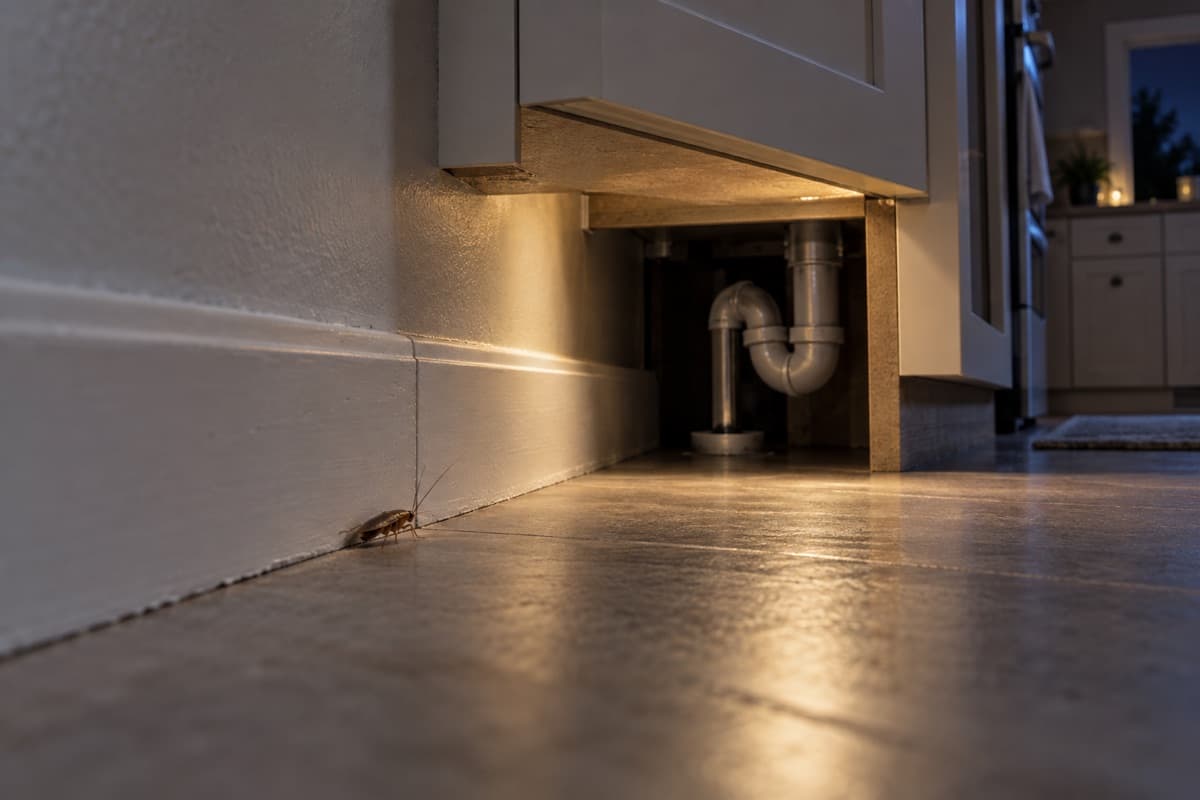
Purdue Extension's multi-family housing guide says the simplest way to monitor is to visually inspect hiding places with a flashlight, naming "behind the refrigerator, under the sink, crevices in cabinets and shelves, closet door corners, and bathroom cabinets and closets." UC IPM adds that a small mirror on a long handle helps where you can't see. Work in a fixed order:
- Under and behind the kitchen sink: back corners, the gap where pipes pass through the wall, the underside of the basin.
- The dishwasher, its side panels, the cabinet toe kick, and the gap between cabinet and wall.
- Behind and under the refrigerator, including the warm motor compartment and the drip pan.
- The stove: underneath, behind, inside the drawer, and along the control panel edges.
- Cabinet and drawer interiors, especially back corners and hinge hardware. Rutgers Extension singles out door moldings, cabinet hinges, cabinet corners, drawers, and the back of the refrigerator as ideal harborages.
- The bathroom: vanity cabinet, behind the toilet, the tub access panel.
- Utility areas: water heater, laundry hookups, anywhere plumbing enters a wall.
Purdue notes roaches gather in corners and travel along edges such as baseboards, so aim the light at junctions, not open floor. Rutgers is candid about the limits: when numbers are low, "it is often difficult to find them by visual inspection." That is what Step 4 is for.
Step 3: Read the Evidence
Evidence tells you whether you've found a travel route or the harborage itself. UC IPM says good monitoring sites can be identified by "accumulations of fecal matter (e.g., dark spots or smears), cast skins, egg cases, and live or dead cockroaches." Here is how to read each one.
- Droppings. German cockroach droppings look like pepper-grain specks. NC State Extension describes them as clusters of tiny dots in concealed areas near food storage and preparation; larger species leave bigger, ridged pellets. A dense cluster in one cabinet corner means far more than specks spread thin, and the black dots roaches leave behind covers telling them from other debris.
- Smear marks. On damp surfaces, droppings and body oils leave dark, varnish-like streaks along travel edges. Follow them toward the crack they disappear into.
- Shed skins. UF/IFAS reports six molts for a German cockroach nymph over roughly 60 days at room temperature. Cast skins mean roaches are developing on site rather than passing through, which points to a harborage nearby, not an entry point.
- Egg cases. A German cockroach ootheca is a brown, purse-shaped capsule about a third of an inch long. Empty cases piled in one spot indicate established breeding.
- Odor. A musty, oily smell inside a closed cabinet usually means a large, long-standing population behind it.
Heavy evidence in one place is your answer. See how to find the roach nest once you've narrowed it to one void or appliance.
Step 4: Set Sticky Monitors in a Grid and Leave Them a Week
Monitors turn guesswork into a map. Purdue recommends glue board traps "in cabinets above and under the sink, beside the stove and refrigerator, and in the utility room and bathroom along a wall or in corners," and says at least six traps should be placed in a home.
- Place them flat against walls and in corners, at floor-wall junctions, inside cabinets, and under appliances. UC IPM advises traps in all corners of a room to show where roaches are coming from.
- Number each trap and record its location. Without labels you have catches and no map.
- Check daily at first. UC IPM notes cockroaches are often caught within the first 24 hours, and says to keep checking until it is clear where the greatest numbers turn up.
- Give it about a week before drawing conclusions, and keep the counts. NC State cautions that pheromone sticky traps only work with vigilant inspection over time.
- Triangulate. The highest-count trap is closest to the harborage. If one cabinet's trap catches twenty and the rest catch one or two, inspect the voids behind that cabinet. If traps on both sides of a wall run high, the harborage is likely inside that wall or the cabinetry attached to it.
- Move traps inward. Once you have a hot zone, pull the low-count traps and re-place them in a tighter ring around it. Those counts also become your baseline for judging whether treatment works later.
Step 5: Do a Night Check
Purdue notes cockroaches "are most active during the night." Two or three hours after the house goes dark, walk into the kitchen without turning on the lights and sweep a flashlight along baseboards, toe kicks, and counter-to-wall joints. Watch where the roaches run rather than counting them — they head straight back to harborage, and the crack they vanish into is what you came for. Roaches out in the open during the day mean harborage is crowded, which is a signal to escalate.
Step 6: Follow the Moisture and the Plumbing
Moisture is the common denominator across species. Penn State notes American cockroaches can survive two or three months without food but only about a month without water. The EPA's IPM guidance for housing managers puts it bluntly: fix leaking pipes and faucets as soon as possible, because a bucket under a slow leak is a watering trough for roaches.
Check for a slow drip under the sink, a sweating supply line, a running toilet, a wet water heater pan, a damp crawl space, condensation on cold pipes, and a refrigerator drip pan that never dries. If large roaches turn up in tubs and floor drains, the pathway is usually the plumbing: unused drains with dried-out traps, gaps where pipe passes through floor or wall, or a broken sewer line. See stopping roaches from coming up the drain for how to close those routes.
If You Live in an Apartment or Condo
In multi-unit buildings the source is often not in your unit. Rutgers Extension explains that German cockroaches occur more often in apartment buildings because of structural features that let them spread between units through shared walls, common utilities, and hallways, and UF/IFAS notes an infestation can migrate via the plumbing inside a common wall.
- Inspect the shared-wall side first: the plumbing chase behind kitchen and bathroom, gaps where pipes and wiring penetrate, outlet and switch boxes on that wall, the gap where cabinets meet wall and floor, bathroom exhaust ducts, and any chase running between floors.
- Report it in writing to management and ask that the units above, below, and on both sides be inspected. Purdue's guide stresses that good control needs cooperation among residents, management, and the pest control company, and puts sealing wall and ceiling cracks, sealing around electrical and plumbing outlets, and fixing leaks on management.
- Don't treat alone. Spraying only your unit pushes roaches around rather than removing the source. The EPA notes spread from infested apartments can be limited to the extent the passageways out of them are blocked.
- Know roughly where you stand legally. Landlord-tenant law and housing codes vary by state and city, but most jurisdictions recognize some form of implied warranty of habitability that can cover pest infestations in rentals. Check your state's landlord-tenant statute or a local tenant or legal aid organization before withholding rent or breaking a lease. What to do if your neighbors have roaches covers the practical steps.
Outdoor Entry Points To Seal
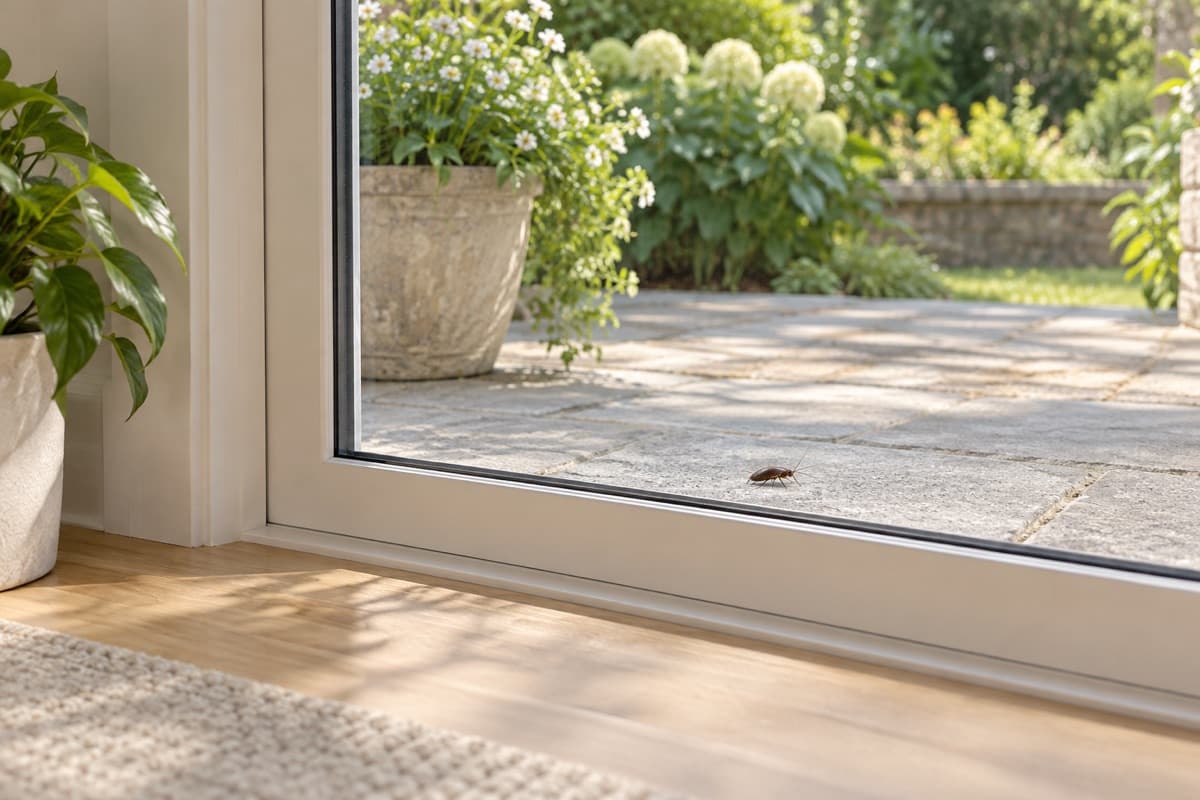
If you've identified an outdoor species, exclusion matters. UC IPM recommends sealing cracks and other openings to the outside and using door sweeps and weather stripping; the EPA advises blocking pipe openings with caulk, knitted copper mesh, steel wool, or foam insulation. Walk the building and check gaps where water, gas, electrical, and cable lines enter the wall; thresholds and side gaps of exterior doors and the garage; foundation cracks, crawl space vents, dryer vents, and damaged screens (UF/IFAS specifically recommends screening attic vents and sealing gaps around door and window frames); and mulch, leaf litter, woodpiles, dense plantings against the foundation, and branches touching the roof, which are harborage and bridges for the large outdoor species.
Sealing does little for a German cockroach population already breeding indoors, so don't let it substitute for finding the harborage.
What Not To Do While You're Still Looking
- Don't fog or bomb the house. Foggers deposit insecticide on open surfaces rather than in the cracks roaches use, scatter the population into wall voids, and carry real fire and explosion risk from flammable propellant near pilot lights and other ignition sources.
- Don't spray repellent insecticides around bait or monitors. It contaminates both and drives roaches away from the spots you're trying to read.
- Don't scrub away evidence before you map it. Note where droppings and smears are first.
- Follow the label on anything you apply. The label is the law: it sets where a product may be used, ventilation and re-entry requirements, and how to keep it away from children and pets.
When To Call a Professional
Call a licensed pest control company if you see roaches in the open during the day, if you have German cockroaches in a multi-unit building, if the evidence points inside a wall or under a slab you can't reach, if numbers keep climbing after a few weeks of monitoring and baiting, or if someone in the home has asthma. Ask them to inspect and monitor before treating, and to say where they believe the harborage is. Once you know the source, getting rid of roaches covers treatment options.
Frequently Asked Questions
How do I know if roaches are coming from my neighbor's apartment?
Look for evidence concentrated on a shared wall — droppings and smears around plumbing penetrations, outlet boxes, and the cabinet-to-wall gap on that side — while the rest of your unit stays comparatively clean. Monitors along that wall filling faster than monitors elsewhere point the same direction. Report it to management and ask for adjacent units to be inspected, since building-wide coordination is what resolves it.
Can roaches really come up through the drain?
Large species such as American and Oriental cockroaches live in sewers and storm drains and can move into buildings through plumbing. Dried-out floor drain traps, unsealed pipe penetrations, and damaged lines are the usual routes. German cockroaches, by contrast, live indoors and use drain areas as a moisture source rather than an entryway.
How long should I leave sticky traps out before I trust the results?
Check daily at first — many catches happen in the first 24 hours — and use about a week of counts before drawing conclusions. Label each trap so you can compare locations. If counts stay at zero across a week with six or more well-placed traps, you likely have occasional intruders rather than an established indoor population.
What if I find droppings but never see a roach?
That's common, and it's useful information. Droppings, smears, cast skins, and empty egg cases mean roaches live nearby even when numbers are too low for visual inspection to find them. Place monitors around the evidence and let them work.
Could roaches be coming from something I brought home?
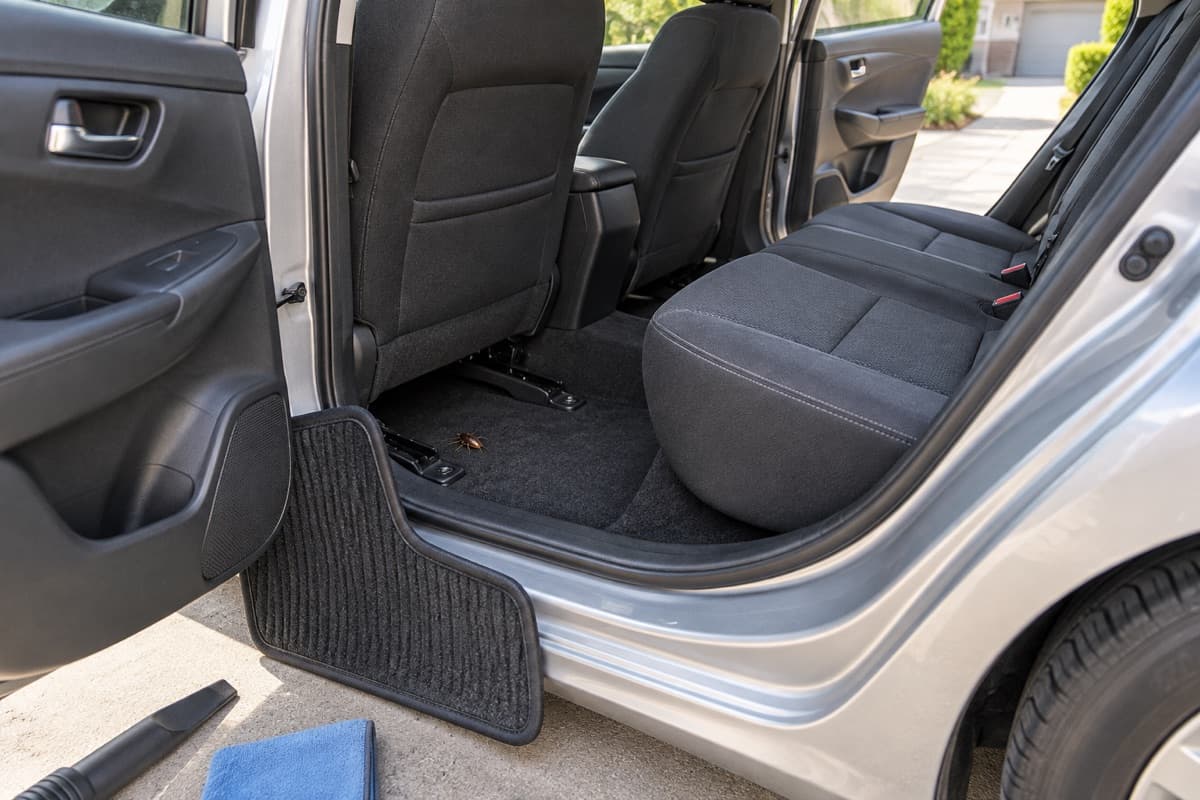
For German cockroaches, that's the most likely origin. Inspect recently acquired secondhand appliances, electronics, furniture, and moving boxes, and check grocery bags and cardboard before they come inside. Breaking down and discarding cardboard promptly removes both a harborage and a delivery vehicle.
Sources
- UF/IFAS Extension: German Cockroach, *Blattella germanica* — inability to survive away from humans, egg case size and 30 to 40 eggs, six nymphal molts over about 60 days.
- UF/IFAS Extension: Cockroaches and Their Management — introduction in grocery bags, cardboard, and school bags; migration from sewers via plumbing and from trees and shrubs; spread between apartments through a common wall; sealing and screening.
- UC IPM: Cockroaches Pest Notes — species habitats, flashlight and long-handled mirror inspection, trap placement and daily checking, evidence of harborage, exclusion and moisture control.
- Purdue Extension: A Practical Guide to Cockroach Control in Multi-Family Housing Units — flashlight inspection sites, at least six glue board traps and where to place them, night activity and edge travel, movement between apartments, and management responsibilities.
- Rutgers NJAES: German Cockroach (FS1322) — hinge, molding, drawer, and appliance harborages; limits of visual inspection at low numbers; spread between units via shared walls, utilities, and hallways.
- NC State Extension: German Cockroach Surveillance and Management — fecal spots as clusters of tiny dots, glue board placement along walls and corners.
- NC State Extension: The German Cockroach — pheromone sticky traps requiring vigilant inspection over time, and water sources such as leaky pipes.
- Penn State Extension: American Cockroaches — basements, crawl spaces, floor drains, pipe chases and sewers; migration between buildings in warm months; survival without water; removing food, moisture, and harborage first.
- EPA: Pest Control Resources for Housing Managers — glue trap monitoring, sealing around pipe openings, fixing leaks, and blocking passageways from infested apartments.