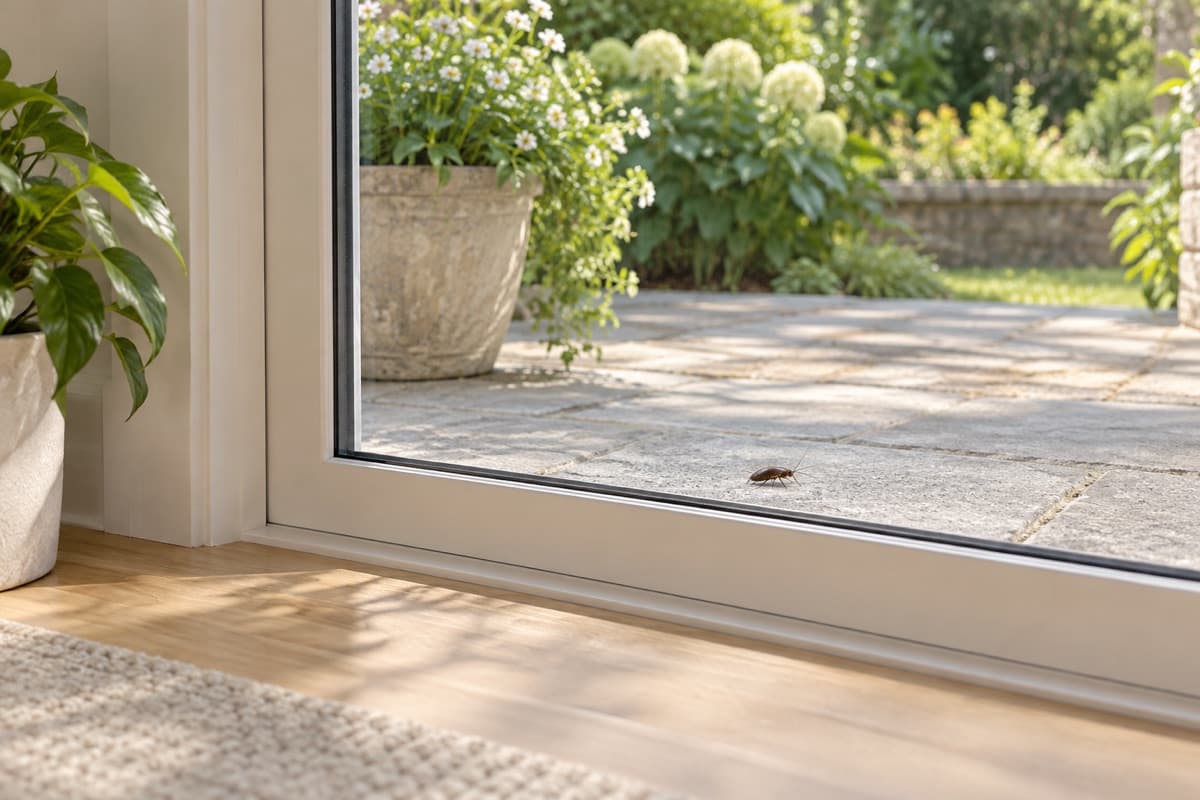
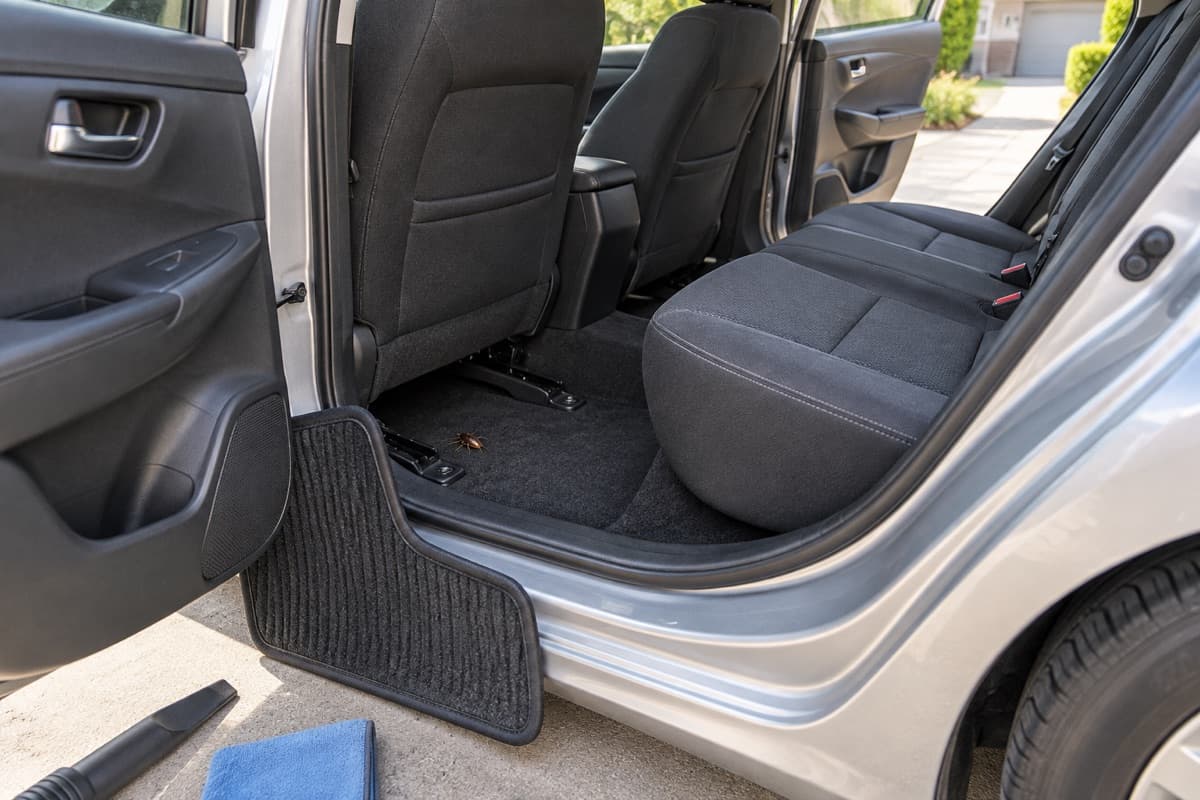
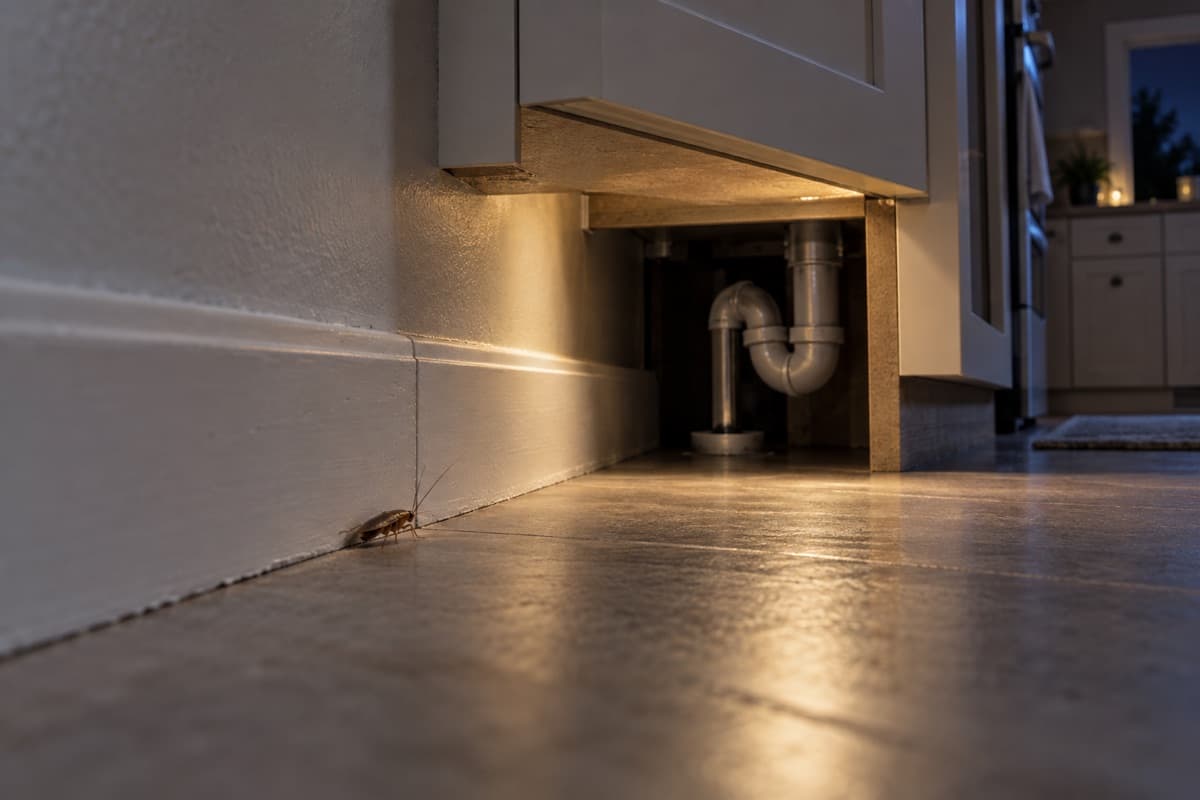
A direct physical hit kills a roach faster and more reliably than anything in a spray can. A shoe, a rolled magazine, or a vacuum hose ends it in under a second, and a heavy squirt of soapy water kills within seconds by wetting the insect's cuticle and flooding its breathing pores. Aerosol "ant and roach" sprays are slower and less certain than the can implies: they are built around pyrethroids, and the directions on Raid Ant & Roach 26 tell you to spray "until wet," not to mist once. In field-collected German cockroaches, researchers at the University of Kentucky found those same consumer sprays killed fewer than 20 percent of roaches after a 30-minute exposure to treated surfaces. None of this matters much, because killing the roach you can see does almost nothing to the population you cannot.
The earlier version of this article said an aerosol produces "near-instant death" and recommended bay leaves, cucumber slices, and essential oils as an "invisible barrier" roaches will not cross. Neither claim holds up. Aerosols produce knockdown quickly and death slowly, and in resistant populations often not at all; and there is no evidence that kitchen aromatics keep cockroaches out of a home. This version separates what genuinely kills one insect from what changes an infestation.
What Actually Kills a Roach on the Spot
Ranked by how fast and how certain they are:
- Crushing. A shoe, a book, a folded newspaper. Instant, free, and unaffected by insecticide resistance. The cost is a mess on a surface you may eat off, which is handled below.
- A vacuum. Suction pulls the roach off the floor immediately and it does not come back out. UC IPM notes that vacuuming also removes "cockroaches, shed skins, and egg cases," and recommends a HEPA-filtered vacuum to limit allergen release. Empty the canister or bag outside, into a sealed bag.
- Soapy water. A spray bottle with a squirt of dish detergent kills a roach in seconds. Surfactants strip the waxy cuticle and break water's surface tension so liquid enters the spiracles, the pores along the insect's sides that it breathes through. University of Georgia Extension describes the mechanism for insecticidal soap generally: it "breaks down cell membranes and disrupts the insect's cuticle," and reduced surface tension lets water penetrate the spiracles. That mode of action is documented for soft-bodied garden pests, not in a controlled trial on cockroaches. What is clear is that a soaked roach stops moving fast and no pesticide residue is left on the counter.
- Boiling water, if the roach is in a sink or drain and nothing around it will be damaged. Effective, awkward, and only worth it in that one setting.
- An aerosol. Fast knockdown, slower kill, and the only method on this list that puts a pesticide into the air of a room where you cook.
Freezing, alcohol, vinegar, and hairspray get recommended constantly and are all slower and messier than a shoe. If speed is the goal, use the shoe.
Knockdown Is Not the Same as Death
This is the single most useful thing to understand about spray cans.
Pyrethroids work on insect nerve cells by holding open voltage-gated sodium channels. The insect loses coordination, flips onto its back, and thrashes. Entomologists call that knockdown, and they measure it separately from mortality for a reason: an insect can be knocked down and then recover. In a study of deltamethrin exposure in Periplaneta americana and Blattella germanica indexed in PubMed Central, knockdown times at the highest tested concentration were around 7 to 9 minutes, while mortality was read at 24, 48, and 72 hours — and complete mortality only appeared at concentrations above 0.25 percent. Low concentrations produced high knockdown and much lower death.
So the roach on its back on your kitchen floor is not necessarily dead. This is also why roaches so often turn up belly-up near baseboards after a treatment: the posture is a symptom, not a confirmation. If you spray one and it stops moving, finish the job physically rather than assuming.
The marketing on the can ("bugs die within seconds") is an EPA-approved claim, but it is approved against susceptible laboratory insects under direct, drenching application. The label's own use directions are more candid: "Spray until wet in cracks around baseboards and other hiding places. When bugs are driven out, spray directly."
Why the Can Often Fails Anyway
German cockroaches — the small, tan, twin-striped species that breeds indoors in kitchens and bathrooms — are now broadly resistant to the exact chemistry sold in consumer aerosols.
NC State researchers collected German cockroaches from apartments and compared them with susceptible laboratory strains. Their 2019 paper in the Journal of Economic Entomology, available through PubMed Central, reported cypermethrin resistance averaging 202-fold, with individual populations from 59-fold to 347-fold. The kdr mutation L993F was present in 96 percent of those cockroaches, and 77 percent carried two copies. In fogger tests, more than 62 percent of field cockroaches survived, against fewer than 10 percent of susceptible ones. Cypermethrin is one of the two active ingredients in the Raid label linked above, alongside imiprothrin.
The 2024 University of Kentucky study by Gordon and colleagues tested four consumer products, two aerosols and two liquid residual sprays, and concluded they offer "little to no value" against German cockroach infestations. Direct drenching still killed most insects. Thirty minutes on a treated surface killed under 20 percent, and even continuous exposure took 24 hours to 5 days. That gap between a direct hit and a residue is the whole story: the roaches you never see never get the direct hit.
Foggers are the worst version of this. If you are weighing one, read why the honest fogger count is usually zero before you buy.
Cleaning Up After a Squash
Crushing is the most reliable kill and the messiest aftermath. Treat the spot as a contaminated food surface, not a smudge.
- Pick up the body with a paper towel, not a rag you will reuse. Bag it and put it in an outside bin.
- Wash the surface with hot soapy water first. Physical removal of the residue matters more than the disinfectant that follows.
- Sanitize afterward if it was a food-contact surface — a counter, a cutting board, a sink rim. A 2026 review in Insects on cockroaches as vectors of pathogens and antimicrobial resistance describes their role as "predominantly mechanical, via contact transfer and deposition of regurgitate and faeces on food, equipment, and surfaces," and notes that cockroaches sampled worldwide commonly carry Enterobacteriaceae, Staphylococcus aureus, and multidrug-resistant strains. Carriage is well documented; a specific traced infection from a squashed roach on a home counter is not. Wash the surface anyway.
- Wash your hands.
- Do not scrub dried roach debris dry with a brush. Cockroach allergens live in feces, shed skins, and body fragments, and an allergy practice parameter published in PMC notes that most allergen mass sits on particles larger than 10 micrometers but that "a substantial fraction of particulates can penetrate the thoracic regions and deeper." Dry sweeping puts that into the air. Wipe wet, or vacuum with a HEPA filter. The same logic applies to the droppings you find later, which we cover in how to clean roach droppings.
One myth worth retiring: squashing a roach does not scatter viable eggs across your floor. German cockroach females carry the egg case attached to the abdomen until roughly a day or two before hatching, and Rutgers Cooperative Extension puts the load at about 40 eggs per case with 5 to 8 cases per female. Crushing a gravid female destroys the case along with her in almost every case. The real risk of a near-hatching ootheca is that it survives uncrushed under an appliance, which is an argument for vacuuming rather than for leaving roaches alone.
Safer Ways To Kill Roaches in a Kitchen
Aerosols and food preparation areas are a bad fit, and the label says so before any safety writer does. The Raid Ant & Roach 26 directions require you to "Cover or remove exposed food, dishes, utensils and food handling equipment," state "Do not spray up into air. Apply to surfaces only," prohibit use "as a space spray," require a well-ventilated area, and warn that the can is flammable and should be kept away from "heat, sparks, open flame or pilot lights." A gas range has a pilot light or an igniter. Using a pesticide in a manner inconsistent with its labeling is a violation of federal law, not a suggestion.
Practical kitchen options, roughly in order of what to reach for:
- A vacuum with a crevice tool. Kills on contact by removal, no residue, and it also picks up droppings and shed skins.
- Soapy water in a spray bottle. Keep one under the sink. Rinse the surface afterward.
- A shoe, then the cleanup above. Unglamorous and effective.
- Sticky monitors along wall-floor junctions and under the sink. They control nothing, but they show where the population lives and whether it is shrinking.
- Gel bait placed in cracks, not on open surfaces. This is the only method on the list that reaches the roaches you cannot see. Our walkthrough of how to use Advion roach gel correctly covers pea-sized placements and where the label allows them.
- Nothing in the air. No fogger, no space spray, no "misting" a room. Airborne droplets settle on surfaces you eat from and never reach the crack the roaches are in.
If a pesticide has to go into a kitchen, NPIC's guidance on cockroaches is to build an integrated plan and "choose least toxic options first," reading and following label directions carefully.
What Killing One Roach Tells You
The honest answer depends on the species and the circumstances, and nobody selling you a can will make this distinction.
A large roach, two inches long, seen once near a door or drain is most likely an American cockroach that wandered in. Mississippi State Extension notes these "are often found living around the outsides of buildings, as well as in sewer drains," though they will breed indoors when conditions suit them. One of these is an entry-point problem: door sweeps, thresholds, and drain covers.
A small tan roach with two dark stripes, in a kitchen or bathroom, is a German cockroach, and that species does not live outdoors in most of the United States. It got there from somewhere inside — a neighboring unit, a grocery bag, a used appliance — and it is very unlikely to be alone.
Any roach seen in daylight is a worse sign than one seen at 2 a.m. Rutgers is direct about it: daytime sightings indicate a significant infestation, because these insects normally avoid light and only forage in the open when harborage is crowded.
UC IPM sets a sensible threshold for when chemicals are warranted at all: indoor pesticide treatment is justified "only if the cockroach population is established, not for an incidental intruder or two." If you are unsure which situation you are in, how to tell whether you actually have roaches walks through droppings, shed skins, smear marks, and monitor counts.
Why One Kill Changes Nothing
A single German cockroach female produces 200 to 250 offspring over her life, and the egg-to-adult cycle runs roughly 100 days. The roaches foraging at night are a small fraction of the ones wedged into motor housings, cabinet corners, and the void behind a dishwasher. That arithmetic is why the killing method barely matters: whether you crush, soak, or spray, you removed one insect from a reproducing population, in the open, where roaches spend the least of their time.
What does reach harborage is bait. A roach that eats a slow-acting gel returns to the harborage before dying, and the toxicant moves through the population by way of feces and cannibalized bodies. That delay — the thing that makes bait feel like it is not working — is exactly what makes it work. Rutgers recommends gel bait over stations specifically because gel "can be applied closer to the cockroach harborages," on a schedule of follow-up treatments every 2 to 4 weeks.
The full sequence, in order: find where they live, fix the water and food, bait the harborage, monitor, and re-bait. Our step-by-step plan for getting rid of roaches lays it out.
DIY or Call a Pro?
Handle it yourself when sightings are occasional and at night, monitor counts are low, and you can reach the kitchen and bathroom voids to place bait. Call a professional when any of these apply:
- You see roaches during the day, or you see nymphs.
- You live in an apartment building, where a neighboring unit is often the real source and one-unit treatment just moves the population around. Our guide on what to do when neighbors have roaches covers the documentation side.
- Someone in the home has asthma. Cockroach allergen exposure is a documented asthma trigger, and the allergen persists after the insects are gone.
- You have baited consistently for six to eight weeks and counts have not dropped.
- There is a plumbing leak or structural moisture feeding the population.
Frequently Asked Questions
Does hairspray really kill roaches instantly?
It immobilizes them by gumming up the wings and legs and can eventually suffocate one, but it is slower than a shoe, leaves a sticky film, and is flammable. Soapy water or a direct hit is better in every respect.
Is it bad to squash a roach?
Not for the reason people usually give. The egg-scattering worry is largely unfounded, since German cockroach females carry the case until shortly before hatching and crushing destroys it. The real issues are hygiene and allergens: clean the surface with hot soapy water, sanitize it if it is a food-contact surface, and avoid dry-sweeping the residue.
Why do roaches flip onto their backs when sprayed?
That is knockdown. Pyrethroids disrupt the insect's sodium channels, coordination fails, and a top-heavy roach cannot right itself. It is a nervous-system effect, not proof of death, and at low doses insects can recover. Researchers measure knockdown time and 24-hour mortality as two different numbers for exactly this reason.
Will Raid kill a roach instantly?
Directly and heavily sprayed, it will knock one down within seconds and usually kill it. Sprayed lightly, or relied on as a residue, it often will not. The Kentucky study found under 20 percent mortality from a 30-minute exposure to treated surfaces, and resistant populations survive doses that kill laboratory strains outright.
Does killing one roach attract more?
Not in any established way. Cockroaches aggregate using fecal aggregation pheromones, not death signals, and crushed cockroach bodies are eaten by other cockroaches because they are food. The practical effect is that leaving a carcass gives the colony a meal, so pick it up.
What kills roaches overnight?
Nothing you apply to open surfaces. Gel bait placed in the right cracks begins killing foragers within a day or two, but a visible reduction in an established infestation realistically takes two to four weeks, and full control often longer. Anything promising overnight elimination of a colony is selling knockdown and calling it control.
Sources
- EPA-approved label, Raid Ant & Roach 26 (EPA Reg. No. 4822-596) — active ingredients (0.100% cypermethrin, 0.060% imiprothrin), the "spray until wet" directions, covering or removing food and utensils, the space-spray prohibition, and the flammability warning.
- Gordon et al., *Journal of Economic Entomology* 117(5), 2024 — four consumer sprays tested against susceptible and field German cockroaches, and the "little to no value" conclusion.
- University of Kentucky news release on that study — the under-20-percent mortality at 30 minutes of surface exposure.
- DeVries et al., *Journal of Economic Entomology* (2019), via PubMed Central — 202-fold average cypermethrin resistance, L993F kdr prevalence, and fogger survival in field populations.
- Deltamethrin contact exposure study in *Periplaneta americana* and *Blattella germanica*, via PubMed Central — knockdown time versus 24- to 72-hour mortality.
- UC IPM Pest Notes: Cockroaches — aerosols and foggers miss harborage and disperse roaches; vacuuming removes skins and egg cases; treatment only for established populations.
- Rutgers NJAES Fact Sheet FS1322: German Cockroach — eggs per case, cases per female, the 100-day life cycle, daytime sightings, and gel bait near harborage.
- University of Georgia Extension: Insecticidal Soap — how surfactants disrupt the cuticle and penetrate spiracles.
- Derguini and Basher, *Insects* (2026), via PubMed Central — mechanical transmission of pathogens, and the organisms most often isolated.
- Environmental assessment and exposure reduction of cockroaches: a practice parameter, via PubMed Central — allergen sources, particle-size behavior, and removing allergen reservoirs after the insects are gone.
- NPIC: Why do I have cockroaches in my home? — integrated pest management framing and least-toxic-first guidance.
- Mississippi State University Extension: American Cockroach — American cockroaches living outdoors and in sewer drains.