Never more than one per room, and for German cockroaches the honest answer is usually zero. A typical 1.5-ounce fogger can treats up to 5,000 cubic feet of unobstructed space, so a single can already covers most rooms in a house, and fogger labels flatly prohibit using more than one per room. The bigger issue is that foggers don't work on roaches. In a North Carolina State University field study, bug bombs produced no reduction at all in German cockroach populations in 20 infested homes, while gel bait eliminated populations in comparison homes within two to four weeks. The aerosol settles on open surfaces, and roaches live inside cracks, voids, and cabinets where it never reaches.
The earlier version of this article said you need one fogger per 2,000 cubic feet or one per room, and that three or four foggers are "typically sufficient" for an average home. Those numbers don't match current product labels, and the framing encourages exactly the behavior that causes fogger injuries. It also suggested that good airflow helps distribute the fog. Fogger labels say the opposite: shut off fans and air conditioners during treatment. This version corrects both points.
How Fogger Coverage Is Actually Measured
Fogger labels rate coverage in cubic feet of unobstructed space, not in rooms or square feet. The EPA-registered label for Raid Fogger K (the concentrated Deep Reach product) states that one 1.5-ounce can treats up to 5,000 cubic feet, roughly 625 square feet, "a room up to 25' x 25' with an 8' ceiling." The 2.1-ounce can treats up to 7,000 cubic feet, about 875 square feet. The EPA's consumer guidance uses similar math, noting that a typical 6-ounce fogger "is enough to treat a very large area, up to 25 by 25 feet of unobstructed space."
To figure your own number, multiply length by width by ceiling height. A 12-by-14-foot bedroom with an 8-foot ceiling is 1,344 cubic feet. The Washington State Department of Health makes the point plainly: most bedrooms are under 1,000 cubic feet, while foggers are typically sized for 5,000 to 7,000 cubic feet. One can is already far more product than a normal room needs.
Two more label details matter. Foggers are not meant for very small rooms at all: the Raid label says do not use one in a room 5 by 5 feet or smaller, and instead let fog drift in from an adjacent room. And "unobstructed" is doing real work in that phrase. Furniture, cabinets, and closed doors all block the aerosol, which is part of why coverage on paper doesn't translate into dead roaches.
Why "One Per Room" Is a Ceiling, Not a Recipe
People often read "one fogger per room" as an instruction to buy one can for every room in the house. It isn't. It's a maximum. The Raid label wording is explicit: "Do not use more than one fogger per room. Use of a fogger in an enclosed space (or use of more than one fogger per room) may cause the product to explode, resulting injury to people and damage to property."
So the real answer to "how many do I need" is: at most one per room you're treating, and only for rooms large enough and open enough to qualify. A three-pack is not a prescription to fog three rooms. If a room is under the coverage rating, you still use one can, not a partial one, and you do not add a second can to "make sure."
Why More Cans Is the Most Dangerous Mistake
Fogger propellants are flammable. The Raid label carries a "Physical or Chemical Hazards" statement reading "Extremely Flammable" and warning that the product "may cause a fire or explosion if not used properly." The EPA advises placing a fogger six feet or farther from any ignition source, turning off pilot lights, and calling your gas utility if you need help doing that. Refrigerators and air conditioners that cycle on and off count as ignition sources too.
Overuse is how that risk turns into an accident. The National Pesticide Information Center puts it directly: "More is not better. Using extra foggers will not control pests better than the number given on the product's label and could increase your risks."
The health side is documented. A CDC analysis of fogger-related illness across 10 states identified 3,222 acute illnesses and injuries from total release foggers between 2007 and 2015, with 91.7% occurring in private homes. Most cases were low severity, but 20.7% were moderate, 0.7% were high severity, and four were fatal. The most common contributing factors were failure to leave during application (16.6%), re-entering too early (14.8%), inadequate ventilation (9.2%), and excessive fogger use (5.5%). Moderate or severe illness was more likely among people with preexisting asthma and among those exposed to excessive amounts of product.
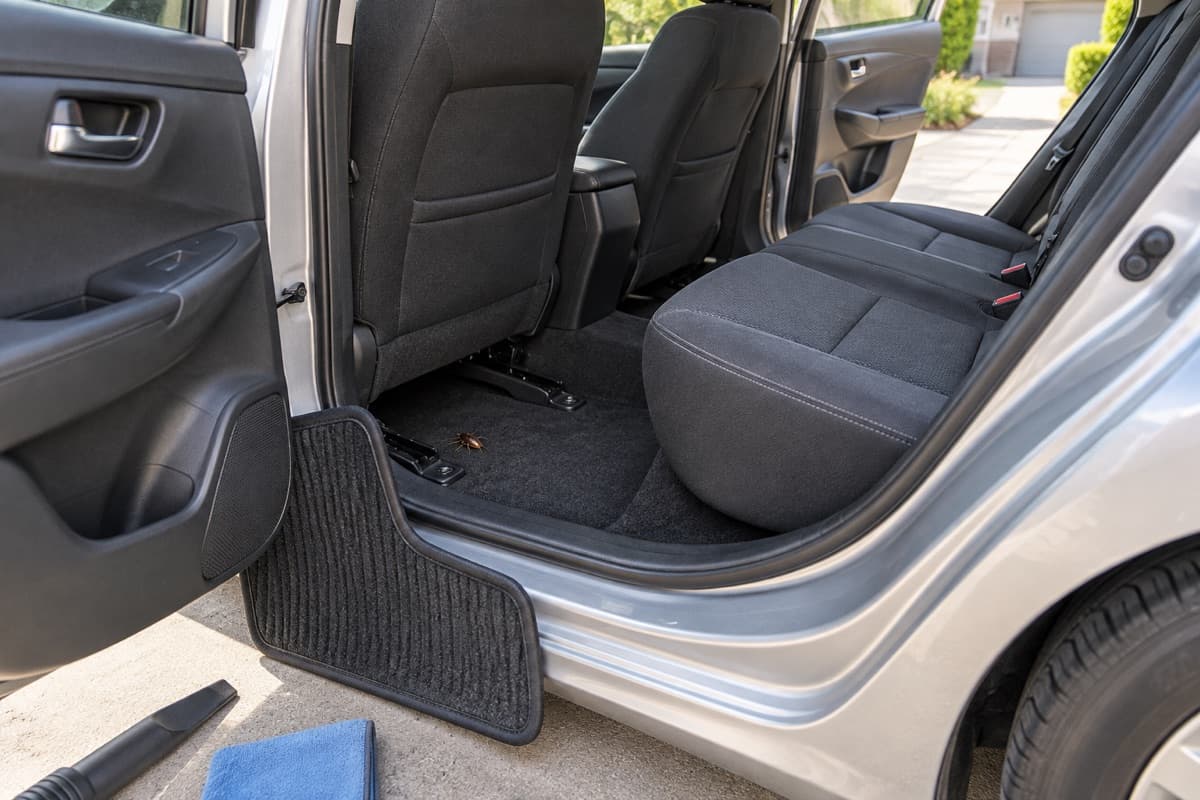
Never use a fogger in a closet, cabinet, crawlspace, attic hatch, car, or camper interior. Those enclosed volumes are where vapor builds to explosive concentrations. If you're dealing with roaches in a vehicle, treat it as a bait-and-clean job, not a fogging job. Our guide to getting roaches out of your car covers that safely.
What the Research Shows About Foggers and Roaches
The efficacy problem is the reason the coverage question mostly doesn't matter.
Researchers at NC State recruited cockroach-infested apartments across five complexes, treated 20 homes with four different commercially available fogger products, and treated 10 more homes with gel bait. They monitored roach populations two weeks and one month later. Entomologist Zachary DeVries summarized the result: "The bug-bomb products did absolutely nothing to control cockroach populations in these homes." The gel baits eliminated populations in the comparison homes within two to four weeks.
The exposure side was worse. Insecticide residue on horizontal surfaces in the fogged homes rose to roughly 600 times baseline levels within hours of discharge, and a month later 34% of sampled surfaces were still above baseline. DeVries described the trade-off as "all costs and no benefits," and noted that bug bombs are "putting pesticides where cockroaches aren't."
A follow-up study explains why the roaches survived. In *Journal of Economic Entomology*, the same lab tested cockroaches collected from the homes where the foggers failed. Resistance to cypermethrin, a common fogger active ingredient, averaged 202 times that of a susceptible laboratory strain, and more than 96% of the field-collected roaches carried at least one copy of the L993F knockdown-resistance mutation. In the original field trial, more than 62% of sentinel roaches placed in open dishes and directly exposed to the aerosol survived, compared with fewer than 10% of susceptible lab roaches. The authors concluded that their findings "provide compelling support for suspending their use for German cockroach control."
Extension and state guidance line up with that. UC IPM says foggers "are rarely effective for control of crawling insects like cockroaches, fleas, and bed bugs" because those insects hide, and NPIC notes the mist "does not reach into unexposed voids, cracks and crevices." Neither NC State Extension's German cockroach guide nor Purdue's cockroach control publication lists foggers as a control option at all.
If You Still Decide To Use One
Foggers remain legal consumer products, and they can knock down exposed flying insects. If you use one, the label is the law, and following it is not optional.
- Count cubic feet per room, and use no more than one can per room, sized at or above that room's volume.
- Turn off all pilot lights and ignition sources, keep the can at least six feet from any of them, and call your gas utility if you need help with pilot lights.
- Close exterior doors and windows, and shut off fans and air conditioners. Fogger labels specifically direct this, contrary to the common belief that airflow helps.
- Remove or cover exposed food, dishes, utensils, and food-prep surfaces. Remove pets and birds; cover and turn off aquariums.
- Set the can on a covered stand in the middle of the room, activate it, and leave immediately.
- Stay out for the full re-entry period. The Raid label requires four hours, and use a door hangtag so nobody walks in.
- Ventilate before reoccupying. Open all doors and windows and air the space for at least 30 minutes, longer if you still smell anything.
- Wash food-contact surfaces, dishes, and utensils before using them. NPIC recommends gloves, long sleeves, and long pants while cleaning treated areas. Our guide to cleaning after roach fumigation walks through what to wipe down and in what order.
Keep the product, and any residue, away from children and pets throughout.
What To Do Instead
For German cockroaches, the same money spent on a six-pack of foggers buys a far better outcome as bait and monitors.
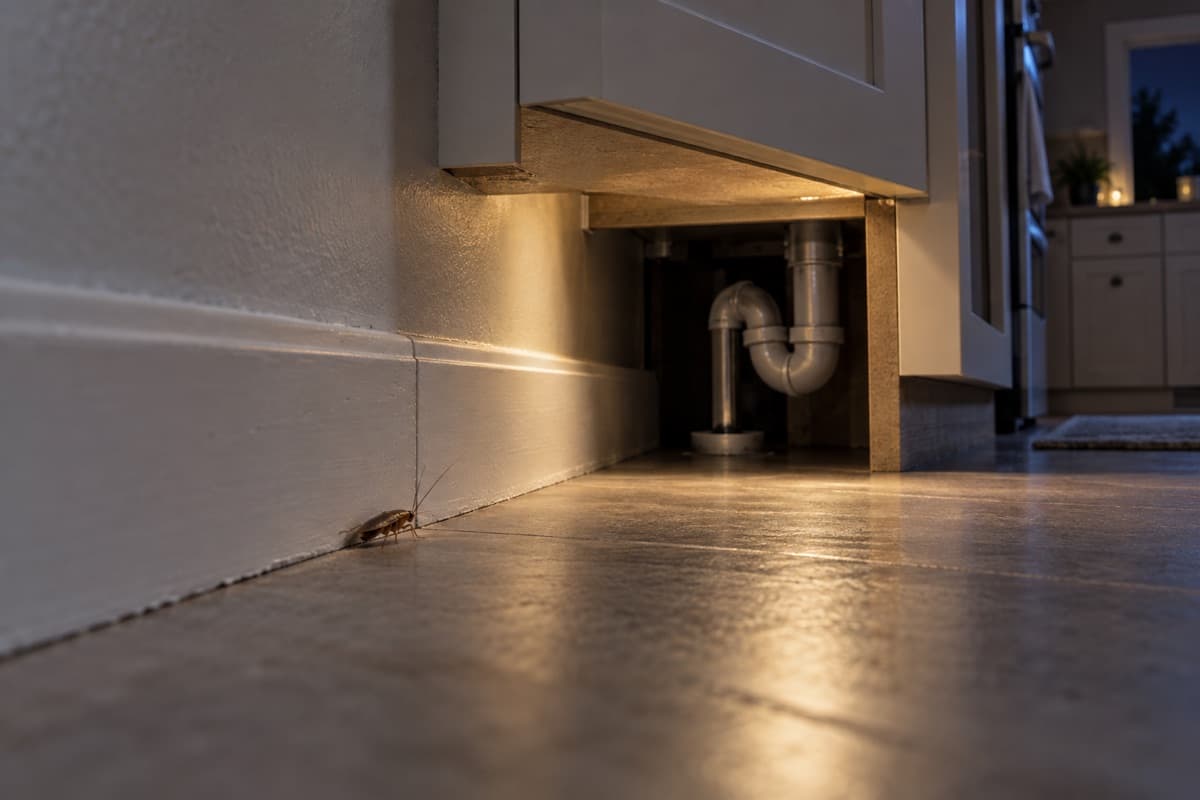
- Monitor first. Put sticky traps in corners, under the sink, behind the refrigerator, and inside lower cabinets so you can see where activity is concentrated. Purdue recommends at least six traps in a home. Our guide on how many roach traps you need covers placement and counts.
- Use gel bait in small placements. Purdue advises "numerous spots at cockroach hiding places or active areas," each about pea-size. Many small placements beat a few large ones. If you're new to it, see how to use Advion roach gel for placement specifics.
- Don't spray where you bait. Residual sprays and cleaners contaminate bait and make roaches avoid it. This is one reason combining a fogger with bait can actively backfire.
- Clean up competing food. Degrease the stove and the sides of the range and refrigerator, wash or soak dishes, cover garbage, and store food in sealed containers. Bait works best when it's the most appealing food available.
- Vacuum droppings, egg cases, and debris, ideally with a HEPA-filtered vacuum, then dispose of the bag outside.
- Seal and repair. NC State and Purdue both emphasize closing cracks and holes where cabinets meet walls and floors and sealing around plumbing and electrical penetrations.
- Give it two to four weeks and re-check your traps before changing anything. For the full sequence, see our guide to getting rid of roaches.
When To Call a Professional
Consider a licensed pest control company if roaches are visible during the day, if numbers haven't dropped after three to four weeks of consistent baiting and cleaning, if roaches walk past bait without feeding, or if someone in the home has asthma or another respiratory condition. Pyrethroid resistance is widespread in German cockroach populations, so a professional's ability to rotate active ingredients and use insect growth regulators matters.
Apartments and multi-unit buildings are a special case. Roaches move between units through shared walls, plumbing chases, and outlets, so unit-by-unit DIY rarely holds. Building-wide treatment through management is usually the only durable fix. If the source appears to be next door, what to do if your neighbors have roaches covers how to approach it, including how to document the problem for your building manager.
Frequently Asked Questions
How many foggers do I need for a 1,000 square foot apartment?
Coverage is per room, not per home, so square footage isn't the right unit. A single 1.5-ounce can is rated for up to 5,000 cubic feet, which already exceeds most individual rooms. You may use at most one can in each room you're treating, but for a roach problem in an apartment, gel bait plus monitoring will outperform any number of foggers.
Can I use two foggers in one room for a bad infestation?
No. Fogger labels prohibit it, and the EPA and NPIC both warn that using extra product raises the risk of fire, explosion, and illness without improving control. A heavier infestation is a reason to switch methods, not to add cans.
Do foggers kill roach eggs?
No. Cockroach egg cases are protected and are usually tucked into cracks and voids the aerosol never reaches. That's also true of the adults, which is why populations in the NC State study didn't drop even a month later.
Why did I see more roaches after using a fogger?
Two things are usually happening. Pyrethroids are irritants, so roaches flushed out of harborages become visible for a while. And because the treatment doesn't actually reduce the population, that visible activity isn't a sign of progress. Set out sticky traps and count catches over a couple of weeks to get a real read.
Do I need to wash everything after using a fogger?
Wash anything food-related: dishes, utensils, countertops, cutting boards, and any prep surface that wasn't covered. Fogger residue lands on horizontal surfaces and can persist. In the NC State study, 34% of sampled surfaces were still above baseline residue levels a month later.
Is a fogger ever the right tool?
It can knock down exposed flying insects in an open space. It is not the right tool for anything that hides in cracks, which includes cockroaches, bed bugs, and fleas in their protected stages. For those, targeted bait and crack-and-crevice treatment are both safer and more effective.
Sources
- EPA: Safety Precautions for Total Release Foggers — coverage guidance, ignition sources, six-foot rule, evacuation and ventilation.
- EPA-registered label, Raid Fogger K (EPA Reg. No. 4822-452) — cubic-foot coverage per can size, one-fogger-per-room prohibition, flammability, four-hour re-entry, 30-minute airing, food-surface handling.
- National Pesticide Information Center: Total Release Foggers — why fog doesn't reach voids and cracks, "more is not better," post-treatment cleaning.
- CDC MMWR: Acute Illnesses and Injuries Related to Total Release Foggers, 10 States, 2007–2015 — 3,222 cases, severity distribution, and contributing factors including excessive use.
- NC State News: 'Bug Bombs' Are Ineffective Killing Roaches Indoors and ScienceDaily summary — DeVries et al. field trial in 30 homes, fogger versus gel bait results, and surface residue findings.
- DeVries et al., *Journal of Economic Entomology* (2019) — cypermethrin resistance ratios, kdr mutation prevalence, sentinel cockroach survival, and the recommendation to suspend fogger use for German cockroaches.
- UC IPM: Bug Bombs — Dangerous and Not Always Effective — ineffectiveness against hiding insects and pyrethroid resistance.
- Washington State Department of Health: Foggers — typical room volume versus fogger coverage rating, illness risks, and IPM alternatives.
- NC State Extension: The German Cockroach — monitoring with sticky traps, bait effectiveness, sanitation, and avoiding routine spraying.
- Purdue Extension: A Practical Guide to Cockroach Control in Multi-Family Housing Units — trap counts, pea-size bait placements, HEPA vacuuming, and sealing cracks and penetrations.