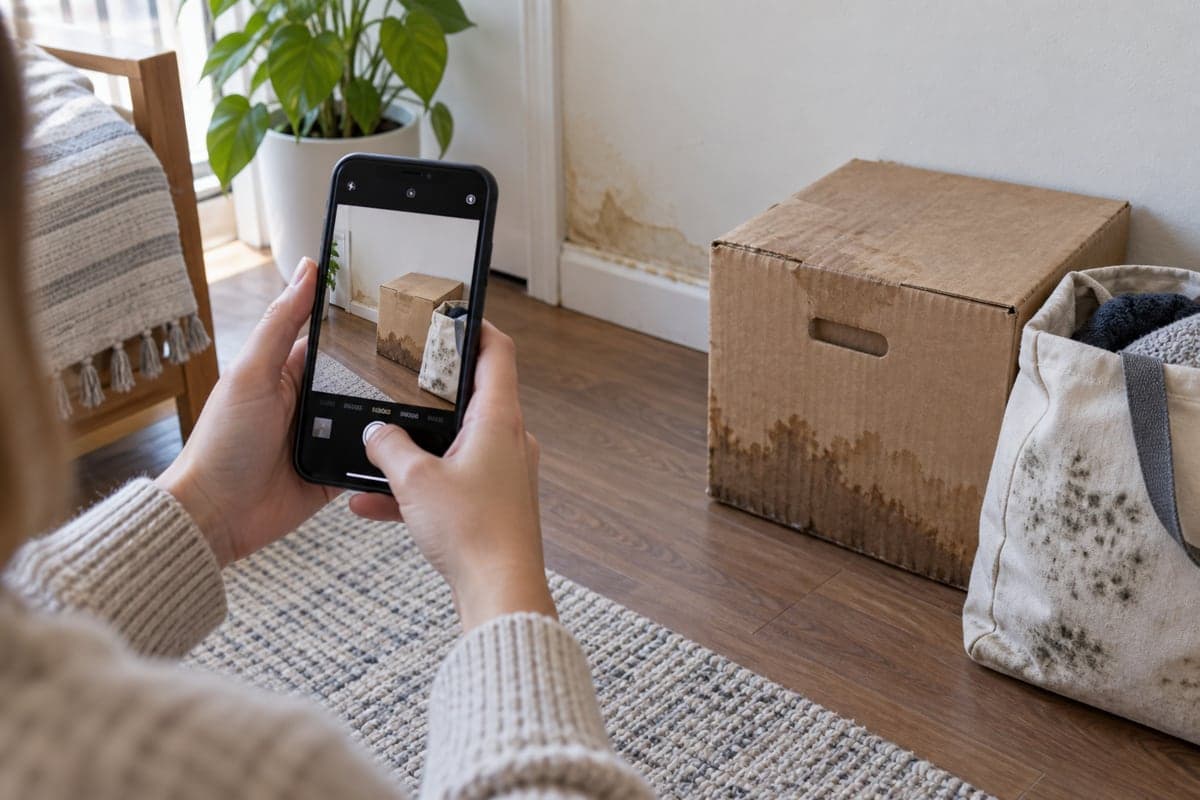
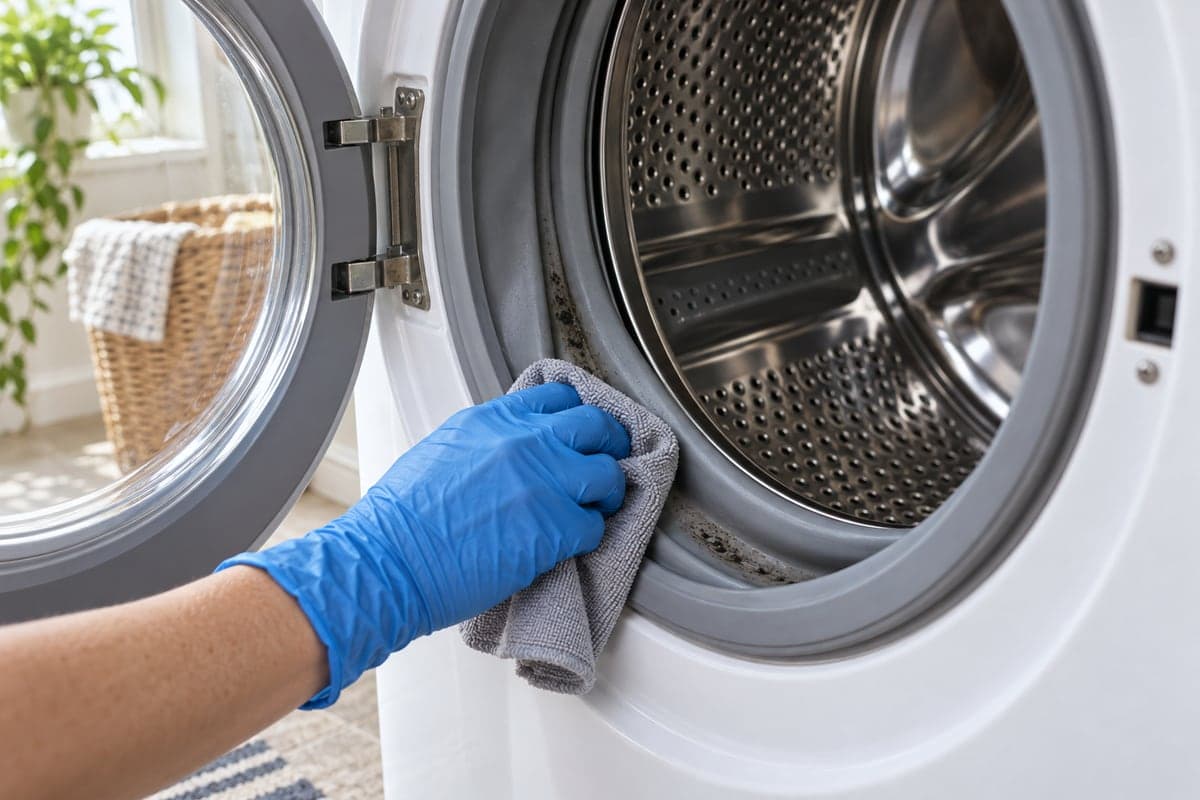
There is no established answer, because no one has had to prove one. Borax sold as a laundry booster is not an EPA-registered mold product, so it carries no tested contact time the way a registered disinfectant does. The borate products that are EPA-registered are wood preservatives labeled for decay fungi and insects, not for mold on household surfaces. More importantly, kill time is the wrong measure: EPA states that "dead mold may still cause allergic reactions in some people, so it is not enough to simply kill the mold, it must also be removed." If you use a borax solution, treat it as a scrubbing aid that works during the minutes you spend scrubbing and rinsing, not as a soak that sterilizes a surface in six hours or 48.
The earlier version of this article said borax takes "a few hours up to a few days" to eliminate mold, and advised letting the solution sit overnight so it could "work its way into the mold and kill the spores." No label, efficacy study, or agency guidance supports those timings, and the deeper premise is wrong: a surface that looks clean because the growth was killed in place is still shedding the same allergenic material. This version replaces that with what the labels and published testing actually say.
Why "Kill Time" Is the Wrong Question
Contact time is a regulated concept. When a product claims to destroy fungi on surfaces, EPA treats it as a public health antimicrobial, and its Pesticide Registration Manual states that "registrants of public health antimicrobial pesticide products must submit efficacy data to support their application for registration." The dwell time printed on a bathroom mold-and-mildew spray exists because a laboratory demonstrated a specific kill at that time, against named organisms, on a named surface type.
Nothing like that exists for household borax. A number pulled from a cleaning blog is not a contact time; it is someone's guess about how long they left the bottle sitting.
Even a proven kill would not finish the job. EPA's cleanup instructions are mechanical, not chemical: "Scrub mold off hard surfaces with detergent and water, and dry completely." Removal and drying are the steps that change the outcome. That is also why EPA says the use of a biocide such as chlorine bleach "is not recommended as a routine practice during mold cleanup." The same logic applies to borax.
What Borax Is, and What It Is Registered To Do
Borax is sodium tetraborate decahydrate, a mined mineral salt. The confusion comes from the fact that borates genuinely are pesticide active ingredients, just not for the job most people want them for.
- The registered borax products are wood treatments and insecticides. Borax EP (EPA Reg. No. 73605-12), which is 100 percent sodium tetraborate decahydrate, is classified on its label as a Group 8D insecticide, "For the Preventative Treatment and Protection of Wood ... against Decay Fungi and Wood Destroying Insects." Its own directions state that the treatment "is not effective against wood-staining fungi." Nothing on the label addresses cleaning existing mold off a wall.
- The same is true of the borate powders pest professionals use. Tim-bor Professional (EPA Reg. No. 1624-129), 98 percent disodium octaborate tetrahydrate, is labeled "For protection and preventative treatment of wood against decay fungi and wood destroying insects." Decay fungi are the organisms that rot structural lumber. They are not the Cladosporium and Penicillium colonies on your bathroom ceiling.
- The box in the laundry aisle is not a pesticide at all. It is sold as a laundry booster and household cleaner, and its manufacturer's own safety page describes it as "a dry powder-like substance used in household cleaning," distinguishing it from boric acid, "a weak acid used mostly as a pesticide."
- The mineral's largest producer says this out loud. Rio Tinto's U.S. Borax states in its FIFRA product stewardship policy that its products "shall not be used or sold for any pesticidal formulation or application except for those products which have been officially registered for such use," and that the company does not "support use of a non-EPA registered product as a pesticide."
None of that makes borax useless. It makes the marketing claim empty. If you scrub with a borax solution, you are cleaning, and cleaning is most of what a small mold job needs.
What the Research Actually Found
Borates have been tested against mold, mostly in the wood-products world, and the results are more mixed than the internet suggests.
The clearest finding runs against the home-remedy claim. A 2013 USDA Forest Products Laboratory report by Coleman, Yang, and Clausen (FPL-RP-673) concluded that boric acid "or DOT alone have substantial potency against insects and decay fungi, but have negligible or no mold inhibitor activity." The researchers only got reliable mold suppression by pairing borates with C7 to C9 fatty acids, which "appears to act synergistically to inhibit mold growth."
An earlier laboratory study is more favorable but still qualified. Micales-Glaeser, Lloyd, and Woods tested borate and quaternary treatments against four indoor molds on wood and sheetrock (IRG/WP 04-30338). Disodium octaborate "was very effective against Aspergillus niger, but provided only sporadic protection against other fungi," and "no single fungicide provided total control of all four fungi on wood." Combinations worked better than any single agent. Two of the three authors worked for companies that sell borate and biocide products, which is worth knowing when weighing the result.
Two things about both studies matter for a homeowner. They treated clean material to prevent future growth, not moldy material to remediate it. And they used concentrations far above the kitchen recipe: the registered wood labels call for roughly a pound of borate per gallon of water, often applied by submersion or pressure treatment, where the usual home instruction is a cup per gallon sprayed on a surface. A weaker solution, applied to a surface that is already colonized, is not the condition that was tested.
If You Still Want To Use Borax
For a small patch on tile, grout, painted trim, or a tub surround, a borax solution is a reasonable alkaline cleaner. Use it that way.
- Fix the water first. Nothing below matters if the leak, the condensation, or the missing exhaust fan is still there.
- Ventilate and protect yourself. Open a window, run the fan, and wear gloves and unvented goggles. EPA suggests an N-95 respirator for anything beyond a small patch.
- Mix in hot water. Borax dissolves slowly in cold water, and undissolved grit does nothing. Half a cup to a cup per gallon of hot water is the common home ratio; there is no authoritative source behind that number, so do not treat it as a dose.
- Scrub, do not soak. Work the solution into the surface with a stiff brush or scrub pad. The mechanical action removes the growth and the biofilm holding it. This is the part that does the work.
- Wipe away the residue and dry the surface completely. Some guides tell you to leave a borax film behind as a preventive coating. On a surface that gets wet, the film washes off; on a surface that stays dry, mold was not going to grow anyway. Drying is the durable step.
- Throw away porous material that stays moldy. EPA is direct about this: "Absorbent or porous materials, such as ceiling tiles and carpet, may have to be thrown away if they become moldy." Borax does not rescue a moldy ceiling tile, and it will not reach growth inside drywall paper.
If you want a comparison of the other pantry remedies, we cover what vinegar actually does to mold and how long it needs and what bleach concentration is required, including where bleach falls short on porous surfaces.
What Not To Do
- Do not leave it overnight instead of scrubbing. Dwell time is not a substitute for removal, and the mold left in place keeps its allergenic proteins whether it is alive or dead.
- Do not expect penetration into wood or drywall. The registered borate treatments achieve depth through submersion, pressure, or glycol carriers on bare wood. A spray on painted or finished material sits on top.
- Do not mix it with bleach or other cleaners. There is no benefit, and mixed cleaning products are a common source of accidental fume exposure. Use one product, rinse, and dry.
- Do not dust it around as a preventive. Loose borax powder in HVAC returns, under carpet, or along baseboards is an inhalation and ingestion hazard with no supporting evidence for mold control.
- Do not use it as a reason to skip the moisture fix. EPA notes that if damp materials are dried within 24 to 48 hours, "in most cases mold will not grow." That window, not the cleaner, is what decides whether the problem returns.
- Do not treat a large or hidden problem yourself. If growth keeps reappearing on drywall or ceilings, see our guide to checking for mold inside walls before you keep cleaning the surface.
Safety: Borax Is Not a Harmless Mineral
"Natural" is not a toxicology category. Borax has low acute toxicity but meaningful chronic and reproductive concerns, and the honest summary sits between the two extremes you will read online.
NPIC's boric acid technical fact sheet reports an oral LD50 for borax of 4,550 mg/kg in male rats, which is low acute toxicity, while also noting that in pregnant animals "offspring had decreased fetal body weights" and increased skeletal malformations, in some cases at doses that caused no visible toxicity in the mother. NPIC adds that "no data were found on the potential developmental effects of boric acid or borates in humans." Signs of poisoning in animals that ingest it include salivation, vomiting, diarrhea, and abdominal pain.
Regulators outside the U.S. weigh that animal evidence heavily. Under the EU's CLP regulation, disodium tetraborate decahydrate is classified Repr. 1B, H360FD — "May damage fertility. May damage the unborn child" — and is on the REACH candidate list of substances of very high concern. The U.S. has not taken that step for consumer borax, and the classification reflects hazard rather than the risk from an occasional cleaning task. Still, it is a reason for ordinary care: keep the powder and the mixed solution away from children and pets, wear gloves, do not inhale the dust, and do not use it on food-contact surfaces or in areas a pet licks.
Prevention Beats Any Cleaner
Every mold cleanup is temporary if the conditions stay the same.
- Hold indoor relative humidity below 60 percent, ideally 30 to 50 percent. That is EPA's target, and a $15 hygrometer tells you where you stand. Our guide to ideal indoor humidity by room and season covers how to hit it.
- Dry wet materials within 24 to 48 hours. Fans, a dehumidifier, and removing wet carpet pad or insulation beat any spray.
- Run bathroom and kitchen exhaust fans during use and afterward. Venting the moisture out is cheaper than fighting what it grows.
- Fix leaks, grade soil away from the foundation, and insulate cold surfaces that sweat.
- Do not paint over it. EPA: "Do not paint or caulk moldy surfaces. Clean up the mold and dry the surfaces before painting."
DIY or Call a Professional
EPA's rough dividing line is size: "If the moldy area is less than about 10 square feet (less than roughly a 3 ft. by 3 ft. patch), in most cases, you can handle the job yourself." Bring in help when the area is larger, when the growth followed sewage or floodwater, when you suspect moisture inside a wall or ceiling assembly, when HVAC equipment is involved, or when someone in the home has asthma, a mold allergy, chronic lung disease, or a weakened immune system. For the full sequence of drying, containment, removal, and verification, see our guide to getting rid of mold and keeping it out.
Frequently Asked Questions
So how long should I leave borax on mold?
Long enough to scrub it, which in practice is a few minutes per area, then rinse and dry. There is no published contact time for borax against mold on household surfaces, because no registered product had to demonstrate one. Any specific number you see — 20 minutes, six hours, overnight — is invented.
Does borax kill mold spores?
Borate salts have antifungal activity in laboratory conditions, and NPIC describes the fungicidal mechanism as preventing the production of reproductive spores. But USDA Forest Products Laboratory researchers found borate alone had "negligible or no mold inhibitor activity" without a fatty-acid partner. Assume it suppresses rather than sterilizes, and rely on removal.
Is borax better than vinegar or bleach for mold?
None of the three is clearly best, and EPA does not recommend any biocide as a routine step. Bleach is a registered disinfectant on hard, nonporous surfaces but does not reach growth below the surface of porous materials. Vinegar is mildly antifungal and untested at any standardized contact time. Borax is an alkaline cleaner with no mold registration. Detergent, a brush, and thorough drying outperform all of them.
Will a borax residue prevent mold from coming back?
Only on surfaces that stay dry, where it is not needed. Borates are water-soluble, which is precisely why borate wood treatments are limited to interiors protected from liquid water. On a shower wall or a damp basement surface, the residue washes or leaches away.
Can I use borax on drywall, wood studs, or a moldy ceiling?
For a light surface bloom on painted drywall, scrubbing with any detergent solution is fine. For mold that has grown into paper facing, insulation, or ceiling tile, no cleaner fixes it; the material comes out. On bare structural lumber, the products with actual fungal claims are the EPA-registered borate treatments applied per their labels, and those are labeled for preventing decay, not for remediating existing mold.
Is borax safe to use around kids and pets?
Use it the way you would any cleaning chemical: gloves on, dust not inhaled, container closed and stored high, surfaces rinsed after use, and children and animals out of the room until it is dry. The reproductive-toxicity classification in the EU is based on animal studies at doses far above incidental contact, but it is a good reason not to spread loose powder around a house where a toddler or a dog lives.
If mold dries out, does it die on its own?
Drying stops growth, but dormant mold can resume when moisture returns, and dried material still contains allergens. We cover that in more detail in how long mold survives without moisture. Removal plus moisture control is what actually ends the cycle.
Sources
- EPA: A Brief Guide to Mold, Moisture and Your Home — dead mold still causing allergic reactions, the 10-square-foot DIY threshold, the 24-to-48-hour drying window, the 30-to-50 percent humidity target, and why biocides are not recommended as a routine practice.
- EPA: Mold Cleanup in Your Home — scrub with detergent and water, discard porous materials, do not paint over mold.
- EPA Pesticide Registration Manual, Chapter 4: Additional Considerations for Antimicrobial Products — efficacy data requirements for public health antimicrobial claims, which is why registered products carry tested contact times.
- EPA pesticide product label: Borax EP, EPA Reg. No. 73605-12 (2020) — 100 percent sodium tetraborate decahydrate registered as a Group 8D insecticide for wood protection against decay fungi and insects, with no mold claim and an explicit statement that it is not effective against wood-staining fungi.
- EPA pesticide product label: Tim-bor Professional, EPA Reg. No. 1624-129 (2006) — 98 percent disodium octaborate tetrahydrate labeled for decay fungi and wood-destroying insects.
- Coleman, Yang, and Clausen, USDA Forest Products Laboratory RP-673 (2013) — borate alone has negligible or no mold inhibitor activity; the effect requires a fatty-acid partner.
- Micales-Glaeser, Lloyd, and Woods, IRG/WP 04-30338 (2004) — DOT effective against Aspergillus niger, only sporadic against other indoor molds, with better results in combination; two authors were industry-affiliated.
- NPIC: Boric Acid Technical Fact Sheet — registered borate uses, the spore-production mechanism, oral LD50 values, animal poisoning signs, developmental effects in animals, and the absence of human developmental data.
- U.S. Borax (Rio Tinto): Pesticide products and FIFRA — the producer's position that non-registered borate products should not be sold or used as pesticides.
- 20 Mule Team Borax: Safety Information — the consumer product is described as a household cleaning mineral, distinct from boric acid.
- Safety data sheet for di-sodium tetraborate decahydrate (Carl Roth) — the EU CLP harmonised classification Repr. 1B, H360FD, and REACH candidate-list status.
- Bergeson & Campbell summary of EPA's draft Pesticide Registration Notice on mold-related label claims — how EPA defines mold-related pesticides and what efficacy data a mold claim requires; a law-firm summary rather than the agency document itself.