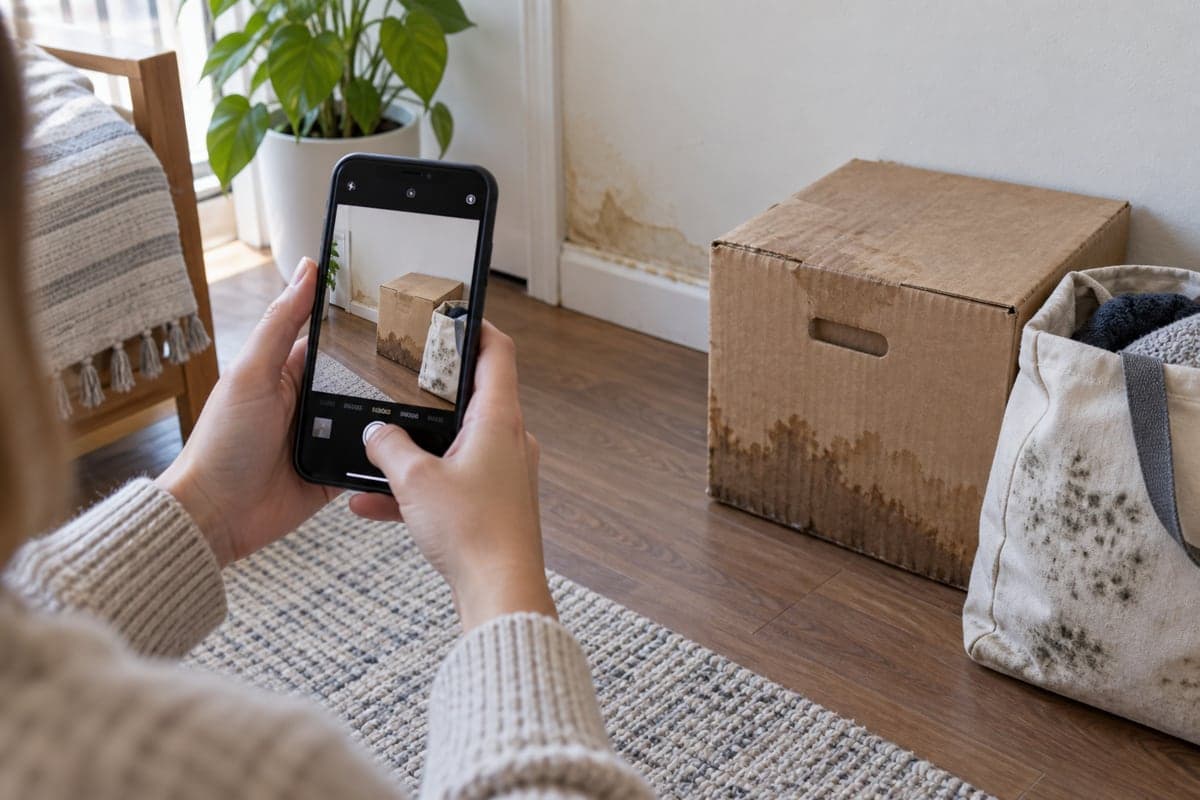
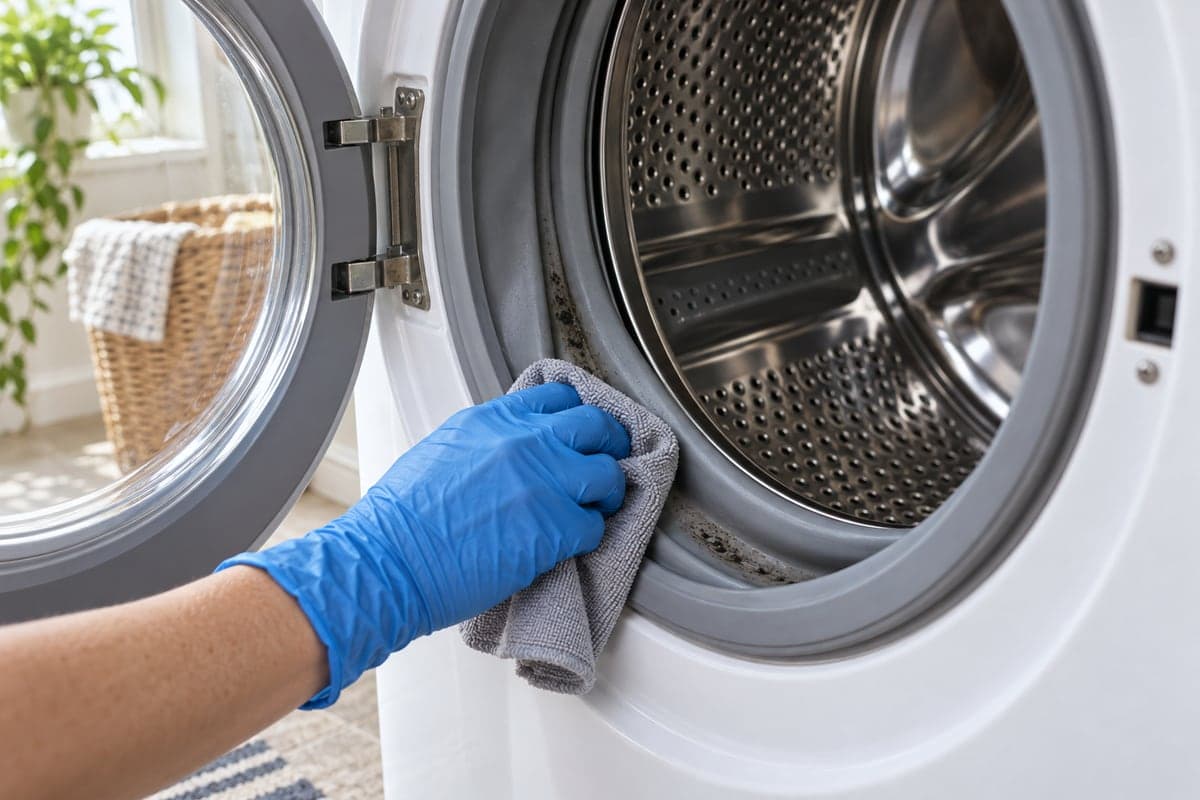
The honest answer has two parts. First, the numbers: the fungicidal directions on the EPA-registered label for Clorox Bleach (EPA Reg. No. 5813-1, 5.25 percent sodium hypochlorite) call for 3/4 cup per gallon of water, which the label puts at 2,400 ppm available chlorine, left wet for 10 minutes on a pre-cleaned hard nonporous surface. CDC's disaster-cleanup guidance sets a ceiling rather than a target: no more than 1 cup of household laundry bleach per gallon of water. That works out to roughly 0.3 percent sodium hypochlorite in the bucket. Second, the part that matters more: EPA states that a biocide such as chlorine bleach "is not recommended as a routine practice during mold cleanup", and CDC says that if your home has only a little mold and minor water damage, "you may not need to use bleach." Scrubbing with detergent and water, then drying the surface completely, is the default.
The earlier version of this article said to use "a bleach solution with a concentration between 2.4% and 16%, which translates to a 1:4 to 1:64 ratio of bleach to water." That was wrong in two directions. Sixteen percent sodium hypochlorite is stronger than any bleach sold for household use, so no dilution of a jug from the grocery store can produce it. And 2.4 percent is not a home-use recommendation at all: it is the concentration used in a laboratory study on inoculated nonporous carriers. The old article also repeated the widely circulated claim that vinegar "can destroy about 82% of mold species," a figure that does not trace back to any published study. Both are corrected below.
Where the Numbers Actually Come From
Three different figures get quoted as "the right concentration," and they answer three different questions.
The product label: 3/4 cup per gallon. A pesticide label is a legal document, and for a disinfecting bleach it is the only place with a tested, enforceable direction. The current accepted label for Clorox Bleach states that the product "is effective against mold, Athlete's Foot Fungus... and Mildew (Aspergillus niger)" when used as directed, and the direction is to first "clean surface by removing gross filth," then apply a solution of 3/4 cup per gallon of water, keep the surface wet for 10 minutes, then rinse with clean water and dry. The label's use sites are "hard, nonporous surfaces." That phrase is doing a lot of work, and the next section explains why.
CDC's post-flood ceiling: 1 cup per gallon. CDC's fact sheet Mold Clean-Up After Disasters: When to Use Bleach is written for homes that took on floodwater. It tells you to remove mud and debris first, because "bleach, soap, or any other product cannot effectively clean up mold if you do not remove the mud and dirt first," then scrub cleanable surfaces with soapy water and a bristle brush, then use "a bleach solution of no more than 1 cup (8 ounces) household laundry bleach per 1 gallon of water to kill mold on surfaces," then dry everything quickly. Note the wording: no more than. It is an upper bound on a disaster-response step, not a recommended strength for a shower corner.
The 2.4 percent lab figure. This comes from a 2012 study in the Journal of Occupational and Environmental Hygiene, Occurrence of Household Mold and Efficacy of Sodium Hypochlorite Disinfectant, which sampled 1,330 nonporous indoor surfaces in 160 U.S. homes and then tested bleach in the lab. Five-minute exposures to 2.4 percent sodium hypochlorite produced a greater than 3- to greater than 6-log reduction in culturable mold. That is a real result, but it describes spores on clean laboratory carriers, not mold growing into a wet baseboard. It is not a home-use instruction, and applying near-half-strength bleach in an enclosed bathroom is a meaningfully worse exposure than the label contemplates.
For reference on what is in the jug: CDC's disinfection guidance notes that the most common chlorine products in the United States are 5.25 to 6.15 percent sodium hypochlorite, though some brands reformulated to 8.25 percent. Read your own bottle. One cup per gallon of a 5.25 percent product lands near 3,100 ppm available chlorine; the same cup of an 8.25 percent product is roughly half again as strong.
Porous Versus Nonporous Is the Decision That Matters
Every bleach label that carries a disinfectant claim limits it to hard, nonporous surfaces. Glazed tile, glass, sealed countertops, porcelain, metal, and finished plastic qualify. Drywall, bare or unfinished wood, grout that has lost its seal, insulation, ceiling tile, carpet, upholstery, and paper-faced building materials do not.
The reason is not mysterious. EPA notes that "absorbent or porous materials, such as ceiling tiles and carpet, may have to be thrown away if they become moldy" because mold that has grown into the material "may be difficult or impossible to remove completely." A surface-applied solution reaches the surface. Hyphae inside the material are not on the surface.
You will often see a specific mechanism offered for this: that the chlorine stays on top while the water in the bleach soaks in and feeds the mold underneath. That claim is repeated constantly by remediation companies, and we could not find a peer-reviewed source for it. The better-supported point does not need it. Whatever happens chemically, applying a hard-surface disinfectant to a porous material that stayed wet does not remove the growth inside it, and the growth comes back.
Two further limits apply even on tile:
- Soil neutralizes chlorine. EPA's flood guidance is blunt: disinfectants "don't work well unless the dirt around the microorganisms is cleaned up first," and you should clean the surface with water and detergent before any disinfectant. Spraying bleach onto visible grime mostly wastes the bleach.
- Killing is not removing. EPA states plainly that "dead mold may still cause allergic reactions in some people, so it is not enough to simply kill the mold, it must also be removed." Texas A&M AgriLife Extension makes the same point in its post-storm mold guidance: clean to remove mold, not just to kill it. A bleached surface that looks white can still be a surface full of mold debris.
If the growth is on drywall or behind a wall cavity rather than on tile, bleach is the wrong question entirely. Our guide on how to tell if there is mold in your walls covers what to check before opening anything up.
A Safe Sequence If You Do Use Bleach
For a small patch on a hard nonporous surface, in a room you can ventilate:
- Fix the water first. If the surface is still getting wet, everything below this is temporary. EPA's threshold for DIY work is a moldy area under about 10 square feet, roughly a 3-by-3-foot patch.
- Open windows and doors and run an exhaust fan. CDC's reminder is to open windows or doors when using any cleaning product. EPA adds that if you use a disinfectant you should "always ventilate the area and exhaust the air to the outdoors."
- Put on protection. CDC specifies at least an N95 respirator, goggles that provide complete eye protection without open vent holes, and non-latex, vinyl, nitrile, or rubber gloves. Do not handle moldy material bare-handed.
- Clean before you disinfect. Scrub with detergent and water and a bristle brush. Remove the visible growth and the soil. This step does most of the actual work.
- Mix the solution in a clean container, adding bleach to water. Follow the label. Three-quarters of a cup per gallon satisfies the fungicidal direction on a 5.25 percent product; CDC's post-flood ceiling is 1 cup per gallon. Mix only what you will use that day, since diluted hypochlorite loses strength.
- Keep the surface wet for the labeled contact time, which on the Clorox fungicidal direction is 10 minutes. A quick wipe does not meet it.
- Rinse with clean water and dry the surface thoroughly. CDC advises using a fan, air conditioner, or dehumidifier to speed drying. Materials left damp restart the whole problem, and mold can grow on wood, drywall, carpet, and furniture that stay wet longer than 24 hours.
- Keep the room's humidity down afterward. EPA's target is below 60 percent relative humidity, ideally 30 to 50 percent. Our guide to indoor humidity targets covers how to hold that range season by season.
Children should not be part of cleanup work. CDC states this directly for disaster cleaning, and it is sound advice for ordinary mold cleanup too.
What Not to Do
- Do not mix bleach with anything. Washington State Department of Health warns that bleach plus ammonia produces toxic chloramine gases, and that "when chlorine bleach is mixed with an acid, chlorine gas is given off." Vinegar is an acid. So are most toilet bowl cleaners, rust removers, and tub-and-tile products. Some glass cleaners contain ammonia, and so does urine, which matters in a pet area. Symptoms range from watery eyes and coughing to chest pain, pneumonia, and fluid in the lungs. If you have mixed products and feel symptoms, get to fresh air and call Poison Control at 1-800-222-1222 or 911.
- Do not use it at full strength. The Clorox label says explicitly not to use the product full strength for cleaning surfaces and to "always dilute strictly in accordance with the directions." Stronger is not better; it increases fume exposure and surface damage without buying you a better result.
- Do not use bleach in a closed room. CDC's instruction is to open windows or doors first. A small bathroom with the door shut is the worst case.
- Do not paint or caulk over it. EPA: "Do not paint or caulk moldy surfaces. Clean up the mold and dry the surfaces before painting."
- Do not assume a bleached surface is a solved problem. If it returns in a few weeks, the moisture source is still there. Our overview of how to get rid of mold and keep it from coming back works through that sequence.
- Do not bleach something the label does not cover. That includes unfinished wood, fabric you care about, and colored grout. The same label that authorizes disinfecting tile warns about metal corrosion and about applying the solution in direct sunlight outdoors.
Alternatives, and What They Actually Do
Detergent and water. This is EPA's stated method: "Scrub mold off hard surfaces with detergent and water, and dry completely." It has no fume hazard, works on more materials than bleach, and physically removes the growth rather than bleaching its color out. For most household patches this is the whole job.
Vinegar. Commonly recommended, and it does have antifungal activity, but the "82 percent of mold species" number that circulates online has no traceable source and should be ignored. Vinegar is also an acid, so it must never be combined with or applied near bleach. Our guide on how long vinegar takes to kill mold covers what is and is not established.
EPA-registered mold and mildew products. If you want a registered antimicrobial, any product making a mold claim carries an EPA registration number and directions with a contact time. Those directions are also usually limited to hard nonporous surfaces.
Removal. For porous materials with real growth, the answer is not a chemical. Texas A&M AgriLife advises removing moldy porous materials, with solid wood as the main exception. Wet drywall, carpet pad, and insulation get cut out and replaced.
DIY or Call a Pro
Handle it yourself when the patch is under about 10 square feet on a hard nonporous surface, the water source is identified and fixed, and nobody in the house is at elevated risk.
Get professional help when:
- The affected area is larger than roughly 10 square feet, EPA's DIY threshold.
- The water was floodwater or sewage, which brings contamination concerns beyond mold.
- The growth is inside walls, under flooring, or in the HVAC system. CDC specifically advises having the HVAC system checked and cleaned by a professional experienced in mold cleanup before turning it on after flooding, because running a flooded system spreads mold through the house.
- Someone in the home has asthma, a mold allergy, chronic lung disease, or a weakened immune system.
- The mold keeps returning after cleaning, which points at a moisture source you have not found. Understanding how quickly mold grows after water damage helps explain why a slow leak outruns cleaning.
If you are weighing the call, our breakdown of what mold removal costs covers what drives the number.
Frequently Asked Questions
What is the exact bleach-to-water ratio for mold?
Three-quarters of a cup of 5.25 percent household bleach per gallon of water, which is roughly 1:21 and produces about 2,400 ppm available chlorine, matching the fungicidal direction on the EPA-accepted Clorox label. CDC's post-flood guidance allows up to 1 cup per gallon, roughly 1:16. Check your bottle's percentage, because an 8.25 percent product is stronger at the same ratio.
Does bleach kill mold on wood?
Not reliably, and disinfectant labels do not cover it. Unfinished wood is porous, so growth extends below the surface where a wiped-on solution does not reach. Bleach will lighten the stain, which is easy to mistake for success. Sealed and finished wood behaves more like a hard surface, but bleach can still damage the finish.
Is stronger bleach more effective on mold?
No, and it adds risk. The label caps use at the stated dilution and prohibits full-strength application on surfaces. Above the labeled concentration you get more fumes, more corrosion, and more surface damage without a meaningful gain, because the limiting factors are usually soil on the surface and mold below it, not chlorine concentration.
Why does EPA say not to use bleach for mold?
EPA's position is that killing mold is not the goal; removing it and fixing the moisture is. Its guidance notes that sterilizing an area is neither possible nor desirable, that background spores will not grow once moisture is controlled, and that dead mold can still cause allergic reactions. EPA allows that professional judgment may indicate biocide use in specific cases, such as when immune-compromised people are present.
Can I mix bleach and vinegar to make it stronger?
No. Vinegar is an acid, and Washington State Department of Health states that mixing chlorine bleach with an acid releases chlorine gas. The same applies to toilet bowl cleaners and rust removers. Use one product, rinse thoroughly, and let the surface dry before using anything else.
Do I need to rinse bleach off after cleaning mold?
Yes, when following the label. The fungicidal direction is to keep the surface wet for 10 minutes, then rinse with clean water and dry. Rinsing removes residue and, more importantly, removes the dead mold and soil that bleaching alone leaves behind.
Will bleach remove a black mold stain permanently?
It often removes the stain while leaving the underlying problem. On tile and grout, a bleached surface usually stays clean as long as the area dries between uses. On drywall or a ceiling, a stain that returns is evidence of ongoing water, and at that point the fix is the leak or the ventilation, not a stronger solution.
Sources
- Clorox Bleach, EPA-accepted pesticide label, EPA Reg. No. 5813-1 (accepted February 10, 2021) — 5.25 percent sodium hypochlorite, fungicidal efficacy directions of 3/4 cup per gallon at 2,400 ppm available chlorine, 10-minute contact time, hard nonporous use sites, pre-clean requirement, and the prohibition on full-strength surface use.
- CDC: Mold Clean-Up After Disasters — When to Use Bleach (PDF) — the 1-cup-per-gallon ceiling, the note that minor damage may not need bleach, removing mud first, scrubbing with soapy water, PPE, ventilation, never mixing, keeping children out, and the HVAC warning.
- CDC: Mold Clean Up Guidelines and Recommendations — PPE specifics and the same dilution ceiling.
- EPA: Should I Use Bleach to Clean Up Mold? — biocides are not recommended as a routine practice, the immune-compromised exception, ventilation, never mixing with ammonia, and that dead mold must still be removed.
- EPA: A Brief Guide to Mold, Moisture and Your Home — the 10-square-foot DIY threshold, the 30 to 50 percent humidity target, and porous materials that may need discarding.
- EPA: Mold Cleanup in Your Home — scrub with detergent and water, do not paint over mold.
- EPA: Flood Cleanup to Protect Indoor Air and Your Health — clean before disinfecting, disinfectants fail on soiled surfaces, do not mix cleaning products, and the 24-hour wet-material window.
- CDC: Chemical Disinfectants (Guideline for Disinfection and Sterilization) — typical household bleach strength of 5.25 to 6.15 percent sodium hypochlorite and inactivation of hypochlorites by organic matter.
- Occurrence of Household Mold and Efficacy of Sodium Hypochlorite Disinfectant, *Journal of Occupational and Environmental Hygiene* 9(11), 2012 — the origin of the 2.4 percent figure: 1,330 samples from 160 homes and log-reduction results from five-minute lab exposures on nonporous surfaces.
- Texas A&M AgriLife Extension: Controlling Mold Growth After the Storm — remove mold rather than only killing it, remove moldy porous materials except solid wood, and use non-phosphate detergents.
- Washington State Department of Health: Dangers of Mixing Bleach with Cleaners — chloramine gases from ammonia, chlorine gas from acids, and the symptom range.