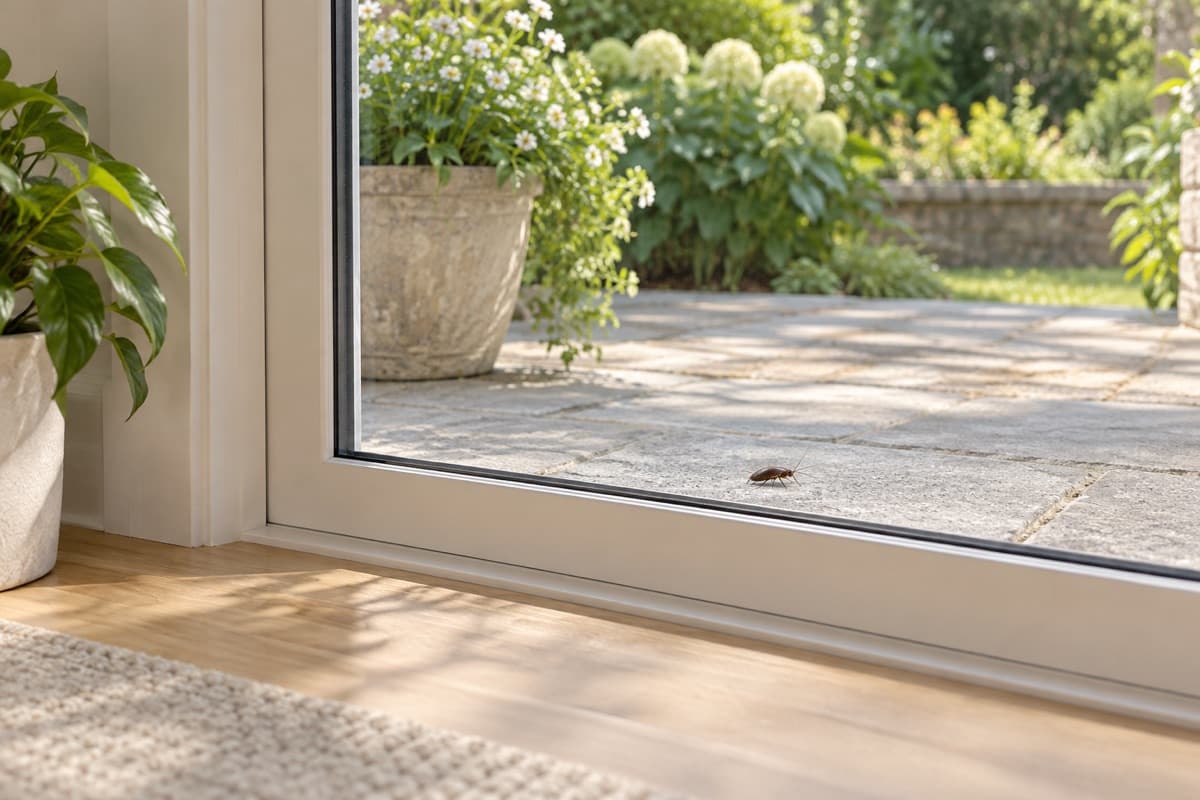
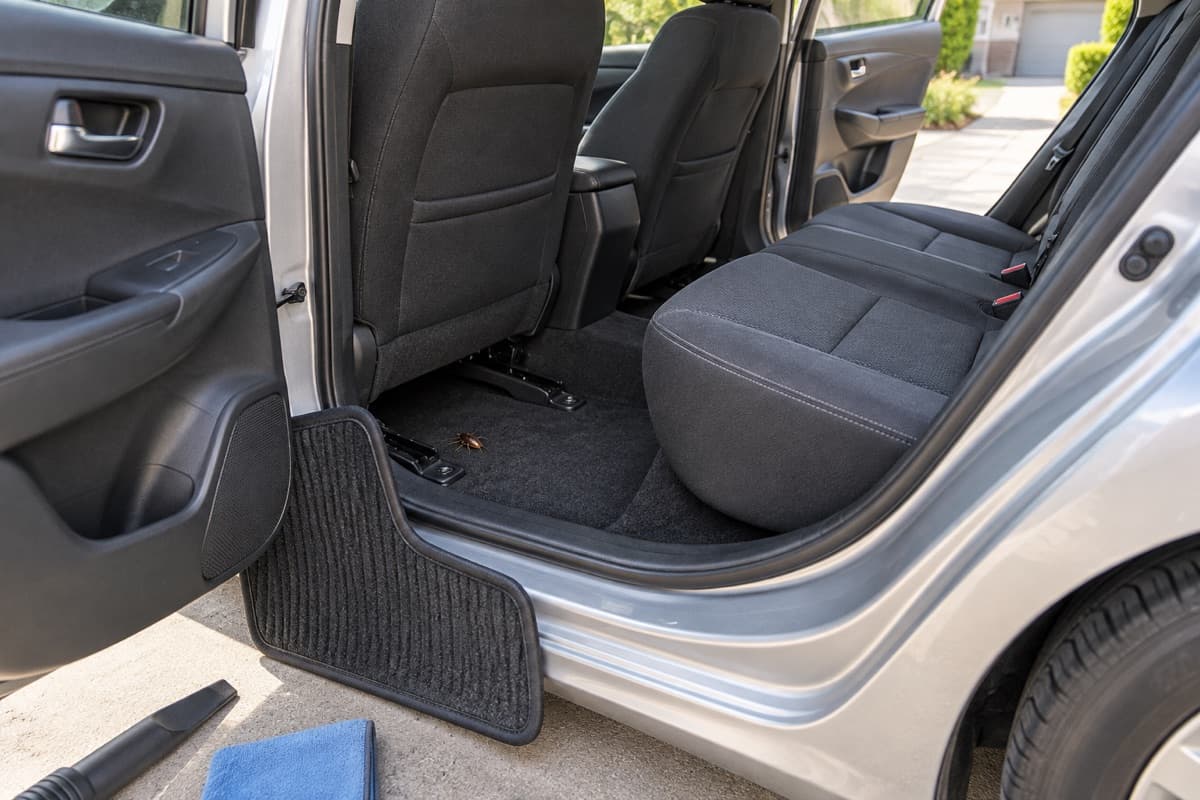
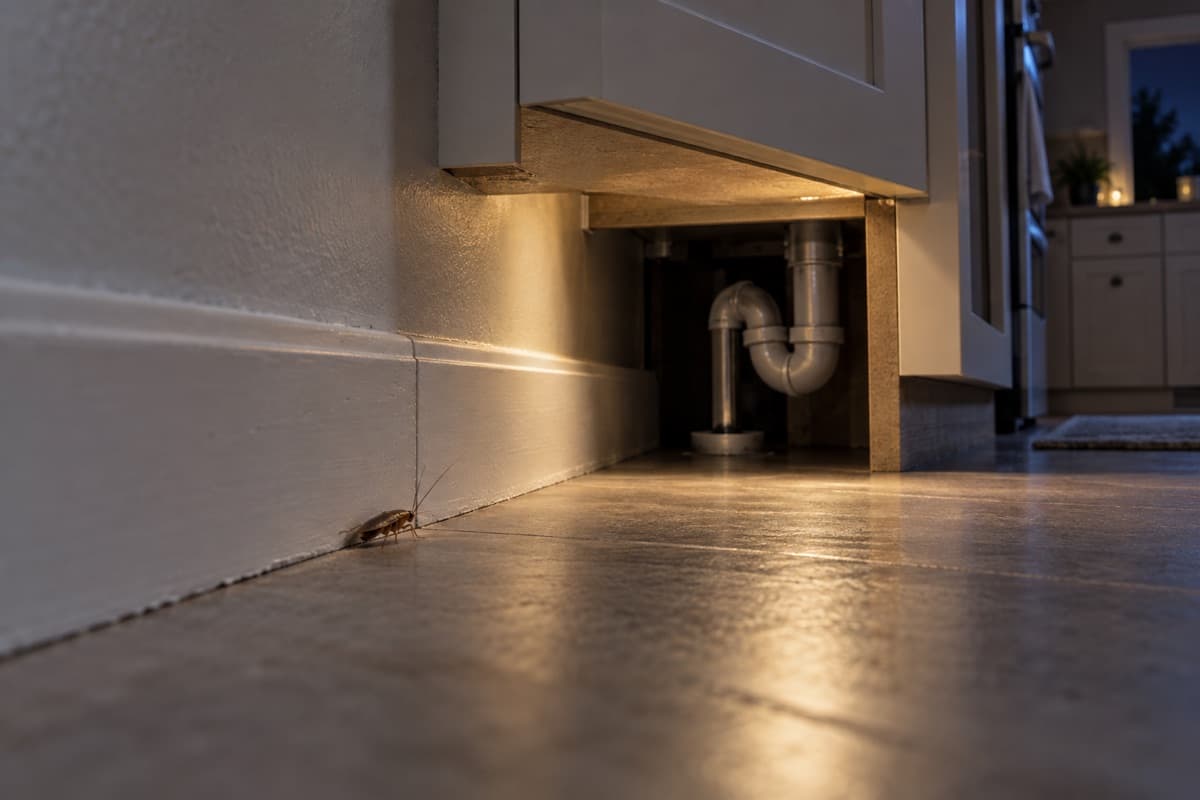
We could not find a single published study testing table salt as a cockroach insecticide or repellent, and no university extension IPM program or public health agency lists it among the tools for cockroach control. Sodium chloride does appear on EPA's list of active ingredients permitted in exempted minimum risk pesticide products under 40 CFR 152.25, but that listing reflects low risk, not proven performance: EPA states plainly that because it does not review exempted products, any claim implying agency endorsement is misleading. The substances that actually desiccate cockroaches — diatomaceous earth and silica aerogel — work by absorbing the oils and fats from the cuticle of the insect's exoskeleton, which is a different mechanism from drawing water across a membrane. Salt on the floor is not doing that.
The previous version of this article got the headline answer roughly right and then padded it with claims we could not substantiate, including that cucumber slices repel roaches and that a female cockroach can produce up to 400 offspring in her lifetime. Those have been dropped.
Why the Salt Idea Feels Right
The myth has a good pedigree, which is why it survives. Three real things get blended together.
- Salt genuinely kills slugs and snails. They have moist, permeable skin and no waterproof covering, so salt pulls water out of them by osmosis. A cockroach is sealed inside a waxy, water-repellent cuticle designed to hold moisture in. The osmotic trick has nothing to grab.
- Desiccation genuinely kills cockroaches. It is one of the most reliable ways to kill one. But the dusts that do it work by sorption — stripping the waxy lipid layer so the insect leaks water through its own shell. W. Ebeling's 1971 review of sorptive dusts for pest control in the Annual Review of Entomology remains the foundation for that whole product class. Salt crystals are neither sorptive nor finely abrasive.
- "Salt" is chemically vague. Borax is a salt. Boric acid is closely related to it. Those genuinely do kill cockroaches, and the loose overlap in vocabulary does a lot of quiet work in kitchen-remedy folklore.
What Boric Acid Does That Salt Does Not
If you have read that "a salt" kills roaches and came away thinking of the shaker on your table, this is the substance you were probably hearing about.
The National Pesticide Information Center's boric acid fact sheet describes boric acid and its sodium borate salts as pesticides found in nature and in many products, and explains the mechanism: boric acid kills insects that eat it by disrupting the stomach and affecting the nervous system, and it can also scratch and damage the insect's exterior. That is a stomach poison plus a physical effect, delivered in a form the cockroach will actually consume.
It is also not risk-free. NPIC notes that in people, short exposures can cause nausea, vomiting, stomach aches, and diarrhea, that extreme amounts can cause a red, boiled-lobster-like rash followed by skin loss, and that infants who ate large amounts have shown nervous system effects. Signs of poisoning in pets can begin within two hours. Placement matters enormously. How long to leave boric acid down for roaches covers the timing and the placement rules.
And What Diatomaceous Earth Does
The other half of the confusion is the dust that really does dehydrate insects. NPIC's diatomaceous earth fact sheet explains that DE consists of the fossilized remains of diatoms, that it causes insects to dry out and die by absorbing the oils and fats from the cuticle, and that sharp edges speed the process — but that the product must stay dry and undisturbed to work at all.
Note what is required: microscopic particles that adhere to the insect and pull lipid out of its outer layer. Table salt has none of those properties at any grain size you can buy. If desiccation is the effect you were after, how to use diatomaceous earth for roaches is the guide to the substance that actually does it.
The Epsom Salt Version of the Same Claim
Epsom salt is magnesium sulfate, not sodium chloride, and it has its own separate legend with a traceable origin. In 1937, H. W. and M. S. Frings published a short note in Science titled "Magnesium sulphate — a new insecticide." Within months, two other Science papers rebutted it: R. C. Smith's "Magnesium sulfate — an unsatisfactory substitute for arsenicals in grasshopper baits" and N. F. Howard's "Magnesium sulfate valueless as a control for the bean beetle." All three citations appear in Washington State University's bibliography of the literature on Epsom salts.
So the original claim was about grasshopper bait, was contradicted in the same journal the same year, and was never about cockroaches at all. Worth noting too: magnesium sulfate does not appear on EPA's minimum-risk active ingredient list. It appears only in the separate table of permitted inert ingredients. Why Epsom salt does not kill roaches traces that thread further.
Dehydration Is a Real Vulnerability — Just Not This One
The kernel of truth worth keeping is that cockroaches are far more fragile about water than about food. Penn State Extension notes that Oriental cockroaches can live for a month without food if water is available, but die within two weeks without water. That is the lever, and it is free.
Practical version:
- Fix every drip. The trap under the sink, the toilet supply line, the refrigerator water line, the condensate pan.
- Dry the sink and tub at night. A wiped-down basin removes the easiest water source in the house.
- Do not leave pet water bowls out overnight, and empty drip trays under houseplants.
- Ventilate damp rooms. Bathrooms and laundry areas with a running exhaust fan are much less hospitable.
- Fix condensation. Cold pipes sweating inside a cabinet supply water indefinitely.
That does more than any amount of salt on a baseboard, and it makes baits work better because a thirsty roach ranges further looking for something to consume.
What Not To Bother With
- Salt barriers or salt lines. No published evidence of repellency or mortality, and a cockroach will simply walk across.
- Salt-and-sugar mixtures. This is a food source. You are feeding them.
- Salt water sprays. Wet salt is even less likely to do anything physical, and moisture is what roaches want.
- Salting drains. Pouring salt or salt water down a drain does not reach the harborage and can corrode plumbing over time.
- Homemade "pesticides" generally. EPA's guidance on avoiding illegal household pesticide products is worth internalizing: the EPA registration number on a container is the signal that the product's safety testing has been examined. A mixture you invented has no label, no rate, and no tested margin. Using a registered pesticide in a way its label does not allow is also a violation of federal law.
What household products kill roaches sorts the kitchen-cabinet remedies into the ones with evidence, the ones without, and the genuinely risky ones.
What To Do Instead
- Confirm what you have and where. Sticky monitors under the sink, behind and beneath the refrigerator, and in the back corners of base cabinets. Run them for several nights before treating anything. Counts tell you where to concentrate.
- Remove food and water. Grease on the range hood and under the stove, crumbs in the toaster tray, open pet food, damp sponges.
- Close the gaps. Caulk cracks and crevices, seal around pipe penetrations, and add door sweeps. This is the step that keeps results after treatment.
- Use gel bait in many small placements near harborage. Baits are the primary pesticide tool for cockroaches in UC IPM's guidance, precisely because the insect carries the active ingredient back to where it lives.
- Consider an insect growth regulator alongside bait if the population includes a lot of nymphs.
- Be patient, then change something. Penn State's IPM guidance is that baits take a week or more to work, and that if the infestation is not eliminated within 30 days you should replace the bait with a different product rather than continuing.
- Keep repellents away from bait. Aerosols and foggers repel and disperse cockroaches, and scented sprays near bait make the bait unattractive.
The whole sequence, in order, is in how to get rid of roaches.
When To Call a Professional
- You see roaches during the day, which usually means the population has outgrown its harborage.
- You are in an apartment or attached housing and the source appears to be a neighboring unit or a shared chase.
- Baiting correctly for 30 days has not reduced trap counts.
- Someone in the household has asthma. Cockroach allergen is a recognized asthma trigger, and knocking the population down quickly matters more than the method being homemade.
- You are finding them inside appliances, wall voids, or electrical boxes, where DIY treatment is both ineffective and unsafe.
Frequently Asked Questions
Does salt kill cockroaches?
There is no published evidence that it does. Cockroaches are sealed in a waxy, water-retaining cuticle, so the osmotic effect that kills slugs does not apply, and salt lacks the sorptive and abrasive properties of the dusts that do kill by desiccation.
Will roaches eat salt?
Cockroaches are omnivorous scavengers and will sample almost anything, but eating salt is not the same as being poisoned by it. Mixing salt into a sweet bait mostly creates a food source with no active ingredient.
Does salt repel roaches?
No repellency data exist for sodium chloride against cockroaches. Even the essential oil compounds that have been formally tested top out at modest, short-lived repellency, and repelling roaches tends to spread them into adjacent voids rather than remove them.
Why is salt on EPA's minimum-risk pesticide list then?
The 25(b) exemption is about risk, not efficacy. A product made only from listed ingredients, labeled correctly, and making no public-health claims can be sold without registration — and EPA explicitly does not review those products. Presence on the list says nothing about whether salt works on any particular pest.
Is Epsom salt different?
Chemically yes, practically no. The 1937 Science note proposing magnesium sulfate as an insecticide concerned grasshopper bait and was rebutted twice in the same journal that year. Magnesium sulfate is not even on EPA's minimum-risk active ingredient list; it appears only among permitted inerts.
What about baking soda?
Different folk remedy, similar evidence problem. The mechanism usually described for it is not supported, and the field evidence is thin. What the evidence actually shows about baking soda goes through the one study that exists.
Does salting a drain stop roaches coming up?
No. Roaches entering through a sink area are usually coming through the wall penetration around the pipe, not up through the water trap. Sealing that gap accomplishes what salt cannot.
Sources
- 40 CFR 152.25 — Exemptions for pesticides of a character not requiring FIFRA regulation — sodium chloride listed among permitted active ingredients in Table 1, and magnesium sulfate appearing only in Table 2 as a permitted inert.
- EPA: Conditions for Minimum Risk Pesticides — the six exemption conditions and the statement that EPA does not review exempted products.
- NPIC: Diatomaceous Earth General Fact Sheet — the cuticle-absorption mechanism and the requirement that the dust stay dry.
- NPIC: Boric Acid General Fact Sheet — boric acid and sodium borate salts, the stomach and nervous-system mechanism, cuticle damage, and human and pet toxicity.
- Ebeling, W. (1971), Sorptive Dusts for Pest Control, *Annual Review of Entomology* 16:123–158 — the foundational review of the desiccant dust class.
- Washington State University: Literature on Epsom Salts — the Frings 1937 Science claim and the two 1937 rebuttals by Smith and Howard.
- Penn State Extension: Oriental Cockroaches — a month without food with water available, but death within two weeks without water.
- UC Statewide IPM Program: Cockroaches — baits as the primary pesticide tool, dust behavior, and the warning that foggers and sprays repel and disperse.
- Penn State Extension: Got Roaches? Eliminate Roaches with IPM — sanitation and exclusion steps, the week-or-more bait timeline, and the 30-day decision point.
- EPA: Avoid Illegal Household Pesticide Products — the EPA registration number as the marker of reviewed safety testing, and what unregistered products have not been evaluated for.