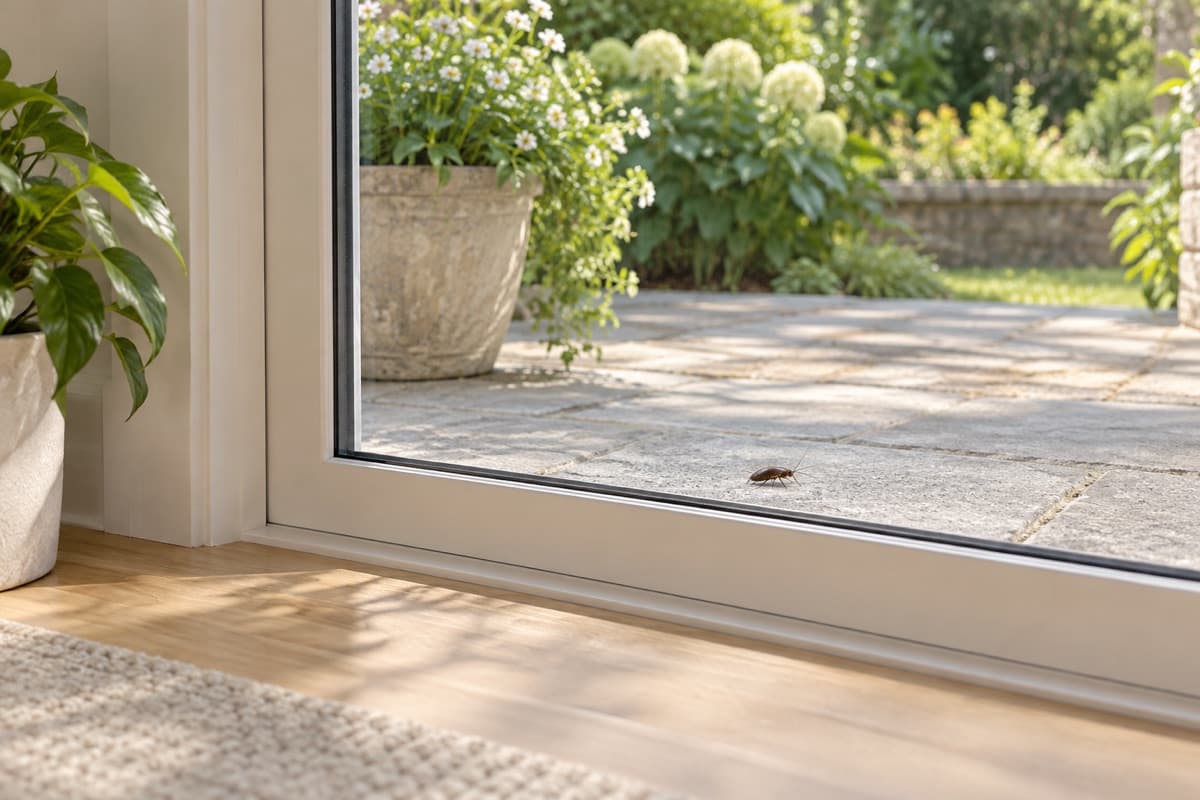
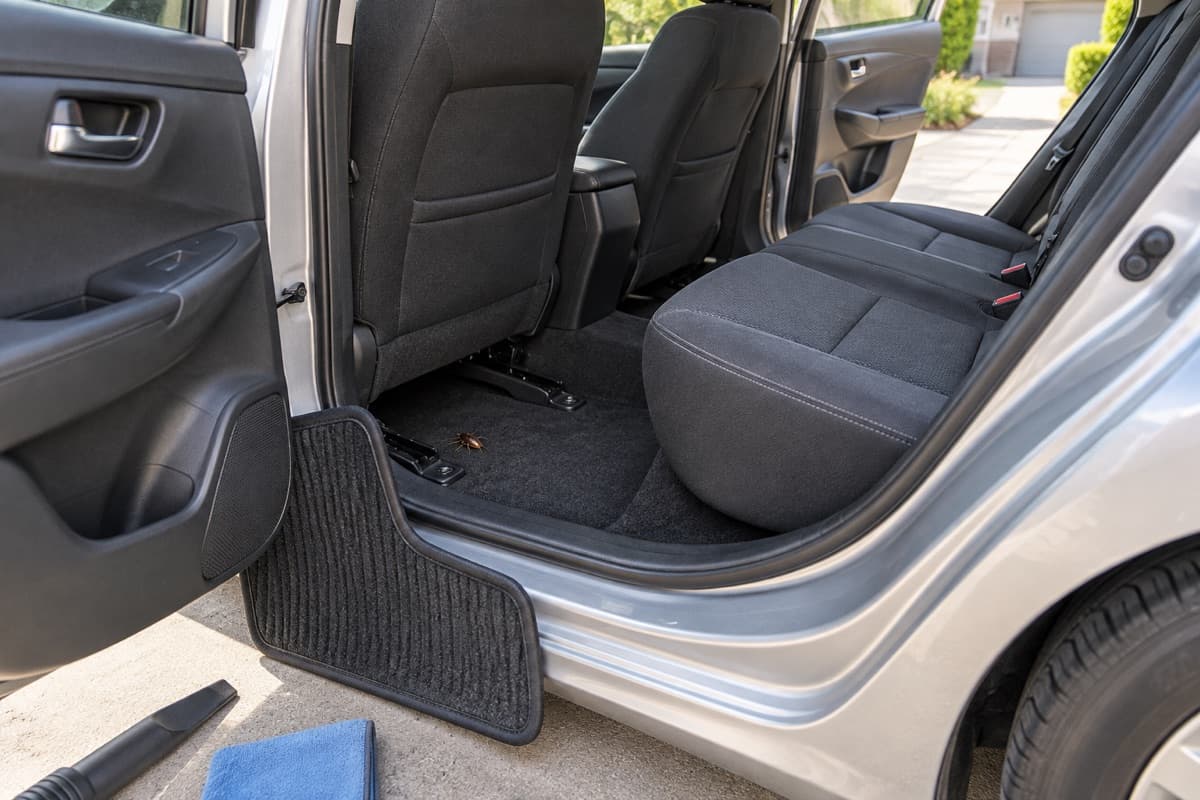
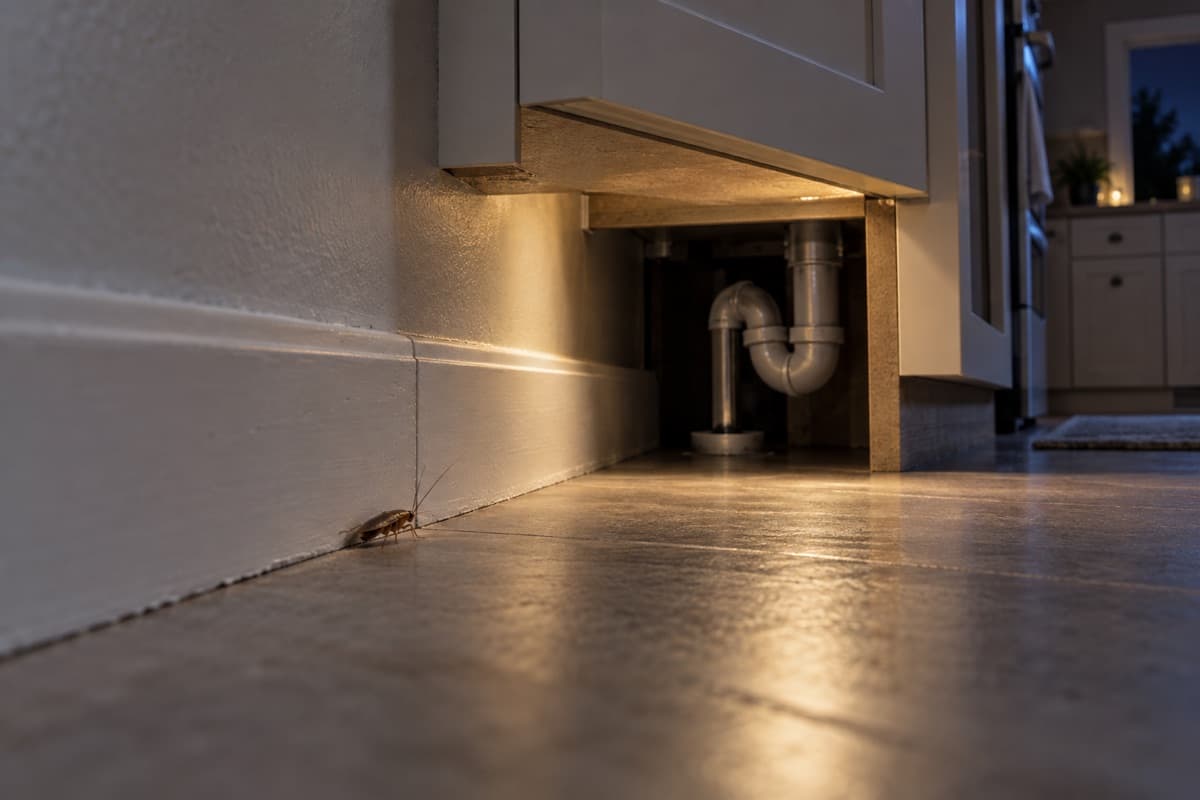
Apply a registered diatomaceous earth product as a barely visible film in dry cracks, crevices, and voids where cockroaches travel — not as a visible line or pile. The EPA-accepted label for Harris Diatomaceous Earth, EPA Reg. No. 3-18, specifies 1 to 5 ounces per 100 square feet, applied lightly and uniformly with a bulb or hand duster, no more than once a week, and in living areas "in such a manner as to avoid deposits on exposed surfaces or introducing the material into the air." Penn State Extension warns that heavy deposits may repel cockroaches and that dusts should never be applied to wet or damp areas. It works by drying the insect out: NPIC describes DE as absorbing the oils and fats from the cuticle of the insect's exoskeleton, which means the dust has to stay dry and undisturbed to do anything at all. That is also its biggest limitation, because cockroaches prefer exactly the damp places where DE stops working.
The earlier version of this article told readers to reapply every few days, then in another section every one to two weeks, and described DE as "not toxic if ingested." None of that came from a label. The rates, the frequency, and the precautions below all do.
What DE Actually Is, and What Grade To Buy
Diatomaceous earth is the fossilized silica skeletons of diatoms. NPIC notes that silicon dioxide occurs in two forms — amorphous, which makes up most DE products, and crystalline, present at very low levels — and that DE has been registered as a pesticide since 1960, with more than 150 products registered for indoor and outdoor use against bed bugs, cockroaches, fleas, ticks, and spiders.
The grade distinction is a real safety issue, and the usual explanation for it is wrong. Pool-grade DE is not dangerous because of "additives." It is dangerous because it has been calcined — baked at 800 to 1000°C — which converts amorphous silica into crystalline cristobalite. The Cosmetic Ingredient Review panel's safety assessment of diatomaceous earth puts numbers on it: uncalcined DE contains 0.1% to 4.0% crystalline silica, straight-calcined products run 10% to 20% cristobalite, and flux-calcined products 40% to 60%. The same review notes occupational studies indicating a risk of pneumoconiosis in DE mine and mill workers.
Practical rules:
- Buy a product with an EPA registration number on the container. That number is how EPA tells you the product's safety testing has been examined. A bag of pool filter media is not a pesticide and using it as one is not a legal pesticide application.
- Food grade means purified and FDA-listed as Generally Recognized As Safe for uses like anticaking agents in animal feed, per NPIC. It does not mean inhaling it is harmless.
- Never use pool or filter grade anywhere in a house.
Where To Put It
Placement decides whether DE does anything. The Harris label's indoor directions name the sites plainly: apply a thin layer where pests hide, including cracks and crevices, behind and beneath refrigerators, cabinets, and stoves, around garbage cans, in and around sewer pipes and drains, around window frames, and in attics and basements.
Translate that into a home:
- Wall voids and the gaps behind cabinet kick plates. Puff dust in through an existing gap; you do not need to open the wall.
- Under and behind the refrigerator and range, where grease and warmth concentrate.
- The void under a sink cabinet floor, around the pipe penetration — dry side only.
- Attics, basements, and crawl space rims, if dry.
- Around exterior door thresholds and utility penetrations from outside.
And where not to put it: any damp area, any surface people or pets touch, any food contact surface, any spot where it will be swept or wiped tomorrow, and anywhere near a bait placement. UF/IFAS Extension warns that improperly applied, dusts can become airborne, contaminating off-target sites and non-target organisms, including people.
Why a Thin Film Beats a Visible Line
This is the single most common mistake, and both extension programs and label language address it.
UC IPM's guidance on cockroach dusts states that thin films of dust are more effective than thick layers, which may cake and clump together. Penn State is more direct about the behavioral reason: heavy deposits may repel cockroaches. An insect that walks around your white line has received no dose.
The label rate — 1 to 5 ounces per 100 square feet — works out to a deposit you can barely see. A bulb duster or a small hand duster puts it where it belongs; a spoon or a shaker jar almost always puts down ten times too much and leaves it on exposed surfaces where the label says it should not be. If you are assembling a DIY kit, how to do your own pest control safely covers the equipment side.
How Fast It Works
The Harris label states that insects contacting or ingesting the powder die within 48 hours. That is an individual-insect claim under good conditions, not a population timeline.
Laboratory data give a sense of the ceiling. Hosseini and colleagues, writing in the *Asian Pacific Journal of Tropical Biomedicine* in 2014, exposed German cockroach nymphs and adults to DE at 2.5 to 25 g/m² and reported an LC50 of 4.24 g/m² for nymphs at 24 hours and 8.03 g/m² for adults. Özcan and Tunaz, in the *Revista de la Sociedad Entomológica Argentina* in 2022, found a Turkish DE at 2.5 g/m² killed 97.5% of adults on concrete, 92.3% on ceramic, and 90% on parquet within one day, reaching 100% by day two at 25°C and 65% relative humidity.
Read those carefully. The insects in both studies were confined on a treated surface with no choice. In your kitchen, a cockroach decides where to walk, and it prefers humid harborage where the dust is least effective. Expect weeks, not days, for any visible change in population, and expect DE alone to fall short of elimination.
Moisture Is the Whole Ballgame
NPIC's requirement that the product remain dry and undisturbed is not a footnote. The Hosseini study found that adding water to the DE raised the LC50 for nymphs roughly tenfold — the same dust, ten times less effective. The Harris label's crop section states outright that the product has been shown to be less effective when relative humidity is above 65%, and its food-area directions say to apply to dry areas for best results.
Penn State's instruction not to apply dusts to wet or damp areas collides with cockroach biology, because damp is where they want to be. That tension is the honest reason DE underperforms in bathrooms, under sinks, and in basements — the three places people most want to use it.
If a treated spot gets mopped, splashed, or humid, the dust is spent. Vacuum it out and reapply on a dry surface rather than adding more on top.
Safety, Honestly
DE is a low-toxicity pesticide, not a non-toxic one, and the hazard is respiratory and ocular rather than systemic.
The Harris label carries the signal word CAUTION and states that the product causes moderate eye irritation, and instructs users to use adequate ventilation, avoid breathing dust, and wear a suitable NIOSH/MSHA-approved dust mask during prolonged exposure. The EPA-accepted label for APL Diatomaceous Earth Insecticide, EPA Reg. No. 89104-2, uses the same language. NPIC notes that inhaling DE can irritate the nasal passages and eyes and that extreme exposures cause coughing and shortness of breath, while ingested DE is minimally absorbed and rapidly excreted.
So:
- Wear an N95 or better and eye protection while dusting, and keep children and pets out of the room until the dust has settled.
- Do not apply it where a crawling infant or a pet will contact it. Penn State says this explicitly about dusts generally.
- Do not contaminate food or food-prep surfaces. In food-handling areas, the Harris label limits spot treatments to no more than 2 square feet and requires crack-and-crevice application.
- Follow the label, including the once-a-week maximum. Using a registered pesticide in a manner inconsistent with its labeling is a violation of federal law, stated on the label itself.
Where DE Fits Next To Gel Bait
DE is a support tool. Bait is the treatment.
Baits are the primary pesticide approach for cockroaches in UC IPM's guidance because the insect eats the active ingredient and carries it back into the harborage, reaching roaches you never see. A dust only affects insects that physically walk through it in a dry place. Sequence them like this:
- Monitor first. Sticky traps for several nights tell you which rooms and which cabinets matter. How many roach traps you need covers placement counts.
- Clean and dry. Remove the grease, crumbs, and standing water that compete with bait. What attracts roaches and how to remove each attractant is the checklist.
- Place gel bait in many small placements close to harborage, per its label. How to use Advion roach gel correctly walks through rates and placement.
- Add an insect growth regulator if you are seeing nymphs and oothecae. How to use an IGR for roaches explains the timing.
- Then dust dry voids the bait cannot reach — wall voids, behind kick plates, attic and basement perimeters.
- Keep the dust away from the bait. Dust settling on a gel placement contaminates it and can make it unattractive.
If you are weighing DE against the other common dust, how long to leave boric acid down for roaches covers that one's different mechanism and its stricter placement rules.
When To Call a Professional
- Trap counts have not dropped after 30 days of correct baiting.
- You see roaches in daylight, which generally indicates a large population.
- The infestation appears to come from an adjoining unit or a shared plumbing chase.
- Someone in the home has asthma; cockroach allergen is a recognized trigger and speed matters more than DIY.
- You are finding them inside appliances or electrical boxes, where dusting is both ineffective and a shock or fire concern.
Frequently Asked Questions
How long does diatomaceous earth take to kill roaches?
The Harris label states insects die within 48 hours of contact or ingestion. Population-level results take considerably longer, because most roaches will not cross a dry treated surface on any given night.
How often should I reapply?
The label limit is no more than once a week. Reapply after the treated area has been cleaned, vacuumed, or has gotten damp — not on a fixed calendar, and never as an extra layer on top of an existing deposit.
Can I just sprinkle it along the baseboards?
That is the version that does not work. Visible deposits cake, lose effect, and can repel cockroaches outright, and the label specifically tells you to avoid deposits on exposed surfaces in living areas. Use a duster and aim into cracks, crevices, and voids.
Is food-grade DE safe around pets and children?
It is low in toxicity if swallowed, but the dust irritates eyes and airways, and Penn State advises not placing dusts where children or pets can contact them. Keep them out during application and until the dust has settled, and dust into voids rather than onto open floors.
What is wrong with pool-grade DE?
Calcination converts much of the amorphous silica into crystalline cristobalite — 10% to 20% in straight-calcined products and 40% to 60% in flux-calcined ones. Long-term inhalation of crystalline silica carries a silicosis risk. It is also not registered as a pesticide, so using it as one is not a legal application.
Does DE still work if it gets wet?
No. Once it is wet it is finished, even after it dries and cakes. One study found adding water raised the lethal dose for nymphs roughly tenfold, and one product label notes reduced effectiveness above 65% relative humidity.
Should I use DE instead of gel bait?
No. Use bait as the primary tool and DE as a supplement for dry voids. Bait reaches the harborage through the insects themselves; a dust only reaches the ones that walk through it.
Can I mix DE with essential oil sprays or other liquids?
Do not. Moisture inactivates the dust, and repellent residues near a bait placement undermine the one thing that was going to work. Keep dusts dry and keep scented products away from bait entirely.
Sources
- EPA-accepted label, Harris Diatomaceous Earth, EPA Reg. No. 3-18 (2021) — 85% silicon dioxide, indoor application sites, the 1–5 oz per 100 sq ft rate, "apply lightly and uniformly," the once-a-week limit, the 2-square-foot spot limit in food areas, the 48-hour kill statement, the 65% humidity note, and the CAUTION precautionary statements.
- EPA-accepted label, APL Diatomaceous Earth Insecticide, EPA Reg. No. 89104-2 (2015) — amorphous silicon dioxide content and the NIOSH/MSHA dust mask requirement.
- NPIC: Diatomaceous Earth General Fact Sheet — the cuticle-absorption mechanism, the dry-and-undisturbed requirement, amorphous versus crystalline silica, food-grade purification and GRAS listing, and inhalation effects.
- Penn State Extension: American Cockroaches — dusts applied lightly because heavy deposits may repel cockroaches, no application to wet or damp areas, and keeping dusts away from children, pets, and food.
- UC Statewide IPM Program: Cockroaches — thin films outperforming thick layers, the desiccant mechanism, and baits as the primary pesticide approach.
- UF/IFAS Extension: Assessment-Based Pest Management of German Cockroaches — improperly applied dusts becoming airborne and contaminating off-target sites.
- Hosseini et al. (2014), The insecticidal effect of diatomaceous earth against adults and nymphs of *Blattella germanica*, *Asian Pacific Journal of Tropical Biomedicine* — dose rates, LC50 values for nymphs and adults, and the roughly tenfold loss of potency when water was added.
- Özcan and Tunaz (2022), Mortality of Turkish diatomaceous earth against German cockroach adults, *Revista de la Sociedad Entomológica Argentina* — mortality by surface type at 2.5 g/m² and the test conditions.
- Cosmetic Ingredient Review: Safety Assessment of Diatomaceous Earth (2022) — crystalline silica content of uncalcined, calcined, and flux-calcined DE, and pneumoconiosis risk in mine and mill workers.
- EPA: Avoid Illegal Household Pesticide Products — the EPA registration number as the marker that safety testing has been examined.