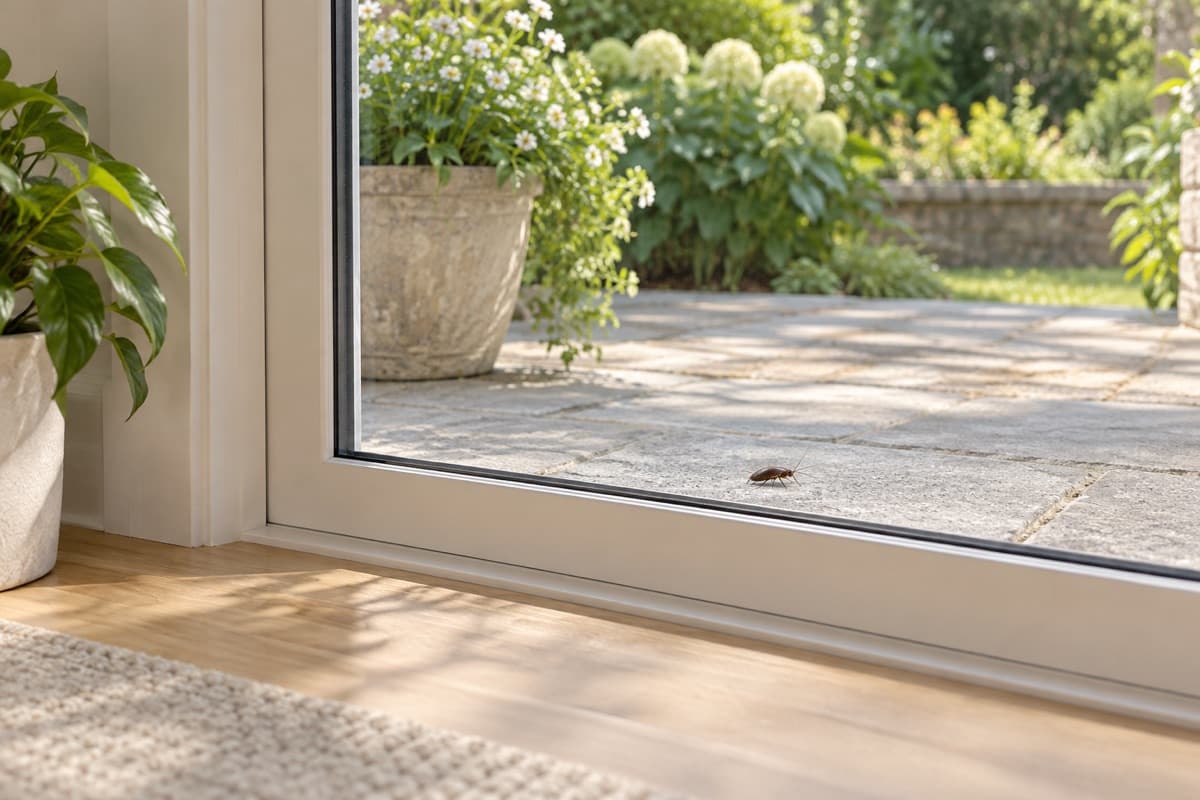
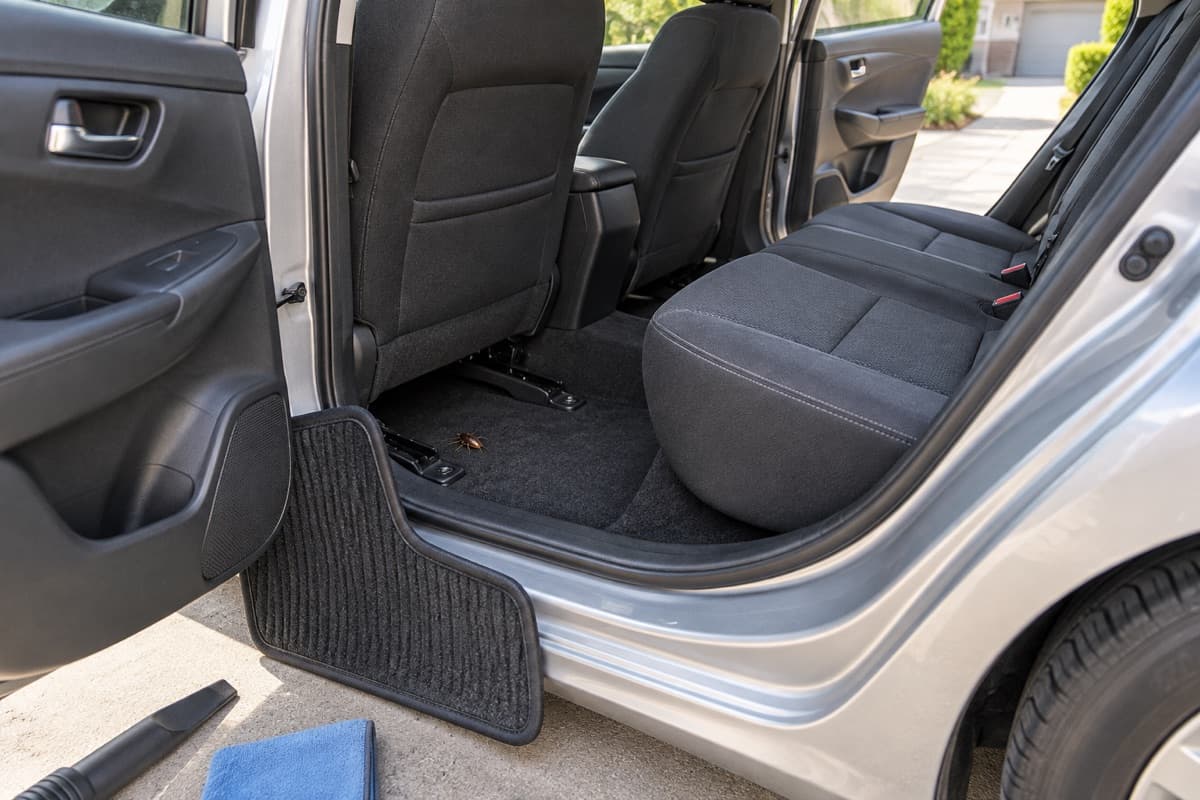
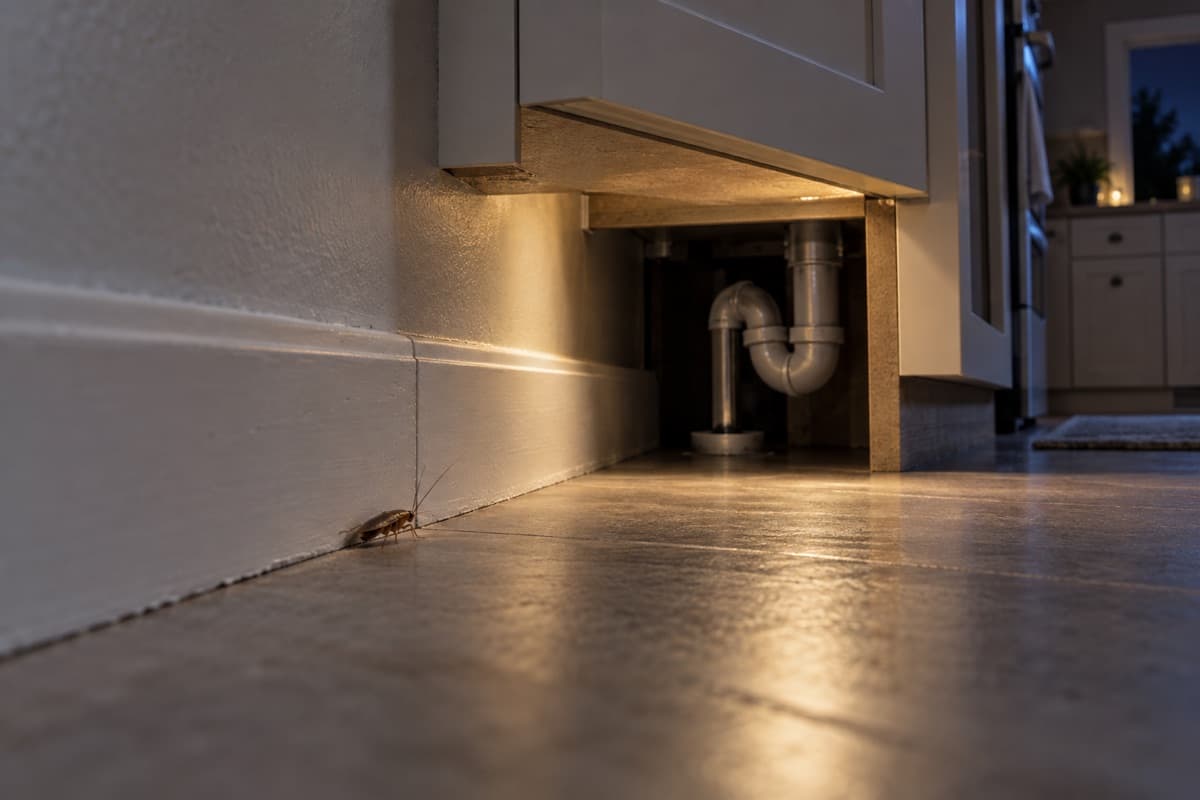
Two household-aisle products have genuine evidence behind them: boric acid and desiccant dusts such as diatomaceous earth and silica gel. Virginia Cooperative Extension states that "boric acid, silica gel, or diatomaceous earth dusts and powders work as desiccants or stomach poisons for cockroaches," applied as a thin, barely visible layer in cracks and crevices. The same publication says plainly that "borax, baking soda, and baking powder are often touted as effective remedies for cockroaches, but they do little to reduce cockroach populations." Vinegar, bleach, Lysol, dish soap, bay leaves, cucumber, and essential oils either kill only the insect they land on or do nothing measurable. And even the two that work are not a plan by themselves — in the one recent controlled trial that cleared infestations, boric acid dust was paired with gel bait and monitoring traps.
The earlier version of this article recommended a sugar-and-baking-soda mixture and said bay leaves and cucumber slices repel roaches. We could not find support for any of that in extension publications or the entomology literature, and Virginia Tech's cockroach publication specifically lists baking soda among the remedies that do little. Those recommendations are gone.
The Short List: What Actually Kills Roaches
Boric acid. A slow-acting inorganic insecticide, registered with the EPA as a pesticide since 1948 and sold in hardware and grocery stores as a labeled roach dust. Virginia Tech entomologist D. G. Cochran showed in 1995 that ingested boric acid destroys the cellular lining of the German cockroach's foregut, an effect he judged sufficient to kill the insect, "perhaps ultimately by starvation." It also abrades the waxy cuticle. Roaches pick it up on their legs and bodies, groom themselves, and swallow it.
Diatomaceous earth and silica gel. These are physical, not chemical. The National Pesticide Information Center explains that diatomaceous earth "causes insects to dry out and die by absorbing the oils and fats from the cuticle of the insect's exoskeleton." UC IPM says silica aerogels "readily absorb waxes from the surface of insects, resulting in their desiccation and death." An Iranian laboratory study published in the Asian Pacific Journal of Tropical Biomedicine found dose-dependent mortality in German cockroach adults and nymphs across application rates from 2.5 to 25 grams per square meter.
That is the whole list of household staples with real support. Everything else in this guide is either a contact-only knockdown, a myth, or a safety problem.
How To Use Boric Acid and Dusts Correctly
Most people who say boric acid did not work used far too much of it. Roaches walk around a visible pile of powder. They walk through an invisible film.
- Buy a product labeled for roaches. Boric acid roach dust and food-grade or pest-labeled diatomaceous earth are EPA-registered or exempt pesticide products with directions on the container. Pool-filter diatomaceous earth is a different material with much higher crystalline silica content and is not for this.
- Use a bulb duster. Virginia Tech specifies applying dusts "as a thin, barely visible layer of dust in cracks and crevices, behind cabinets, or other suitable places using a bulb duster or puffing applicator." A spoon or a shaker jar puts down ten times too much.
- Target harborage, not open floor. Under and behind the refrigerator and range, inside the motor compartment void, the gap under the base cabinet toe-kick, around plumbing penetrations under sinks, inside wall voids at electrical outlets on shared kitchen and bathroom walls, and the hinge and latch cavities of cabinet doors.
- Keep it dry. Virginia Tech notes desiccant dusts "are effective in clean, dry areas, but must be reapplied if they get damp or wet." UC IPM adds that if a boric acid deposit gets wet and then dries and cakes, it loses its electrostatic charge and will not be picked up readily. The nuance is worth knowing: an Auburn University study in the *Journal of Economic Entomology* found that relative humidity alone did not strongly affect most dust formulations, but liquid water reduced the potency of silica gel and caked boric acid. Damp under-sink cabinets are exactly the wrong place for dust unless you fix the leak first.
- Do not spray over it. Any surface spray or cleaner applied on top of dust or bait contaminates it and roaches avoid it.
- Give it weeks. These are slow materials by design. Our guide on how long to leave boric acid down for roaches covers the realistic timeline, and the step-by-step diatomaceous earth guide covers application detail.
Dust Alone Rarely Finishes the Job
The strongest recent evidence on household-grade products comes from a 2026 Rutgers University study published in *Insects*. Researchers gave residents of 12 low-income apartments a kit — indoxacarb gel bait, a bottle of boric acid dust, sticky traps, a printed guide, and about fifteen minutes of in-person instruction — and compared them against 17 untreated control apartments.
At six months, the geometric mean cockroach count fell 99 percent in the kit group versus 51 percent in controls, and 58 percent of the treated apartments had no cockroaches detected at all, versus 6 percent of controls.
Two details matter for anyone planning a DIY approach. First, boric acid dust was one component, not the whole treatment; gel bait carried a large share of the work. Second, and more surprising, the education "did not lead to an improvement in the sanitation rating." Those apartments got clean of roaches without getting measurably cleaner. Sanitation makes bait more attractive, but the products did the killing.
UC IPM puts the same point in a sentence: bait products are the primary pesticides used to treat cockroach infestations. Dust supplements bait in voids where bait placement is impractical. If you want the full sequence, see our guide on how to get rid of roaches.
Contact Killers: Useful for One Roach, Useless for an Infestation
Soapy water. A spray bottle of dish soap and water will kill a roach you can see. Soap is a surfactant: Kansas State University Extension entomology describes fatty acids penetrating the cuticle and dissolving cell membranes, and soap solutions blocking the spiracles the insect breathes through. But K-State also notes that household dish and laundry soaps have "less predictable" reliability than registered insecticidal soaps, and that they are not EPA-registered for insect control. There is no residual effect — once it dries, it does nothing. Soapy water is a flyswatter, not a treatment.
Rubbing alcohol, hairspray, boiling water. Same category. They kill on contact and leave nothing behind. Alcohol and aerosol hairspray are also flammable, and none of these should be sprayed near a range, pilot light, or outlet.
Bleach and Lysol. These are disinfectants. A direct soaking will kill a roach, but that is incidental to what they are for, and neither has meaningful residual insecticidal activity on surfaces. More importantly, CDC's bleach guidance is unambiguous: "Never mix household bleach (or any disinfectants) with any other cleaners or disinfectants. This can release vapors that may be very dangerous to breathe in." Bleach plus an ammonia-based cleaner produces chloramine gas. Pouring bleach down a drain to kill roaches also does not reach the roaches, which live in the voids around the pipe rather than in the water.
Vacuuming. Not a product, but genuinely effective and underused. UC IPM notes that vacuuming cracks and crevices "removes cockroaches, shed skins, and egg cases, reducing overall cockroach numbers" along with the food debris. Use a HEPA vacuum where possible, bag the contents, and take it outside.
What Does Not Work
- Baking soda and sugar. Virginia Tech lists it among remedies that do little. One small 2025 field study in Ghana did find higher mortality in confined traps baited with a roughly 50/50 baking-soda-and-food mix, but that is trap mortality under confinement, not population control, and the popular "the roach explodes" mechanism is not real. Our baking soda guide walks through that study and its limits in detail.
- Borax laundry booster. Chemically related to boric acid, but a different product at a different concentration with no pesticide label, and named directly in the Virginia Tech list of things that do little. Homeowners routinely confuse it with boric acid roach dust. They are not interchangeable.
- Bay leaves and cucumber. No extension or peer-reviewed source we could find supports either as a repellent or a killer. See bay leaves for roaches.
- Essential oils. Some oils show measurable repellency in laboratory choice tests and some kill on direct topical contact at high concentration, but repellency decays within days and repelling roaches mostly moves them somewhere else in the building. Worse, repellents applied near bait make the bait less attractive.
- Coffee grounds, salt, Epsom salt, catnip, fabric softener sheets. Nothing in the extension literature supports any of them for cockroach control.
- Foggers and bug bombs. Not a household product exactly, but the usual escalation. Virginia Tech: foggers "seldom do they eliminate pest populations." UC IPM: sprays "may also repel and disperse cockroaches to other areas." A fogger drives roaches deeper into voids and contaminates the bait you just placed.
Safety: The Part the Home-Remedy Posts Skip
Boric acid is low in acute toxicity but is not benign, and children are the specific concern. NPIC notes that children may be more sensitive because "they may crawl or play on the floor and put their hands or other items in their mouths," and documents historical infant poisonings from improper exposure. Symptoms of ingestion include nausea, vomiting, stomach pain, and diarrhea.
Practical rules:
- Put dust only where a child or pet cannot reach: inside wall voids, under appliances, behind the toe-kick, inside cabinet hinge cavities. Never on open floor, counters, or in a pet's path.
- Keep it out of food-prep surfaces and away from dishes and utensils.
- Wear a dust mask and eye protection during application. NPIC notes diatomaceous earth dust "can irritate the nose and nasal passages" and that high exposures may cause coughing and shortness of breath.
- Buy the pest-labeled or food-grade product, not pool-grade diatomaceous earth, which contains much more crystalline silica. Crystalline silica is associated with silicosis and chronic bronchitis; the amorphous silica in pest products is not.
- Follow the label. For registered pesticides, using the product in a way inconsistent with its labeling is a violation of federal law, and the label is also the only place the safe application sites and rates are actually written down.
- Save the Poison Control number: 1-800-222-1222.
If there are pets or small children in the home and dust placement is hard to do safely, enclosed bait stations are usually the better choice: the active ingredient stays inside a housing the animal cannot open.
DIY or Call a Pro?
Household products plus gel bait are a reasonable DIY plan when the infestation is confined to one kitchen or bathroom, you own or fully control the space, and you can see the population dropping on sticky traps within three to four weeks.
Call a professional when any of these apply:
- You live in an apartment or a shared building. Roaches move through shared walls, plumbing chases, and utility penetrations, and treating one unit while adjacent units go untreated rarely holds.
- Trap counts are flat or rising after a month of correct treatment.
- You see roaches in the open during the day, which usually signals a population large enough that harborage is full.
- Someone in the home has asthma. Cockroach allergen is a well-documented asthma trigger, and the exposure keeps accruing while a slow DIY approach runs.
- The moisture source feeding the infestation is structural — a leak behind a wall, a failed drain, chronic condensation — in which case dusts will keep getting wet and failing.
Frequently Asked Questions
Is boric acid or diatomaceous earth better for roaches?
Boric acid generally acts faster and works as both a stomach poison and an abrasive, which is why it appears in the Rutgers intervention kit and in most extension recommendations. Diatomaceous earth is purely mechanical and depends entirely on staying bone-dry. Both belong in dry voids and cracks, not on open surfaces. If you can only use one indoors, boric acid roach dust is the more reliable choice.
Will vinegar kill roaches?
No. Vinegar is a cleaner. It has no residual insecticidal activity and no extension source recommends it for cockroach control. It is genuinely useful for removing the food residue and grease film that sustain a population, which is a different job.
Does Lysol kill roaches?
A direct, saturating spray will kill the insect in front of you, mostly by the same surfactant and solvent effects as soapy water. It is not labeled as an insecticide, leaves no useful residue, and sprayed near bait placements it makes them less attractive.
How long does boric acid take to kill roaches?
Days, not minutes, and weeks for a population. Roaches have to contact the dust, groom it into their mouths, and ingest enough for gut damage to accumulate. Expect to leave dust in place and check monitoring traps for at least three to four weeks before judging it.
Can I just make my own roach bait with boric acid and sugar?
You can, and people do, but homemade mixes compete poorly against commercial gel baits, which are formulated for palatability and moisture retention. There is also a specific trap: some German cockroach populations have evolved glucose aversion and actively reject glucose-sweetened food, so a sugar-based homemade bait can be rejected outright. A gel bait with a different active ingredient and different food matrix is usually the better use of your time.
How many sticky traps do I need to know if this is working?
Enough to cover each suspected harborage area and enough to compare week over week. Counts from the same trap positions over consecutive weeks are the only honest measure of whether a treatment is working. Our guide on how many roach traps you need lays out placement and a counting schedule.
Is diatomaceous earth safe around pets?
Ingestion risk is low — NPIC notes very little is absorbed and the rest is rapidly excreted. The real concern is inhalation of airborne dust during application, for pets and people alike. Apply into voids and cracks rather than dusting open floors, keep animals out of the room while you work, and let the dust settle before letting them back in.
Sources
- Virginia Cooperative Extension: Cockroaches Found in Living Spaces (ENTO-528) — boric acid, silica gel, and diatomaceous earth as desiccants and stomach poisons; thin barely-visible application with a bulb duster; borax, baking soda, and baking powder doing little; limits of foggers.
- UC IPM Pest Notes: Cockroaches — baits as the primary pesticide, silica aerogel mode of action, loss of electrostatic charge in caked boric acid, vacuuming, and why sprays disperse rather than control.
- NPIC: Boric Acid General Fact Sheet — registration history, mode of action, ingestion symptoms, and why children are more susceptible.
- NPIC: Diatomaceous Earth General Fact Sheet — desiccation mechanism, nasal and respiratory irritation, amorphous versus crystalline silica, and the requirement to stay dry.
- Cochran, *Experientia* (1995): Toxic effects of boric acid on the German cockroach — destruction of the foregut lining as the mechanism of kill.
- Appel, Gehret, and Tanley, *Journal of Economic Entomology* (2004) — effects of relative humidity and liquid water on the toxicity of boric acid, silica gel, and other dust formulations.
- Hosseini et al., *Asian Pacific Journal of Tropical Biomedicine* (2014) — dose-dependent diatomaceous earth mortality in German cockroach adults and nymphs from 2.5 to 25 g/m².
- Pan, Sarker, Yu, Cooper, and Wang, *Insects* (2026): Education and Provision of a Pest Management Tool Kit to Residents in Low-Income Housing — the gel bait, boric acid dust, and sticky trap kit; 99 percent reduction at six months; no measurable sanitation improvement.
- Kansas State University Extension Entomology: Fundamentals of Using Soaps as Insecticides — fatty acid mode of action, spiracle blockage, and the unpredictability and non-registration of household dish and laundry soaps.
- CDC: Cleaning and Disinfecting with Bleach — never mixing bleach with other cleaners or disinfectants, and ventilation and protective equipment guidance.