Keeping cockroaches out long term means denying them the three things they need and checking your work. UF/IFAS Extension calls it the survival triangle: "Eliminating food, water, and harborage is key to successful German cockroach control." Add permanent sticky-trap monitoring so you catch the next arrival while it is one insect rather than a population, and use gel bait rather than sprays when you do find something. A 12-month building-wide IPM program that did exactly this cut infested apartments from 49% to 12%, while a comparison building on conventional monthly spraying went only from 47% to 29%. There is no product that makes a home permanently roach-proof.
The earlier version of this article claimed that cleaning and repairs "can reduce roach attractants by up to 90%." We could not find a source for that number, and it is not a meaningful thing to measure, so we have dropped it.
What "For Good" Actually Means
Roaches are not a one-time problem you solve and forget. German cockroaches, the small tan species that lives indoors year-round, are transported by people and move between connected units in a building. So "for good" is best understood as two commitments:
- Your home stops supporting a population. Even if a few arrive, there is no water, no accessible food residue, and nowhere tight and dark to shelter, so they do not establish.
- You would notice early. Monitors tell you in week one instead of month six.
That second point is what separates people who deal with roaches once from people who deal with them every eighteen months. NC State Extension notes that cleaning and sanitation has been shown to reduce German cockroach population numbers and cockroach allergen levels, which is the outcome that actually matters for health.
Start With Water
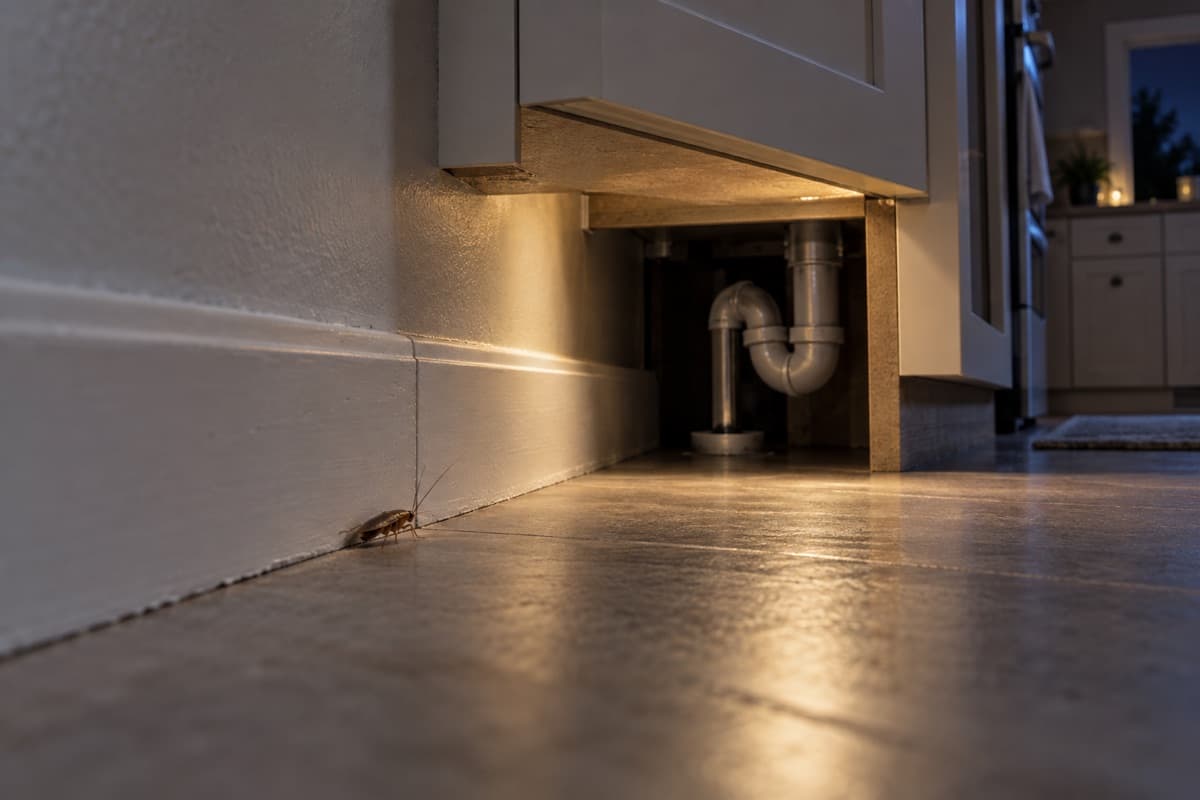
Water is the constraint people underestimate. German cockroaches favor warm, humid areas and concentrate near plumbing fixtures, in cupboard cracks, and under drawers and kitchen sinks. EPA's IPM guidance for housing tells managers to fix leaking pipes and faucets as soon as possible and to address condensation.
What to do:
- Fix drips at the kitchen and bathroom traps, supply valves, and the refrigerator water line. A slow drip inside a sink cabinet will keep a small population alive indefinitely.
- Dry the sink and tub at night, and do not leave standing water in a basin or a dish rack.
- Empty and dry the refrigerator drip pan, and check behind the dishwasher for seepage.
- Ventilate the bathroom and run the kitchen exhaust when cooking. Lower indoor humidity helps with mold as well.
- Pick up pet water bowls overnight where that is practical.
- Insulate sweating cold-water pipes in basements and utility closets.
Then Food
Cockroaches follow food odor, and grease residue counts as much as crumbs.
- Store dry goods, cereal, flour, sugar, and pet food in hard containers with tight lids rather than original packaging.
- Degrease the stovetop, range hood, the sides of the range and refrigerator, and the floor beneath both. This is the highest-yield cleaning you can do.
- Wash dishes the same night, or at minimum cover them with soapy water, which is Purdue Extension's advice to residents.
- Use garbage cans with tight lids, tie bags, and take trash out regularly. Rinse recyclables.
- Pick up pet food at night instead of free-feeding.
- Vacuum cabinet corners, under appliances, and along baseboards. A HEPA vacuum also removes droppings and allergen, and UF/IFAS recommends vacuuming heavy infestations before treatment for immediate reduction.
Take Away The Hiding Places
Harborage is the third leg, and it is the one most prevention advice skips. A cockroach wants a crack narrow enough to touch its back and belly at once.
- Cut cardboard and paper storage. Corrugated cardboard is close to ideal harborage, and stacks of it in a pantry, garage, or closet are a standing invitation.
- Caulk cracks and gaps inside and behind cabinets, at the toe kick, at the back corners of drawers, and where cabinets meet the wall and floor. Purdue specifically calls out sealing wall and ceiling cracks where kitchen cabinets meet wall and floor surfaces.
- Seal around plumbing and electrical penetrations in cabinets and walls. Foam gaskets behind outlet and switch plates take a minute each.
- Fix loose baseboard, trim, and backsplash edges.
- Repair or replace warped cabinet doors and torn drawer liners.
- Declutter the areas closest to food and water first: the sink cabinet, the pantry floor, the space beside the refrigerator.
Seal The Ways In
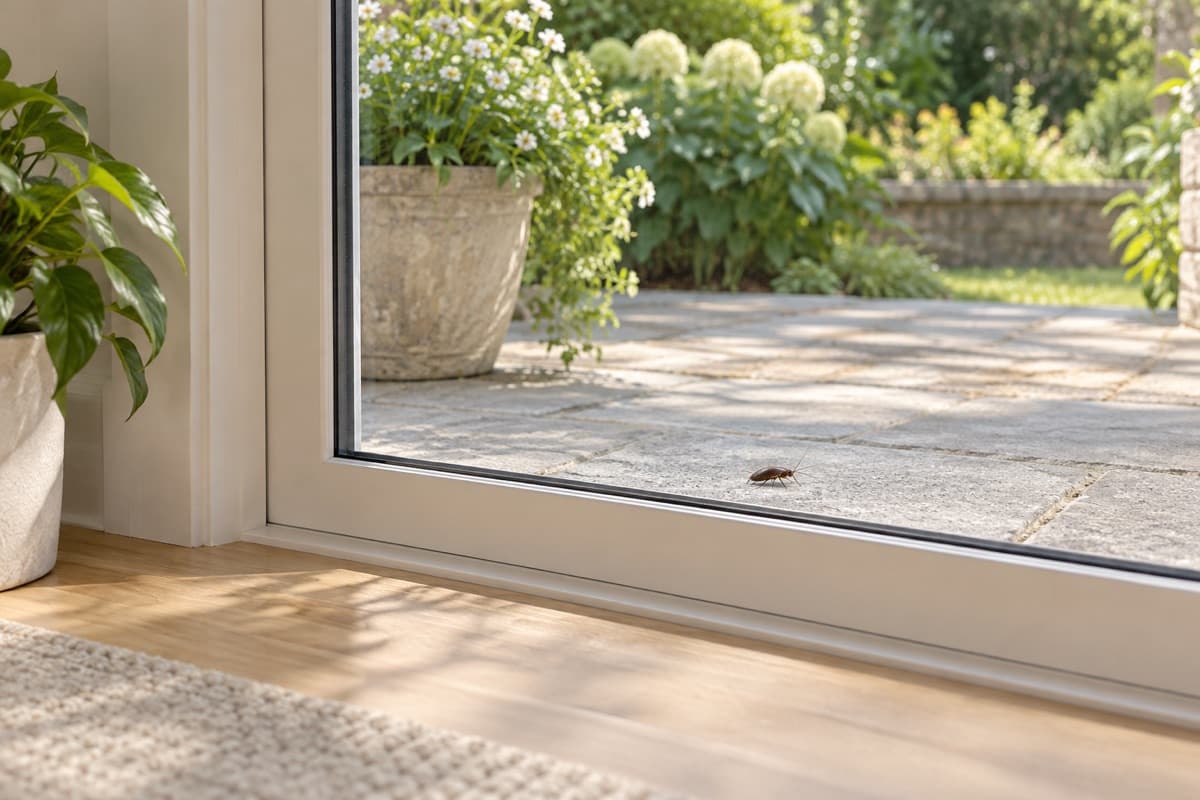
Exclusion will not stop an established indoor population, but it reduces the flow of new arrivals and matters a lot in multi-unit buildings and in warm climates with large outdoor species.
New York City's indoor allergen law gives a workable checklist. Covered landlords must repair and seal holes, gaps, and cracks in walls, ceilings, floors, molding, baseboards, around pipes and conduits, and inside cabinets; repair leaking plumbing; and fit door sweeps on doors to hallways, basements, and the outside. Apply the same list to your own home, plus:
- Door sweeps and weatherstripping on exterior doors, including the garage service door.
- Intact screens on windows and vents, and a sealed gap where the dryer vent passes through the wall.
- Sealant where utility lines, cable, and gas lines enter the house.
- Attention to floor drains and infrequently used sink drains, which dry out and lose their trap seal.
For a fuller tour of entry routes, see how roaches get in your house.
Monitor Permanently
This is the habit that makes prevention durable, and almost nobody does it. UF/IFAS describes sticky traps as your "eyes" in the property, working for you 24/7.
Keep four to eight traps in place all the time: under the kitchen sink, in the back corner of a lower cabinet, beside and behind the refrigerator, beside the range, in the bathroom vanity, and near the water heater or laundry. Place them tight against edges where walls meet floors, which is where cockroaches travel. Date each trap, check monthly, and replace them a few times a year or when they are dusty.
A single nymph on a trap is actionable information. A single nymph seen on the kitchen floor at 2 a.m., six months later, is a project.
Bait And IGRs, Not Sprays
When monitoring catches something, respond with bait rather than reaching for a can.
- Gel bait in small, pea-size dabs at cracks, cabinet corners, hinge areas, and appliance voids, placed where roaches travel rather than in the open. Follow the product label for placement and amount, and keep bait out of reach of children and pets or use enclosed stations.
- Do not spray near bait. UF/IFAS warns that using a product with repellent properties where bait may be applied "will render the bait ineffective because the treatment will contaminate the bait."
- Insect growth regulators are a useful companion. UF/IFAS explains that IGRs "will prevent the normal development of immature cockroaches so they cannot reproduce as adults." They do not kill adults and they work slowly, so they supplement bait rather than replace it. See how to use an IGR for roaches for placement.
- Rotate active ingredients if control stalls. UF/IFAS notes that product rotation slows resistance development, and that resistance shows up as cockroaches eating bait but not dying.
- Read and follow the label on every product. The label is the legally binding instruction set, and it specifies where a product may be used and what precautions apply around food, children, and pets.
If you are starting from an active infestation rather than a clean slate, work through how to get rid of roaches first and treat this guide as what comes after.
What Does Not Keep Roaches Away
- Total release foggers. In a 2019 BMC Public Health study, researchers set off foggers in 20 infested homes following label directions and found no reduction in cockroach populations at two weeks or one month, while gel bait eliminated populations in the 10 comparison homes. Insecticide residue on horizontal kitchen surfaces rose by a median of about 85 times baseline, in the places people and pets touch and not in the voids where roaches hide.
- Consumer pyrethroid sprays, used as a barrier. A companion study found German cockroaches collected from apartments were about 200-fold resistant to cypermethrin on average, with 96% carrying at least one copy of a known resistance mutation. Repellent sprays can also push cockroaches to move rather than die; a classic study found pyrethrin applications increased movement between apartments.
- Ultrasonic repellers. The FTC has warned manufacturers and retailers that "efficacy claims about those products must be supported by scientific evidence" and has brought enforcement actions over unsubstantiated pest-repeller claims.
- Essential oils and bay leaves as a perimeter. Laboratory work does show essential oils can kill German cockroaches, but the studies that report high mortality typically apply undiluted oil directly onto the insect in a closed container, which is nothing like misting a baseboard. Treat them as a pleasant smell, not a control measure. We go through the evidence in what essential oil repels roaches.
- Diatomaceous earth everywhere. It has a real mechanism, abrading and desiccating the insect cuticle, but NPIC notes it remains effective only as long as it is kept dry and undisturbed. That rules out the damp sink cabinets and pipe chases that matter most, and inhaling the dust can irritate airways, so apply thin layers in dry voids only and follow the label.
The Two Ways Roaches Come Back
Reinfestation almost always has one of two explanations, and the fix is different for each.
They walk in from a neighbor. In a 188-unit high-rise, Rutgers researchers found infestations statistically clustered among apartments that shared a wall, shared a ceiling or floor, or faced each other across the hall. A 1982 study measured interapartment movement of up to 30% per week where construction allowed it. If you share walls, sealing penetrations and reporting problems in writing matters as much as anything you do in your own kitchen. See what to do if your neighbors have roaches.
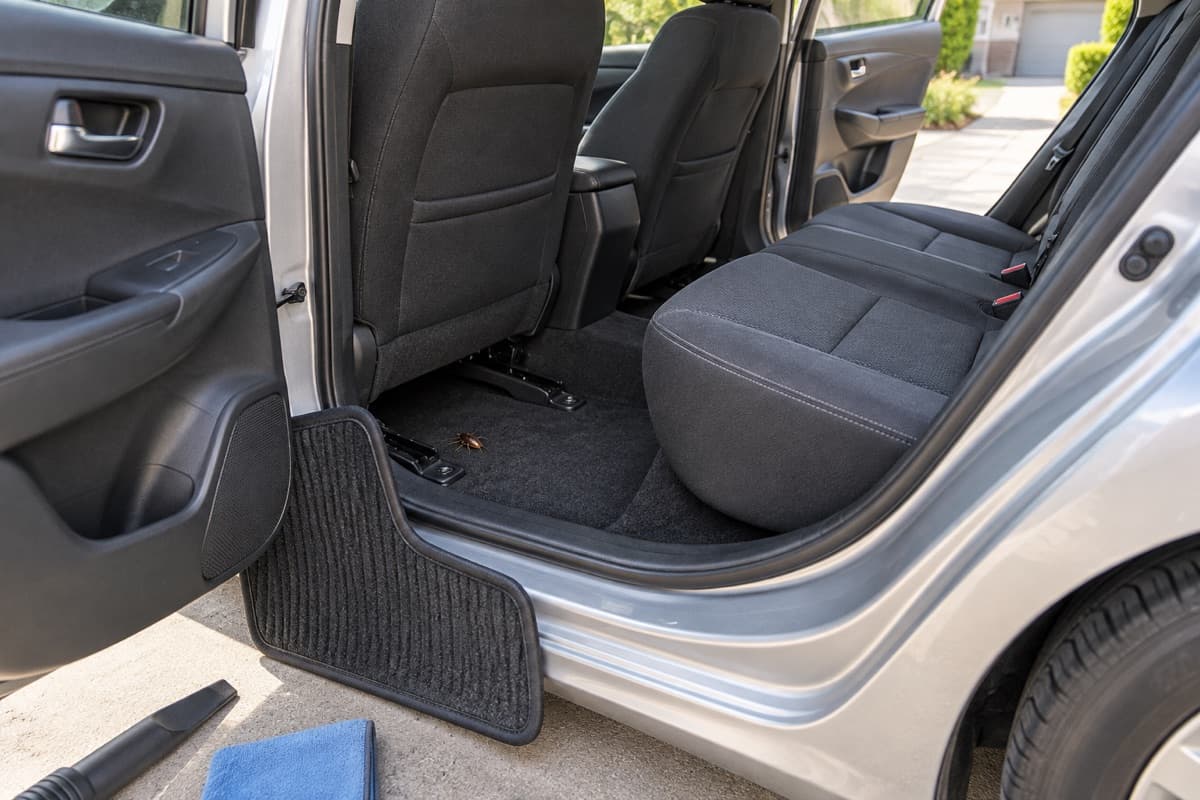
You carry them in. Long-distance spread of German cockroaches is entirely human-mediated. Used appliances with warm motor compartments, secondhand furniture, cardboard boxes, and grocery containers are the usual vehicles, and University of Minnesota Extension advises inspecting bags, boxes, and luggage for cockroaches and egg capsules before they come inside. If you are relocating, start with how likely it is to bring roaches when you move.
A Routine You Can Actually Keep
- Weekly: wipe the stovetop and around the range, take out trash, run the dishwasher or wash dishes nightly, check for new drips under sinks.
- Monthly: check and date sticky traps, pull the range out and sweep behind it, wipe the refrigerator seals and the floor underneath, empty and dry the drip pan.
- Quarterly: vacuum cabinet corners and baseboards, inspect and re-caulk any gaps that have opened, check door sweeps, clear accumulated cardboard.
- Annually: walk the exterior for new gaps at utility penetrations and door thresholds, re-check attic and crawlspace vent screens, replace monitors.
None of this takes long once it is habit. The thirty minutes a month is what buys you the "for good" part.
When To Call A Professional
Bring in a licensed pest control professional if:
- You see roaches during the day, or in more than one room.
- Trap counts are flat or rising after three to four weeks of consistent baiting.
- You live in a multi-unit building and the problem clearly extends beyond your unit.
- You keep getting reinfested despite good sanitation and sealing, which usually means a structural or building-wide source.
- Someone in the home has asthma. Cockroach allergen is an established asthma trigger, and HUD notes that cockroaches "can cause asthma in children" and transfer disease-causing organisms to food and surfaces.
Ask any company how they monitor results, whether they rotate bait active ingredients, and whether they will treat adjoining units. A single perimeter spray is not a prevention program.
Frequently Asked Questions
Can you ever be permanently rid of roaches?
You can get to zero and stay there for years, but not by installing something and walking away. Homes that stay clear are the ones with no water source, no accessible food residue, few tight hiding places, and traps in place to catch the next arrival early. In a shared-wall building, assume periodic pressure from neighboring units.
How long does it take for prevention to show results?
Sanitation and sealing change conditions immediately, but an existing population takes weeks to decline. In the Rutgers building-wide study, the share of infested apartments fell from 49% to 24% at six months and 12% at twelve months under an intensive program. Judge your own progress on monthly trap counts, not on sightings.
Do I need to spray a perimeter around my house every few months?
For German cockroaches indoors, no. Resistance to consumer pyrethroids is widespread, repellent residue interferes with bait, and the treatment does not reach the voids where the insects actually live. Exterior perimeter treatment can have a role against large outdoor species in warm climates, but it is not what keeps a kitchen clear.
Does keeping the house cold keep roaches away?
Not at a temperature you would live in. German cockroaches do best in warm conditions, roughly 70 to 75 degrees Fahrenheit, and development slows when it is cooler, but ordinary indoor temperatures are still comfortable for them. Moisture control is the lever worth pulling.
Are cockroach allergens a real health concern, or just unpleasant?
They are a recognized indoor asthma trigger, which is why federal housing guidance treats infestation as a health and safety issue rather than a cosmetic one. Reducing the population and removing droppings and debris by HEPA vacuuming both matter. Talk to a clinician if someone in the home has worsening asthma symptoms.
Do I still need bait if I have no roaches?
No. Bait is a response, not a maintenance product. Leaving old gel in place year-round mostly gives you dried-out, unattractive bait. Keep monitors out permanently, keep a fresh tube of gel on hand, and deploy it when a trap catches something.
What is the single highest-value thing I can do?
Fix every water source and degrease behind and under the range and refrigerator. Water is the hardest of the three needs for a cockroach to do without, and the grease film behind appliances is the food supply most people never remove.
Sources
- UF/IFAS Extension: Assessment-Based Pest Management of German Cockroaches — the food, water, and harborage "survival triangle," sticky traps as monitoring, IGRs, bait contamination by repellents, product rotation, and HEPA vacuuming.
- Wang, Eiden, Cooper, Zha, Wang, and Sanchez, *Journal of Integrated Pest Management* (2019) — building-wide IPM reducing infested units from 49% to 12% in 12 months versus 47% to 29% under conventional service.
- Wang, Eiden, Singh, Zha, Wang, and Cooper, *Journal of Economic Entomology* (2019) — clustering of infestations among adjacent, stacked, and across-hall apartments, and progress at 6 and 12 months.
- Owens and Bennett, *Journal of Economic Entomology* (1982) — interapartment movement up to 30% per week, and pyrethrin applications increasing that movement.
- DeVries, Santangelo, Crissman, Mick, and Schal, *BMC Public Health* (2019) — total release foggers ineffective against cockroaches, with heavy surface residue.
- DeVries, Santangelo, Crissman, Suazo, Kakumanu, and Schal, *Journal of Economic Entomology* (2019) — pyrethroid resistance levels and the L993F resistance mutation in apartment-collected cockroaches.
- Manzanares-Sierra, Monsonís-Güell, Gómez, Abril, and Moreno-Gómez, *Insects* (2025) — essential oil toxicity to German cockroaches measured by direct topical application in laboratory containers.
- NC State Extension: The German cockroach — sanitation reducing populations and allergen levels, monitoring, and baits.
- University of Minnesota Extension: Cockroaches — moisture and temperature preferences, inspecting items brought indoors, trap placement, and apartment treatment.
- Purdue Extension: A Practical Guide to Cockroach Control in Multi-Family Housing Units — resident sanitation steps, sealing cabinet and outlet gaps, and pea-size bait placements.
- EPA: Pest Control Resources for Housing Managers — monitoring, prompt leak repair, sealing openings, and vacuuming.
- NYC HPD: Indoor Allergen Hazards — the sealing, plumbing repair, and door sweep steps required under Local Law 55.
- HUD PIH Notice 2011-22: Promotion of Integrated Pest Management — IPM components and the statement on cockroaches and childhood asthma.
- FTC: Warning to manufacturers and retailers of ultrasonic pest-control devices — efficacy claims must be supported by scientific evidence.
- NPIC: Diatomaceous Earth General Fact Sheet — mechanism, the requirement that it stay dry and undisturbed, inhalation precautions, and following the label.