For washable clothes with a small amount of mold, pretreat the stains, wash with detergent at the warmest temperature the care label permits, and use a laundry bleach only if both the fabric and product instructions allow it. Check the result before using a hot dryer. Some mold stains and fiber damage are permanent, so a stronger chemical or another wash will not always save the garment.
A forgotten damp towel and a wardrobe soaked by sewage need different decisions. The steps below are for otherwise sound, washable clothing with limited growth from ordinary dampness. For flood-contaminated, extensively moldy, or valuable delicate items, get a textile restoration assessment before trying a home treatment.
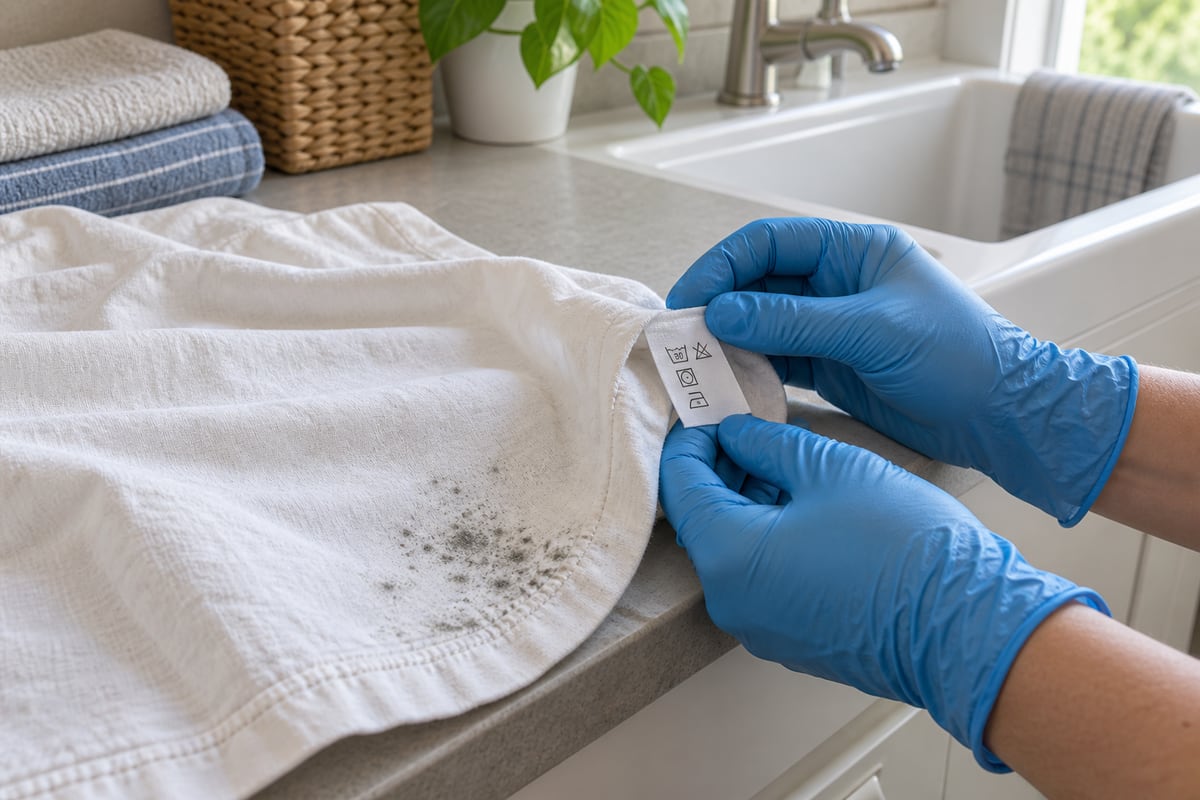
Decide Whether the Clothes Can Be Saved
Read the fiber content, washing temperature, and bleach restrictions. A white shirt may contain spandex or have a finish that rules out chlorine bleach. A washable label does not mean every stain remover is suitable.
- Ordinary washable fabric with a few spots: Try the label-compatible wash process below.
- Silk, wool, leather, structured garments, or dry-clean-only items: Call a cleaner who handles mold damage. Describe the problem before bringing the item in.
- Extensive growth, weakened fibers, or persistent odor after treatment: Consider replacement or specialist assessment. Repeated bleaching cannot repair fabric that is breaking down.
- Sewage, floodwater, or unknown chemical contamination: Keep these items separate from routine laundry and seek restoration advice.
Photograph damaged belongings before cleaning if they may be part of an insurance claim. Avoid shaking or dry-brushing moldy fabric indoors. For handling visible growth, use gloves, eye protection, and a well-fitting N95; people with asthma, chronic lung disease, or weakened immunity should have someone else handle cleanup. See the CDC's mold cleanup guidance.
Wash Mold-Stained Clothes Step by Step
The University of Georgia's fabric-cleaning guidance supports pretreating washable items with a non-ammonia detergent, using appropriate laundry bleach, and checking stains before heat drying.
- Separate the affected items. Keep them away from clean laundry and take them directly to the washing area. Do not leave them wet in a sealed bag for days.
- Pretreat the spots. Apply a laundry detergent or stain treatment that is suitable for the fabric. Follow its directions for application and waiting time; do not improvise a mixture of products.
- Choose one compatible stain-removal treatment. Use the fabric guidance in the next section. Test a hidden seam if the product calls for it, and stop if the color or texture changes.
- Wash a manageable load. Use the detergent dose for your machine and load size, with the warmest water the garment allows. Leave enough room for the clothes to move.
- Inspect before heat drying. If spots remain, repeat only a treatment allowed by the labels. Do not keep increasing the concentration or soaking time.
- Dry completely. Air-dry promptly while you evaluate stubborn staining; once satisfied, follow the normal drying instructions. Do not put damp clothing back into storage.
If freshly washed clothes keep smelling musty, check the machine before repeating the process. Our guide to cleaning mold from a washing machine covers the gasket, dispenser, and maintenance cycle.
Choose a Treatment That Fits the Fabric
Bleach-safe whites and colorfast fabrics
Chlorine laundry bleach can help remove mildew staining on compatible fabrics. Use the actual bottle's laundry directions and the washer's dispenser instructions. A cleaning recipe for shower tile is not a laundry recipe, and bleach concentrations differ between products.
Clorox's fabric guidance excludes wool, silk, mohair, leather, spandex, and colors that are not bleach-fast. Check blends and trims as well as the main fabric. Never pour undiluted chlorine bleach directly onto a garment.
Colored washable clothes
An oxygen-based laundry stain remover may be an option when chlorine bleach is prohibited. Check the product's allowed fabrics, hidden-area test, and soaking instructions. “Color-safe” is not a promise that every dye or fiber will tolerate it.
For example, OxiClean's pretreatment instructions exclude wool, silk, leather, their specified blends, and dry-clean-only fabrics from its powder treatments. An oxygen bleach is also not automatically a disinfectant: use only the claims and directions on its label.
Delicates and items that cannot be washed
Ask a professional cleaner whether the item can be treated and what permanent staining to expect. Tell them about previous products you used. This is especially useful for a lined jacket or heirloom item, where the outer fabric, lining, and trim may need different care.
Avoid These Common Mistakes
Do not mix chlorine bleach with vinegar, ammonia, or another cleaning chemical. Use laundry detergent alongside bleach only as the laundry product directions specify. If changing treatments, follow the washing and rinsing directions before using another product.
Skip bathroom mold sprays on clothing unless their labels specifically allow that fabric use. Do not boil a garment that calls for cool washing, or assume an overnight soak is better than the labeled contact time.
Sunlight can help dry suitable fabric, but fading and heat are concerns. It is not proof that a garment has been disinfected. Similarly, a pleasant scent does not establish that the mold problem has been resolved.
Keep the Stains From Returning
University of Missouri Extension emphasizes cleaning clothes before storage, drying them thoroughly, and allowing air to circulate. Spread out wet towels instead of burying them in a hamper, remove laundry promptly, and avoid packing a closet so tightly that fabric stays damp.
If several stored garments develop spots, inspect the closet and nearby wall for dampness. Check the room against our humidity guidance for mold prevention. After a leak, deal with wet storage areas quickly; mold growth after water damage can begin before the damage looks extensive.
Frequently Asked Questions
Can I remove mold stains without bleach?
Start with detergent and a fabric-compatible pretreatment. Some stains may lift without bleach, while older marks may remain. If the label prohibits bleaching, preserve that restriction rather than risking irreversible damage.
Does a black stain mean the clothing has toxic black mold?
No. Color alone cannot identify the organism or its health risk. Our explanation of mold and mildew covers the terminology; the practical response is to address growth and moisture.
Are clothes safe if a faint stain remains?
A remaining mark can be permanent discoloration, but appearance alone cannot establish that an item is clean. If growth, musty odor, or irritation persists, stop wearing it and seek advice or replace it. Do not promise yourself a particular wash cycle sterilized the fabric.
Should I throw away everything in the same closet?
Not automatically. Inspect each item and the storage space. Clean or assess affected items according to their materials, and fix the moisture source before returning belongings.