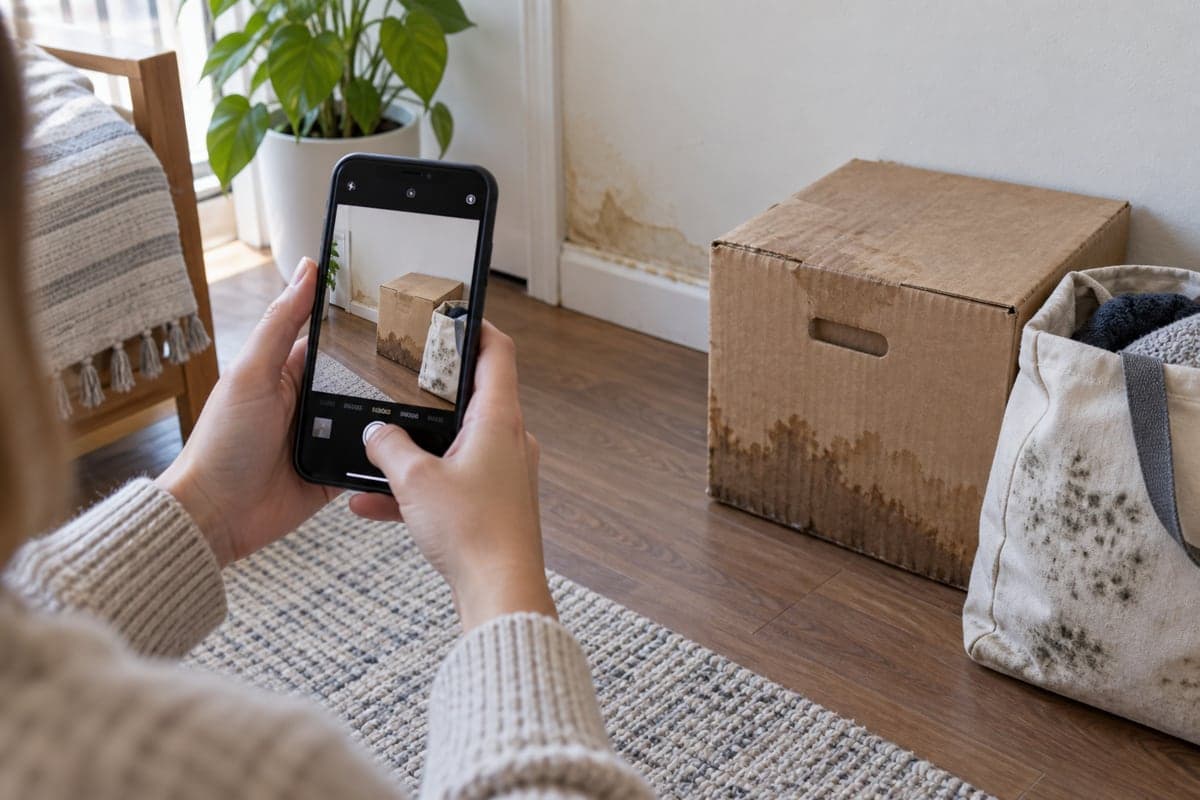
Mildew is not a separate organism from mold. The EPA explains that "mildew refers to certain kinds of mold or fungus," and that the word is often used loosely for mold growth with a flat growth habit, like the spots on shower walls and windowsills. In everyday use, "mildew" usually means thin surface growth that can be wiped or scrubbed off, and "mold" is used for everything else. Mildew is not reliably safer. The CDC says all molds should be treated the same with respect to potential health risks and removal. The difference that matters most is what the growth is on and whether the moisture behind it has been fixed.
The earlier version of this article said mildew is white, gray, or yellow and mold is green or black. Extension and agency sources don't support that. University of Missouri Extension describes household mildew as a "thin, black, or sometimes white" growth, and NDSU Extension says mold can be white, green, brown, black, or orange. You can't tell mold from mildew by color.
What People Mean by "Mildew"
The word gets used in a few different ways:
- Household mildew. This is the most common meaning. University of Missouri Extension describes mildew as a thin growth produced by mold, most common in humid summer weather, especially in closed-up houses. University of Georgia Extension says it usually starts when relative humidity stays around 60 percent and the temperature is 60°F or higher, and that it shows up on bathroom tile and on leather or plastic goods stored in closets.
- Early mold growth. FEMA's flood-cleanup brochure describes mildew as mold in an early stage.
- Plant diseases. In the garden, "mildew" names specific plant diseases. Clemson Extension describes powdery mildew as a group of plant diseases that form a grayish-white powdery mat on leaves. Penn State Extension notes that downy mildews aren't even believed to be closely related to true fungi. Neither is the same thing as the mildew in your bathroom, and they don't spread from plants to your walls.
Some people use "mildew" to mean growth that is less serious. That can be true in practice, since a small spot on sealed tile is easy to remove. But it's the size and location that make it minor, not the name.
Mold vs. Mildew: The Differences That Actually Matter
Instead of trying to label it, answer these questions:
Is it on a hard, nonporous surface or a porous one? Growth on tile, glass, sealed countertops, and painted trim can usually be scrubbed off. Growth on drywall, ceiling tiles, carpet, or other absorbent materials is harder to remove. The EPA says absorbent materials such as ceiling tiles and carpet "may have to be thrown away if they become moldy."
How big is it? The EPA says most people can handle a moldy area smaller than about 10 square feet, roughly a 3-by-3-foot patch, themselves.
Does it come back? Spots that return quickly after cleaning mean the moisture source is still there, whether that's shower steam, condensation, or a leak.
Is there a musty smell with no visible source? The EPA notes that mold in closed, poorly aired spaces such as basements can produce a strong musty odor. A smell without visible growth can point to hidden mold behind walls, under carpet, or in cabinets.
Is Mildew Less Harmful Than Mold?
Not in any way you can count on. The CDC says all molds should be treated the same with respect to potential health risks and removal, and it does not recommend testing to identify the type.
According to the CDC, exposure to damp and moldy environments "may cause a variety of health effects, or none at all." Sensitive people may get a stuffy nose, sore throat, coughing or wheezing, burning eyes, or a skin rash. People with asthma or mold allergies may have more severe reactions. People with weakened immune systems or chronic lung disease can get lung infections from mold. The CDC says these higher-risk groups should not clean up mold.
A small patch on shower grout is a lower concern than a large growth on water-damaged drywall because there's less of it and the cause is obvious, not because it's called mildew. For more on what the evidence says about specific molds, see what kind of mold is dangerous in a house.
How To Clean Mildew and Mold by Surface
Before you start, open windows, wear gloves and goggles, and consider an N95 respirator. The CDC recommends at least an N95 for mold cleanup. Never mix bleach with ammonia or any other cleaner. The combination can produce toxic fumes.
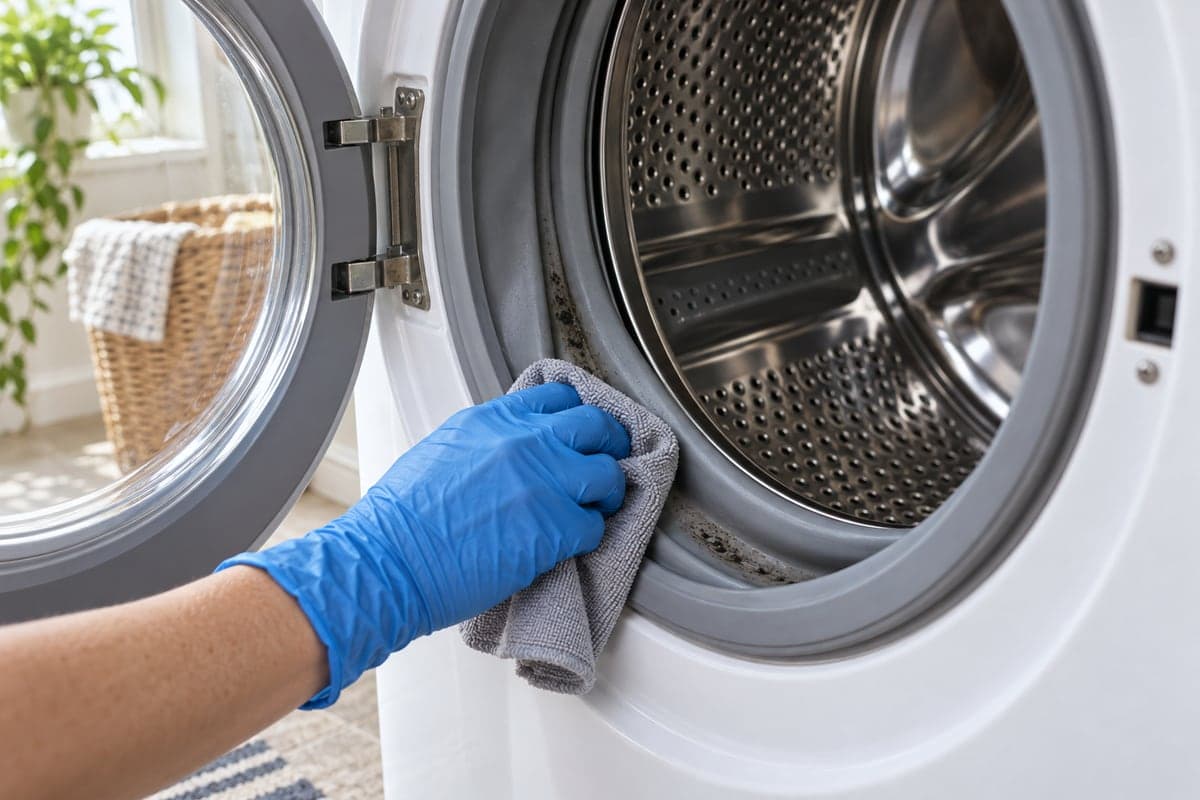
Hard surfaces (tile, tubs, glass, sealed counters). The EPA recommends scrubbing mold off hard surfaces with detergent and water and drying them completely. Bleach isn't required. The EPA does not recommend using bleach or other biocides as a routine practice, and notes that dead mold can still cause allergic reactions, so it has to be removed, not just killed. If you do use bleach, the CDC says to use no more than 1 cup of household bleach in 1 gallon of water. For vinegar, see how long vinegar should sit on mold.
Washable fabrics. University of Missouri Extension suggests brushing off the growth outdoors so spores don't spread inside, then washing with soap or detergent and water, rinsing well, and drying in the sun. Test colored fabrics for colorfastness before using any bleach, and don't use chlorine bleach on silk, wool, or spandex. NDSU Extension recommends sunning and airing mildewed textiles outdoors and laundering washable items with detergent, adding chlorine bleach only when the fabric allows it.
Leather. NDSU Extension suggests wiping leather with a cloth dampened in a mix of 1 cup denatured alcohol and 1 cup water, then letting it air-dry. Missouri Extension also mentions saddle soap. Alcohol is flammable, so keep it away from open flames.
Books and papers. NDSU Extension recommends standing books on end and spreading the pages to dry, then wiping mold off with a clean, dry cloth. Sprinkling talcum powder or cornstarch between pages can absorb moisture. University of Florida IFAS Extension advises brushing gently and avoiding scrubbing or extra moisture. Valuable documents are worth taking to a conservator.
Drywall, ceiling tiles, carpet, and insulation. These are porous, so cleaning the surface may not be enough. Small, light surface spots on painted drywall can sometimes be cleaned. Materials that are stained through, soft, or repeatedly wet usually need to be cut out and replaced once the moisture problem is fixed.
Don't paint over it. The EPA says not to paint or caulk moldy surfaces. Clean and dry them first.
When To Call a Professional
- The growth covers more than about 10 square feet.
- It's inside walls, under flooring, or in heating and cooling ducts.
- It followed flooding or sewage backup.
- A musty smell persists and you can't find the source.
- It keeps coming back after cleaning and fixing the obvious moisture.
- Someone in the home is at higher risk and no one else can safely do the cleanup.
If you're not sure whether you need an inspector, a remediation contractor, or a plumber first, our guide on who to call for a mold inspection explains the options.
How To Prevent Mildew and Mold
- Keep humidity down. The EPA recommends indoor relative humidity below 60 percent, ideally between 30 and 50 percent. See what humidity level helps prevent mold.
- Run exhaust fans during showers and cooking, and vent clothes dryers outside.
- Dry wet areas quickly. The EPA says drying wet materials within 24 to 48 hours prevents mold growth in most cases.
- Fix leaks promptly and wipe up condensation on windows and pipes.
- Air out closets and storage areas, and make sure stored leather, fabrics, and books are clean and dry.
- Squeegee or towel off shower walls so they don't stay wet between uses.
Frequently Asked Questions
Can you tell mold and mildew apart by color?
No. Household mildew can be black or white, and mold can be white, green, brown, black, orange, or other colors. Color doesn't identify the type or tell you how harmful it is.
Is mildew just mold that hasn't grown in yet?
Sometimes that's how the word is used. FEMA describes mildew as mold in an early stage, and the EPA says the term is often used for mold with a flat growth habit. There's no scientific line between "mildew" and "mold" in a home.
Does mildew smell different from mold?
Both can cause a musty odor. The EPA says the smell comes from microbial volatile organic compounds that molds release as they grow. A musty smell is a sign to look for moisture and growth, whatever you call it.
Is the mildew on my plants the same as the mildew in my bathroom?
No. Powdery and downy mildew are plant diseases caused by specific organisms that attack living plants. The mildew in a bathroom is mold growing on damp surfaces.
Should I use bleach on mildew?
You don't have to. The EPA recommends detergent and water for hard surfaces and doesn't recommend bleach as a routine practice. If you use it, dilute it to no more than 1 cup per gallon of water, ventilate the room, and never mix it with ammonia or other cleaners. Don't use chlorine bleach on silk, wool, or spandex.
Sources
- EPA: What is the difference between mold and mildew? — mildew as a term for certain molds with a flat growth habit, common locations, and musty odors.
- EPA: A Brief Guide to Mold, Moisture and Your Home — detergent and water, porous materials, the 10-square-foot threshold, painting, drying, and humidity.
- EPA: Should I use bleach to clean up mold? — biocides not recommended routinely, and removing dead mold.
- CDC: Mold, Mold Clean-Up, and Facts About *Stachybotrys chartarum* — health effects, higher-risk groups, bleach dilution, protective equipment, testing, and treating all molds the same.
- FEMA: Dealing With Mold and Mildew in Your Flood Damaged Home — mildew described as early-stage mold.
- University of Missouri Extension: Mildew — what mildew looks like, when it's common, and cleaning fabrics and leather.
- NDSU Extension: Molds in Your Home — mold colors and cleaning textiles, leather, and books.
- University of Georgia Extension — humidity and temperature conditions for mildew and where it appears.
- UF/IFAS Extension: Mildew removal — handling books and papers.
- Clemson HGIC: Powdery mildew and Penn State Extension: Downy mildew — plant mildew diseases.