There is no reliable answer in hours, because ozone does not dependably kill mold on real building materials at any concentration a person can safely be near. In the EPA-funded chamber study that most other guidance traces back to, ozone at 6 to almost 10 parts per million killed fungi dried onto glass slides, but when the researchers repeated the test on actual building materials, "no kill was demonstrated even at 9 ppm ozone". For scale, 9 ppm is roughly 90 times the OSHA permissible exposure limit and the NIOSH ceiling of 0.1 ppm, and nearly twice the level NIOSH considers immediately dangerous to life or health. EPA's own assessment concludes that ozone used at concentrations that do not exceed public health standards "does not effectively remove viruses, bacteria, mold, or other biological pollutants," and that even at high concentrations it "may have no effect on biological contaminants embedded in porous material." Mold in a wall, a ceiling tile, or a carpet pad is embedded in porous material.
The earlier version of this article said ozone kills mold spores in 3 to 6 hours, with 24 to 48 hours for "complete eradication," and that ozone dissipates in 30 minutes to an hour. None of those numbers came from a source, and the framing was wrong in a way that matters: it implied that the only question is how long to run the machine. The real finding in the published work is that the dose needed to sterilize a damp building surface is far outside the range anyone can safely occupy, and that killing mold does not remove it. This version replaces those figures with what the research actually reports.
Where the Hour Figures on the Internet Come From
Search for this question and you will find confident numbers: two hours, six hours, 24 hours, one hour of airing out. Almost none of them cite anything. They are generally either restated from ozone generator marketing copy, or reverse-engineered from the run-time dial on a rental unit.
The underlying problem is that "how fast" is the wrong variable on its own. Oxidation by ozone follows a dose relationship: concentration multiplied by contact time, modified heavily by humidity, temperature, the surface the organism is sitting on, and how much other oxidizable material is in the room competing for the ozone. Doubling the time does not compensate for a concentration that is two orders of magnitude too low, and there is no published exposure schedule that gets a home ozone generator to a verified kill inside a wall cavity.
What the Lab Data Actually Show
The most relevant study is Foarde, VanOsdell, and Steiber's 1997 work for EPA's Air and Energy Engineering Research Laboratory, published in Applied Occupational and Environmental Hygiene. The team dried suspensions of vegetative fungi, spore-forming fungi, and spore-forming bacteria onto test surfaces and exposed them to 3 to 10 ppm ozone in a 50-liter chamber at both 30 percent and 90 percent relative humidity. Three findings matter for a homeowner:
- The effective range started around 6 ppm. EPA's record of the study states that "ozone concentrations in the range of 6 to almost 10 ppm were required for significant kill."
- Humidity changed the answer substantially. Organisms were more susceptible at high humidity, which is awkward, because the standard advice before an ozone treatment is to dry the space out first.
- Real materials defeated it. When glass slides were swapped for actual building materials, no kill was demonstrated at 9 ppm.
That last point is the one that ends the conversation for mold remediation. Porous, fibrous, organic building materials both shield the organism and consume ozone. EPA's consumer assessment cites this study directly when it notes that contaminants embedded in porous material "may not be affected at all."
EPA also frames the concentration gap plainly: ozone levels "would have to be 5 - 10 times higher than public health standards allow before the ozone could decontaminate the air sufficiently to prevent survival and regeneration of the organisms once the ozone is removed." Survival and regeneration is the operative phrase. Suppressing growth while the gas is present is not the same as ending the problem.
Killing Mold Is Not the Same as Removing It
Even if a treatment did sterilize a surface, you would not be finished. EPA's homeowner guidance is direct: "Dead mold may still cause allergic reactions in some people, so it is not enough to simply kill the mold, it must also be removed."
The allergenic proteins and fragments in mold do not stop being allergenic because the organism is no longer viable. Neither do mycotoxins, where they are present. A sterilized moldy ceiling tile is still a moldy ceiling tile, and EPA's ten-point summary says absorbent materials like ceiling tiles that are moldy "may need to be replaced."
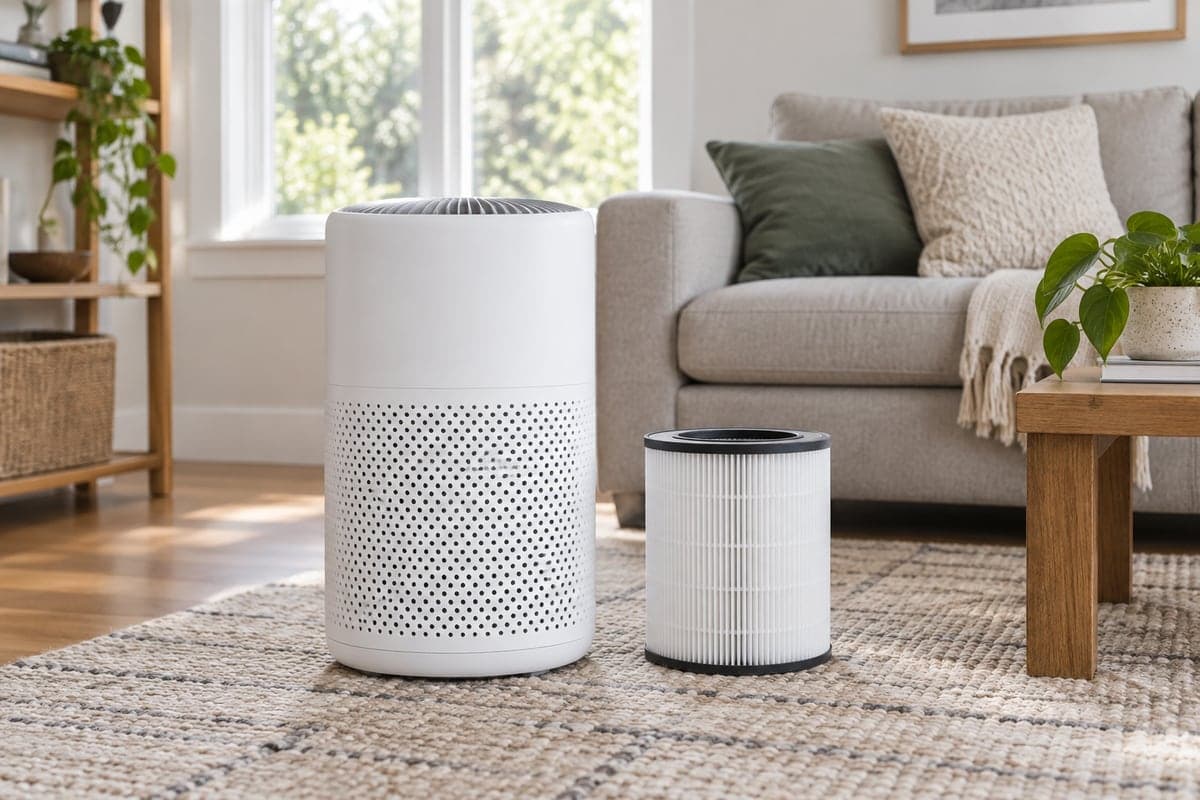
This is the same reason air purifiers cannot solve a mold problem on their own. Filtration catches airborne spores; it does not address the colony or the water feeding it. Ozone has the same structural limitation with additional risk attached.
What Ozone Does to People, Pets, and Materials
Ozone is not a benign "activated oxygen." NIOSH classifies it as a pungent, highly reactive oxidizer with an IDLH value of 5 ppm and lists pulmonary edema and chronic respiratory disease among its effects. The Connecticut Department of Public Health recommends outright that ozone generators not be used in the home, noting that exposure can "inflame the lungs and lining of the respiratory tract, lead to permanent lung damage, and make it harder for the body to fight respiratory diseases."
Three secondary problems are less widely understood:
- Ozone makes new pollutants indoors. It reacts with terpenes, the citrus and pine fragrance compounds in ordinary cleaners, air fresheners, and personal care products, to form reaction products including formaldehyde. Connecticut DPH describes these products as potentially "even more irritating than the parent chemicals," and EPA notes aldehydes and formic acid among the byproducts.
- It damages things. EPA lists rubber, electrical wire coatings, fabrics, artwork with susceptible dyes, and indoor plants as vulnerable. That includes appliance gaskets, weatherstripping, and elastic in textiles.
- It deadens your sense of smell. Connecticut DPH points out that ozone masks odors partly by impairing olfaction, which removes the natural warning that the concentration is too high.
The California Air Resources Board, which regulates air cleaner ozone emissions, advises against using ozone generators in spaces occupied by people or animals and maintains a list of potentially hazardous devices. For reference, California's 8-hour health standard for ozone in outdoor air is 70 parts per billion, or 0.070 ppm — about one one-hundred-and-thirtieth of the 9 ppm that still failed to kill mold on building materials.
How Long the Ozone Itself Sticks Around
If you have already run a machine, the airing-out question is at least answerable. Weschler's review of indoor ozone in Indoor Air reports that under normal conditions the half-life of ozone indoors is about 7 to 10 minutes, governed mainly by surface removal and air exchange. A furnished room scrubs ozone faster than a bare one, because there is more surface to react with.
Practically, that means a well-ventilated room drops toward background within an hour or two, and the old "30 minutes" figure is optimistic for a space that was shocked hard. Two cautions apply. First, half-life describes decay, not safety: starting from a high concentration, several half-lives are needed. Second, the reaction products that formed while the ozone was present do not decay on the same schedule. Ventilate generously with outdoor air, run exhaust fans, and keep people and pets out longer than you think you need to.
What Actually Resolves Mold
The sequence that works is unglamorous and well documented.
- Find and fix the water. EPA is unambiguous that "the way to control indoor mold growth is to control moisture." A treatment applied over an active leak fails on schedule. If you are not sure where the growth is, start with the signs that indicate mold inside wall cavities.
- Dry the materials fast. Wet or damp materials dried within 24 to 48 hours will in most cases not grow mold. Past that window, drying alone stops being enough — and drying an existing colony does not kill it, which is covered in how long mold survives without moisture.
- Physically remove the growth. Scrub hard surfaces with detergent and water and dry completely. Discard porous materials that are saturated or visibly colonized. EPA notes that a biocide such as chlorine bleach "is not recommended as a routine practice during mold cleanup."
- Wear the right protection. For anything beyond a small patch, EPA suggests an N-95 respirator, gloves, and goggles without ventilation holes.
- Hold the humidity down afterward. Keep indoor relative humidity below 60 percent and ideally between 30 and 50 percent; our guide to indoor humidity targets covers how to get there season by season.
Our full walkthrough of getting rid of mold and keeping it out covers the order of operations in detail.
Is There Any Legitimate Use for Ozone Here?
Yes, but it is narrow, and it is not mold remediation.
EPA acknowledges that high ozone concentrations in unoccupied spaces are "sometimes used to help decontaminate an unoccupied space from certain chemical or biological contaminants or odors (e.g., fire restoration)," while adding that little is known about the chemical byproducts left behind, and that "conditions should be sufficiently controlled to insure that no person or pet becomes exposed."
That is an odor application, performed by a contractor, in a vacated structure, usually after smoke damage. It is a reasonable tool for smoke odor and a poor tool for a fungal colony in a wall. If a mold remediation contractor proposes ozone as the treatment rather than as a final odor step after removal and drying, treat that as a reason to get another quote.
DIY or Call a Pro?
Handle it yourself when the affected area is under about 10 square feet — roughly a 3-by-3-foot patch, EPA's threshold — the surface is hard and non-porous, the moisture source is obvious and fixed, and nobody in the house has asthma, a mold allergy, chronic lung disease, or a weakened immune system.
Call a professional when the area is larger than that, when growth keeps returning on drywall or ceilings rather than tile, when there is sewage or floodwater involved, when HVAC ductwork is contaminated, or when you cannot find the water source. Our overview of how long mold remediation takes sets expectations for scope and schedule before you start collecting bids.
Frequently Asked Questions
How many hours should I run an ozone generator to kill mold?
There is no exposure time that makes this work as intended. The published chamber work found no kill on actual building materials even at 9 ppm, a concentration far above what is safe to occupy and close to the level NIOSH considers immediately dangerous. Running a consumer unit longer does not close a gap that large.
Does ozone kill mold spores in the air?
It can reduce airborne viable counts while the gas is present. EPA notes that concentrations would have to be 5 to 10 times higher than public health standards allow to decontaminate air well enough to prevent survival and regeneration once the ozone is gone. Airborne spores are also continuously resupplied by the colony, so treating the air without removing the source produces a temporary reading, not a fix.
Will ozone get rid of the musty smell?
Often it will reduce it for a while, and that is exactly the trap. The musty odor comes from microbial volatile organic compounds produced by active growth. Suppress the smell and you lose the main signal that something is still wet behind a surface. Ozone can also blunt your sense of smell, which compounds the problem.
Is ozone safer than bleach for mold?
Neither is the answer, and they fail differently. Bleach does not penetrate porous materials, and EPA does not recommend biocides as a routine step in mold cleanup at all. Ozone adds an inhalation hazard and creates new reaction products indoors. Physical removal plus moisture control outperforms both.
How long until it is safe to go back in after an ozone treatment?
Indoor ozone has a half-life of roughly 7 to 10 minutes under normal conditions, so with good ventilation a room typically clears within a couple of hours. Air the space out with outdoor air rather than waiting passively, keep pets and anyone with respiratory disease out longer, and remember that the byproducts ozone formed with household chemicals do not clear on the same timeline.
Does ozone destroy mycotoxins?
That claim is common in marketing and is not supported by the indoor-air guidance from EPA, CARB, or state health departments, none of which endorse ozone for mold. Mycotoxins are associated with the mold biomass in and on the material. Removing the material is the established approach.
Are ozone generators legal to sell?
Yes, mostly. EPA notes that no agency has clear authority over ozone emissions from air cleaning devices, a point Connecticut DPH repeats. California regulates ozone emissions from indoor air cleaners and requires certification, which is why many units are labeled as CARB-compliant. Legality here reflects a regulatory gap, not evidence of effectiveness.
Sources
- EPA: Ozone Generators That Are Sold as Air Cleaners — ozone at safe concentrations does not remove mold or other biological pollutants, the 5-to-10-times gap, no effect on contaminants embedded in porous material, byproducts, material damage, and the limited unoccupied-space use case.
- EPA Science Inventory: Investigation of Gas-Phase Ozone as a Potential Biocide (Foarde, VanOsdell, and Steiber, 1997) — 3 to 10 ppm chamber tests at 30 and 90 percent relative humidity, 6 to nearly 10 ppm needed for significant kill, and no kill on actual building materials at 9 ppm.
- CDC/NIOSH Pocket Guide to Chemical Hazards: Ozone — NIOSH ceiling of 0.1 ppm, OSHA PEL of 0.1 ppm, IDLH of 5 ppm, and health effects.
- California Air Resources Board: Hazardous Ozone-Generating Air Purifiers — the 2007 certification regulation, the advisory against use in occupied spaces, California's 70 ppb 8-hour standard, and the ineffectiveness of below-standard ozone against biological contaminants.
- Connecticut Department of Public Health: Ozone Generators, What You Need to Know — recommendation against home use, terpene reactions forming formaldehyde, damage to plastics and rubber, odor masking by deadening smell, and the regulatory gap.
- EPA: A Brief Guide to Mold, Moisture and Your Home — dead mold is still allergenic and must be removed, the 10-square-foot DIY threshold, 24-to-48-hour drying window, 30 to 50 percent humidity target, PPE, and biocides not recommended as routine practice.
- EPA: Ten Things You Should Know About Mold — moisture control as the mechanism, and replacement of absorbent materials such as moldy ceiling tiles.
- Weschler, "Ozone in Indoor Environments: Concentration and Chemistry," *Indoor Air* 10 (2000) — indoor ozone half-life of roughly 7 to 10 minutes, driven by surface removal and air exchange.