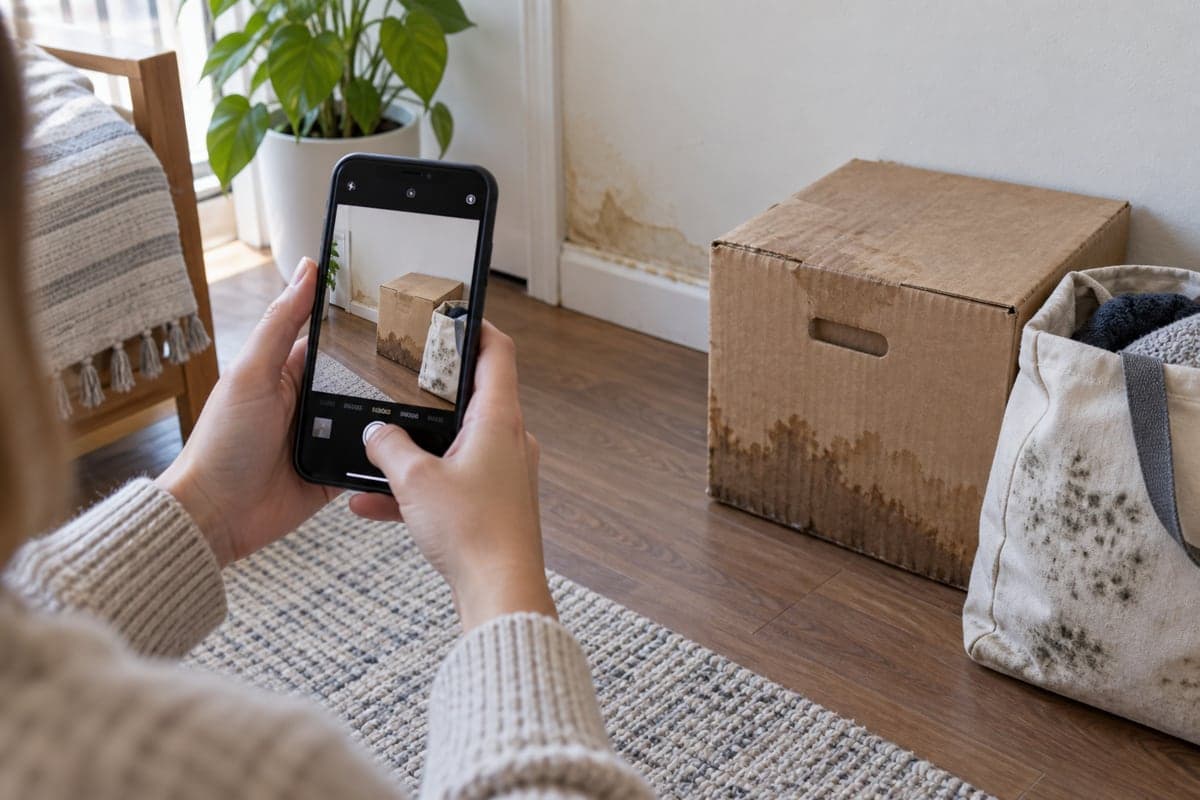
"Red mold" is a description of a color, not the name of an organism. The reddish or pink slime most people find on shower tile, grout, and toilet rims is usually a bacterium, Serratia marcescens, which produces a red pigment and grows on soap and shampoo residue. Genuinely fungal red growth does exist and is usually Rhodotorula, a pink yeast, or Fusarium, a mold that colonizes chronically wet building materials. For nearly everyone, the practical answer is the same: it is a moisture and cleaning problem, not a diagnosis. The EPA says you can usually clean a moldy area smaller than about 10 square feet yourself, and that "the key to mold control is moisture control."
The earlier version of this article described red mold as "a type of fungus." That is only sometimes true, and the distinction matters, because the most common culprit is a bacterium that responds to cleaning and drying rather than to fungicides or mold testing. This version explains which organism you are likely looking at and what actually changes the outcome.
What "Red Mold" Usually Turns Out To Be
Several unrelated organisms can produce red, pink, or orange growth indoors. Color alone cannot tell you which one you have.
- Serratia marcescens, a bacterium. This is the usual answer for a pink-to-red film in showers, tubs, sinks, and toilet bowls. Water utilities describe it as an airborne organism that settles wherever moisture and soap scum collect. Gwinnett County's water department notes that it feeds on "phosphorous containing materials or fatty substances" such as soap residue and that it is not known to cause waterborne disease. It is not in your tap water in any meaningful sense; it arrives from the air and grows on wet surfaces.
- Rhodotorula, a pink yeast. This one is a fungus. A 2012 review in *Interdisciplinary Perspectives on Infectious Diseases* notes that Rhodotorula forms pink to red colonies and "has a strong affinity for plastic," which is why it is recovered from shower curtains, bathtubs, and toothbrushes.
- Fusarium, a true mold. Fusarium species turn up on building materials that stay wet for long stretches. A 2018 survey of damp indoor surfaces in *Current Medical Mycology* isolated Fusarium merismoides and Fusarium solani among the species growing on damp walls and fixtures. Colonies can appear pink, salmon, or reddish.
- Neurospora, the so-called red bread mold. The nickname is misleading. Stanford geneticist David Perkins argued in the Fungal Genetics Newsletter that "red bread mold" is an inappropriate name, because conidiating Neurospora species are "orange or yellow-orange rather than red" and their occurrence on bread "is rare compared to other contaminating molds." You are unlikely to meet it in a bathroom.
If your growth is pink rather than frankly red, our guide to pink mold in bathrooms covers the same organisms in more detail.
Why It Grows Where It Does
Nothing on that list is exotic. All of them are already present in ordinary house dust and air, and they become visible only when a surface stays wet long enough.
The World Health Organization's 2009 dampness and mould guidelines, summarized in a document archived by CDC, put it plainly: "The amount of water on or in materials is the most important trigger of the growth of microorganisms," and "the dust and dirt normally present in most indoor spaces provide sufficient nutrients to support extensive microbial growth."
In a bathroom, three things line up:
- Water that never fully dries. The bottom of a shower, the caulk line, the underside of a soap dish, the toilet rim jets.
- A food source. Soap, shampoo, conditioner, body oils, and the phosphates in some products.
- Warmth and still air. A bathroom with no working exhaust fan holds humid air for hours after a shower.
That combination explains why the growth returns on a schedule. It also explains why mold keeps coming back in showers even in clean homes.
Is Red Mold Dangerous?
For most healthy people, red or pink bathroom slime is a nuisance rather than a hazard. The honest answer requires separating three different questions.
Do these specific organisms cause infections? Rarely, and mainly in people who are already seriously ill. The Rhodotorula review describes infection risk concentrated among patients with cancer, central venous catheters, chemotherapy, or corticosteroid treatment. CDC's Emerging Infectious Diseases journal describes invasive Fusarium infection as a problem primarily for patients with hematologic malignancies and transplant recipients. Serratia marcescens is a recognized cause of healthcare-associated infection, but the county water guidance above notes it is not a waterborne disease agent.
Does living with damp, moldy surfaces affect health? Yes, and this is the better-supported point. WHO concluded that there is "sufficient epidemiological evidence" that occupants of damp or mouldy buildings "are at increased risk of respiratory symptoms, respiratory infections and exacerbation of asthma." CDC similarly states that exposure to damp and moldy environments "may cause a variety of health effects, or none at all," with people who have asthma, mold allergy, chronic lung disease, or weakened immune systems at greater risk.
Is there such a thing as a uniquely toxic colored mold? Not in the way the internet suggests. CDC's own guidance says that it is not necessary to determine what type of mold is growing, because "all molds should be treated the same with respect to potential health risks and removal," and that "no test exists that proves an association between Stachybotrys chartarum and particular health symptoms." WHO likewise concluded that because the relationships "cannot be quantified precisely, no quantitative health-based guideline values or thresholds can be recommended."
If someone in your home is having ongoing respiratory symptoms, the right step is a conversation with a clinician, not a color chart. Our overview of what mold illness means and what is actually established covers where the evidence is firm and where it is not.
How To Clean It Safely
For the small patches typical of a bathroom, this is a 20-minute job.
- Ventilate. Open a window and run the exhaust fan before you start.
- Wear gloves and eye protection. EPA suggests long gloves, goggles without ventilation holes, and an N-95 respirator for larger cleanups.
- Scrub with detergent and water first. EPA's cleanup guidance is explicit: "Scrub mold off hard surfaces with detergent and water, and dry completely." Mechanical scrubbing removes the biofilm that protects the organisms; a spray alone often does not.
- Disinfect the hard surface if you want to. For Serratia specifically, water utilities recommend following cleaning with a chlorine bleach solution on hard, nonporous surfaces. EPA notes that biocides such as chlorine bleach are "not recommended as a routine practice" for mold cleanup, so treat it as optional rather than required.
- Dry the surface. Squeegee or towel it. Leaving it wet restarts the clock.
- Repeat on a schedule. These organisms are constantly reintroduced from the air. Cleaning every couple of weeks in a wet bathroom is normal maintenance, not failure.
What Not To Do
- Do not mix bleach with anything. Washington State Department of Health warns that bleach plus ammonia produces chloramine gases and that "when chlorine bleach is mixed with an acid, chlorine gas is given off." Vinegar, toilet bowl cleaners, and rust removers are acids. If you inhale fumes after mixing products, Poison Control advises leaving the area for fresh air and calling 1-800-222-1222.
- Do not paint over it. EPA's guidance: "Do not paint or caulk moldy surfaces. Clean up the mold and dry the surfaces before painting."
- Do not order a mold test to identify the color. CDC does not recommend mold testing, partly because "there are no set standards for what is and what is not an acceptable quantity of different kinds of mold in a home."
- Do not assume a fungicide fixes it. If the organism is Serratia, it is a bacterium, and if the surface stays wet, anything you apply is temporary.
Red Mold on Food
Discolored food is a separate question from bathroom slime, and the answer is more conservative. USDA's Food Safety and Inspection Service fact sheet *Molds on Food: Are They Dangerous?* advises discarding most moldy soft or high-moisture foods, because visible growth is only the surface of a network of root threads and, in the case of toxin-producing molds, "poisonous substances are often contained in and around these threads." The main exception is firm, low-moisture foods: for hard cheese and firm vegetables such as cabbage, bell peppers, and carrots, USDA says to cut off at least one inch around and below the mold spot and keep the knife out of the mold itself. FSIS also advises not sniffing moldy food, since that can cause respiratory trouble.
Some Fusarium species that grow on grains produce mycotoxins, which is a real food safety concern handled upstream by grain testing rather than by home inspection.
Keeping It From Coming Back
Cleaning treats the symptom. Drying treats the cause.
- Run the exhaust fan during every shower and for at least 20 minutes afterward. That run time is the Home Ventilating Institute's recommendation, and a timer switch makes it automatic.
- Keep indoor relative humidity below 60 percent, ideally 30 to 50 percent. EPA gives that range and notes that a hygrometer costs $10 to $50. Our guide to target humidity levels covers how to hit it season by season.
- Squeegee the shower walls and door. It takes 30 seconds and removes most of the standing water.
- Rinse soap and shampoo residue off ledges and the tub floor. That residue is the food supply.
- Fix drips quickly. EPA notes that if damp materials are dried within 24 to 48 hours, "in most cases mold will not grow."
- Wash shower curtains and bath mats, and replace plastic liners that have developed a permanent film.
When To Call a Professional
Bring in help when the problem is bigger than a surface.
- The affected area is larger than about 10 square feet, which is EPA's threshold for considering professional remediation.
- The growth keeps returning on drywall or ceiling rather than on tile and grout, which suggests water inside the assembly. See how to tell if there is mold in your walls.
- There is visible water damage, staining, or a musty smell with no obvious source.
- The moisture comes from a plumbing or roof leak. Fix the leak first; remediation without it fails.
- Someone in the home has asthma, a mold allergy, chronic lung disease, or a weakened immune system, in which case avoid doing the cleanup yourself.
If the job is beyond a scrub brush, our guide to getting rid of mold walks through the sequence and what a remediation contractor should be doing.
Frequently Asked Questions
Is red mold the same as black mold?
No, and neither name identifies an organism reliably. "Black mold" usually refers to Stachybotrys chartarum, though many dark molds look similar. "Red mold" most often turns out to be Serratia marcescens, a bacterium. CDC advises treating all indoor mold growth the same way regardless of color, because color does not predict health risk.
Does red mold mean my water is contaminated?
Almost never. Water utilities describe Serratia marcescens as an airborne organism that settles on wet bathroom surfaces rather than something delivered through the tap. Gwinnett County notes that growth can actually increase when a carbon filter removes the chlorine residual from the water, because the disinfectant that would suppress it is gone.
Will bleach kill red mold permanently?
It will clear the surface, but not permanently. These organisms are continuously reintroduced from the air and will regrow anywhere that stays wet and has soap residue. EPA also cautions that bleach is not needed as a routine step, and on porous materials it does not reach growth below the surface. Drying the surface is what extends the interval between cleanings.
Can red mold make my dog or cat sick?
There is little research specifically on pets and bathroom biofilms. The general principle from mold guidance applies: keep animals out of persistently damp, visibly moldy spaces, wash pet bowls and bedding regularly, and if your pet develops coughing, skin problems, or other unexplained symptoms, ask your veterinarian rather than assuming a cause.
Is it worth testing to find out which organism it is?
For a bathroom surface, no. CDC does not recommend mold testing for homes, and identifying the species would not change what you do, which is clean the surface and dry it. Testing occasionally makes sense in a dispute with a landlord or insurer, or as part of a documented remediation project.
Why does it come back within a week?
Because the conditions did not change. If a bathroom holds humid air after every shower and the tub floor stays wet, the surface will recolonize quickly. Adding fan run time, squeegeeing, and rinsing residue typically stretches the interval from days to weeks.
Can red growth appear outside the bathroom?
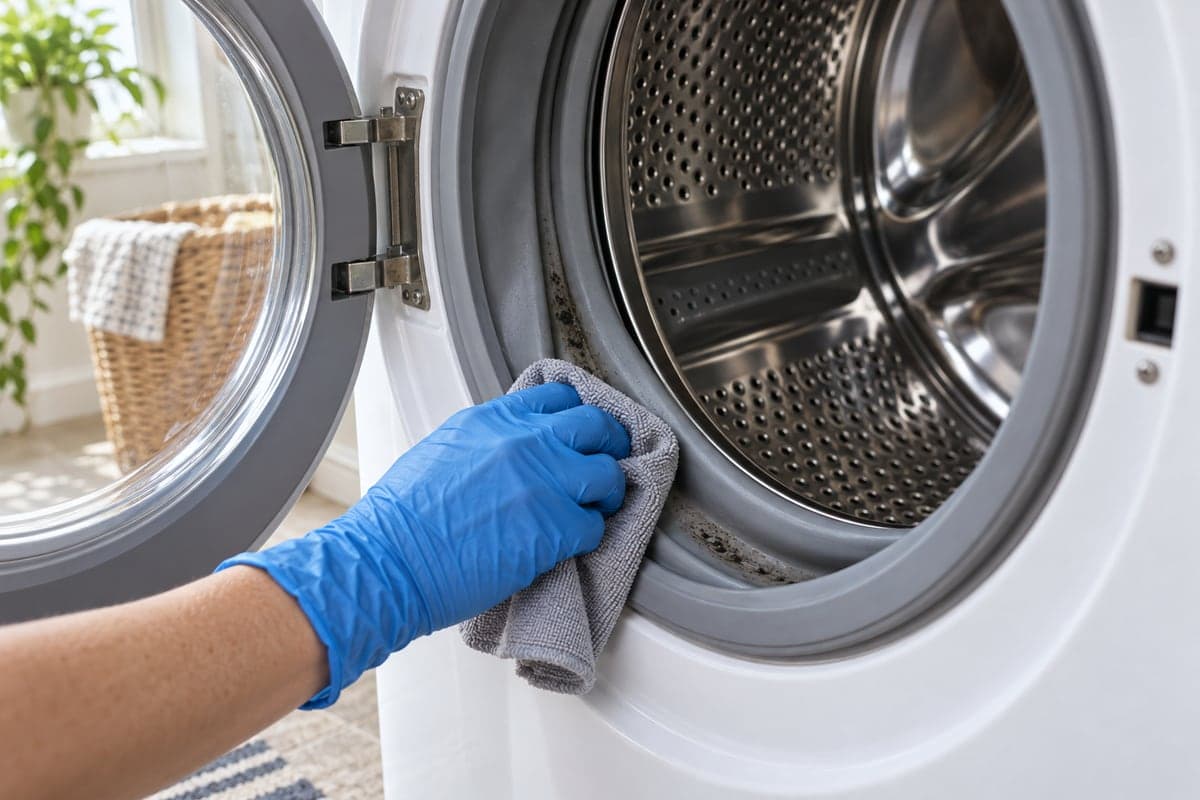
Yes. Pink and red films show up in humidifier tanks, pet water bowls, washing machine gaskets, refrigerator drip pans, and around window condensation. The same logic applies: standing water plus organic residue.
Sources
- EPA: A Brief Guide to Mold, Moisture and Your Home — the 10-square-foot DIY threshold, 30 to 50 percent humidity target, 24 to 48 hour drying window, PPE, and the caution against routine biocide use.
- EPA: Mold Cleanup in Your Home — scrub with detergent and water, do not paint over mold, discard porous materials.
- CDC: About Mold and Health — who is at higher risk, and why CDC does not recommend mold testing.
- CDC: Facts About Stachybotrys chartarum — all molds should be treated the same, and no test links a species to specific symptoms.
- WHO Guidelines for Indoor Air Quality: Dampness and Mould, executive summary (archived by CDC) — sufficient evidence for respiratory outcomes, no quantitative thresholds, and the role of water in materials.
- Wirth and Goldani, *Interdisciplinary Perspectives on Infectious Diseases* (2012) — Rhodotorula pigment, affinity for plastic, and who is at risk of infection.
- Nasri et al., *Current Medical Mycology* (2018) — fungi isolated from damp indoor surfaces, including Fusarium species.
- CDC *Emerging Infectious Diseases*: Invasive Fusariosis in Nonneutropenic Patients, Spain — who develops invasive Fusarium infection.
- Gwinnett County Water Resources: Facts About Serratia marcescens — where the pink film grows, what it feeds on, and cleaning advice.
- Perkins, *Fungal Genetics Newsletter* 52 — why "red bread mold" is a poor name for Neurospora.
- Washington State Department of Health: Dangers of Mixing Bleach with Cleaners and Poison Control: Chlorine Gas — what forms when bleach meets ammonia or acid, and what to do.
- USDA FSIS: Molds on Food: Are They Dangerous? — root threads, mycotoxins, the one-inch rule for hard cheese and firm produce, and not sniffing moldy food.
- Home Ventilating Institute: Bathroom Ventilation — fan sizing and the 20-minute post-shower run time.