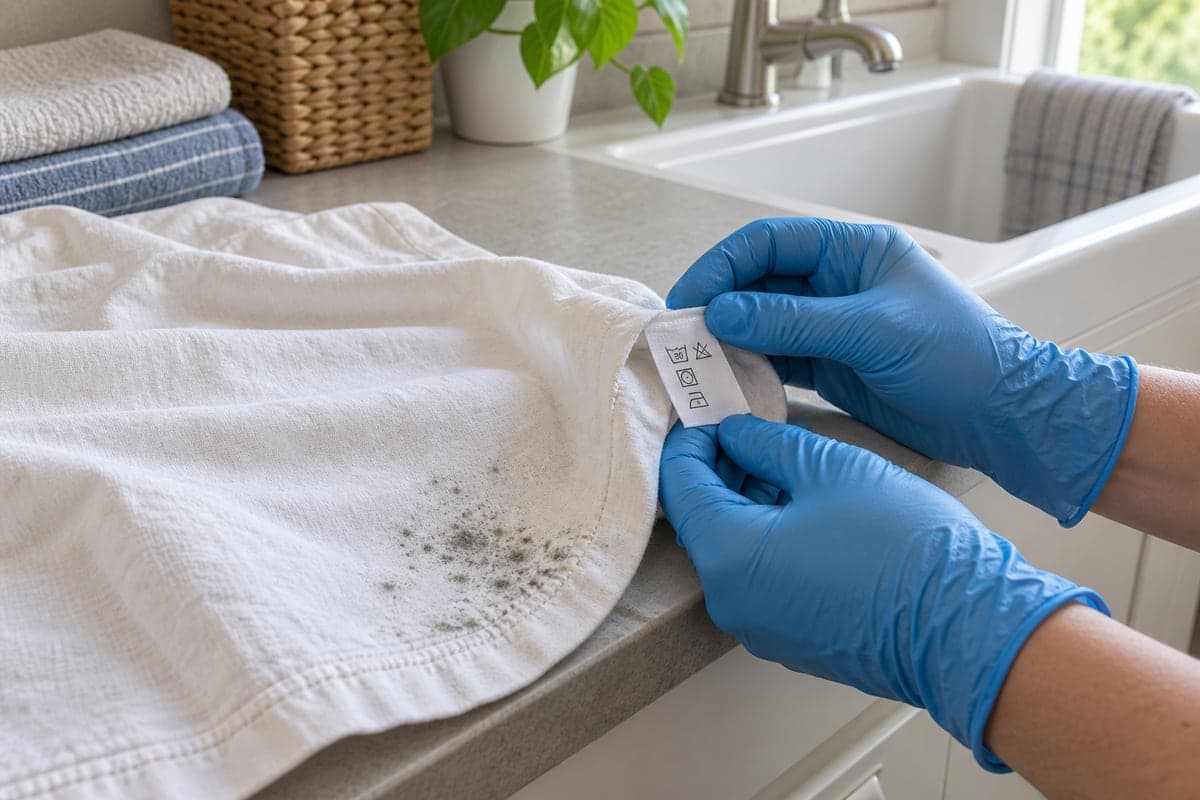
In practice, mold remediation, mold removal, and mold abatement describe largely the same work. "Remediation" is the term the EPA and state licensing laws use. It generally means removing, cleaning, or treating mold-contaminated materials and taking steps to keep mold from returning. "Removal" has no separate legal definition that we could find. State laws treat it as one part of remediation. "Abatement" is borrowed from lead and asbestos work. New York, the one state we found that defines "mold abatement," describes the same activities as remediation, with the difference being whether a business or an individual does the work. Contrary to what the earlier version of this article said, no source we found treats abatement as a more comprehensive service. Compare what a contractor will actually do, not which word they use.
That matters when you're comparing quotes. Two companies may call the same job by different names, or use a more technical-sounding word to justify a higher price. Every good mold job, whatever it's called, fixes the moisture source, contains the work area, removes damaged materials, cleans and dries what remains, and checks that the work succeeded.
Mold Remediation: The Term Regulators Use
The EPA uses "remediation" throughout its guidance. Its guide for schools and commercial buildings says the purpose of mold remediation "is to remove the mold to prevent human exposure and damage to building materials and furnishings." It adds that "it is necessary to clean up mold contamination, not just to kill the mold," because dead mold is still allergenic.
States that license mold work define remediation in similar terms:
- Texas defines mold remediation as "the removal, cleaning, sanitizing, demolition, or other treatment, including preventive activities, of mold or mold-contaminated matter." Texas's consumer information sheet adds that remediation "also refers to actions taken to prevent mold from growing back."
- Florida uses nearly the same wording in Statutes § 468.8411, applied to mold-contaminated matter of more than 10 square feet.
- Louisiana's contractor licensing board defines it as the removal, cleaning, sanitizing, demolition, or other treatment of mold-contaminated materials, including preventive measures.
Notice that "removal" appears inside each definition. Remediation is the umbrella term.
Mold Removal: One Step, Not a Separate Service
We found no statute or agency that defines "mold removal" as its own service. Contractors and homeowners use the phrase loosely, sometimes to mean the whole job and sometimes just the tear-out of moldy materials.
One thing to know about any service sold as "removal": it can't remove every spore. The EPA says it is impossible to eliminate all mold and mold spores indoors, but that mold growth can be controlled by controlling moisture. Its remediation guide adds that "a background level of mold spores will remain," and that those spores won't grow if the moisture problem has been fixed.
So a promise of a "100 percent mold-free" home isn't realistic. A reasonable goal is removing the growth and damaged materials, fixing the moisture, and bringing conditions back to normal.
Mold Abatement: A Term Borrowed From Lead and Asbestos Work
"Abatement" comes from hazardous-materials programs. The EPA describes lead abatement as work designed to permanently address lead-based paint hazards, and it treats abatement as a separate program with its own certifications. Federal asbestos law also uses the term for asbestos abatement projects.
Mold doesn't have a federal abatement program. Where the word appears in mold rules, it usually overlaps with remediation:
- New York. Labor Law § 930 defines "mold remediation" as the business of removing, cleaning, sanitizing, or surface-disinfecting mold, plus containment and waste handling. It defines "mold abatement" as the same activities performed by an individual. The state's licensing rules apply to projects involving more than 10 square feet.
- New York City. The city health department's mold page refers to "mold assessment and remediation (or abatement) workers," using the terms interchangeably.
- HUD. HUD's mortgage handbook refers to "mold or organic growth abatement" while requiring bids from licensed or certified mold remediation contractors.
If a contractor offers "abatement" as a premium option, ask exactly which steps it adds.
What a Proper Mold Job Includes, Whatever It's Called
These are the steps to look for in a written scope. The details should scale with the size of the job.
- Assessment and moisture source. Someone identifies where the mold is, how far it extends, and what's causing the moisture. New York requires a remediation plan to identify the underlying sources of moisture. The EPA warns that if the water problem isn't fixed, the mold will most likely come back.
- Containment. The EPA says containment is meant "to limit release of mold into the air and surroundings," and recommends keeping larger work areas under negative air pressure. Its guidance scales containment for areas under 10 square feet, 10 to 100 square feet, and over 100 square feet.
- Protective equipment. Workers should wear respiratory protection, gloves, and eye protection. The CDC recommends at least an N95 respirator for mold cleanup.
- Removing damaged porous materials. The EPA says porous materials may have to be discarded because mold can be difficult or impossible to remove from them completely. It recommends double-bagging debris in 6-mil plastic.
- Cleaning what stays. Hard surfaces are cleaned, and HEPA vacuums are used for final cleanup after materials are dry and contaminated materials are removed.
- Drying. NIOSH advises drying wet materials within 48 hours or removing them.
- Verification. The EPA's signs of a finished job: the moisture problem is completely fixed, visible mold and moldy odors are gone, and a revisit shows no new water damage or growth.
Many professionals also follow the IICRC S520 industry standard for professional mold remediation. For how long these phases usually take, see how long mold remediation takes.
Red Flags in a Mold Quote
- Promises to eliminate all mold. The EPA says that isn't possible.
- Spraying, fogging, or "killing" mold instead of removing it. The EPA says biocides such as bleach are not recommended as a routine practice during remediation, and dead mold must still be removed.
- Ozone treatment. The EPA says ozone applied to indoor air "does not effectively remove viruses, bacteria, mold, or other biological pollutants," and that no federal agency has approved ozone generators for use in occupied spaces.
- Painting or sealing over mold. The EPA says not to paint or caulk moldy surfaces, and NIOSH warns that painting over moldy surfaces can cause further problems.
- No plan for the moisture source.
- The same company testing and remediating. Texas, New York, and Florida prohibit the same licensee from both assessing and remediating a project. Where it isn't required, it's still a good idea.
- Scare language about "toxic black mold." The CDC says all molds should be treated the same with respect to potential health risks and removal. The earlier version of this article said black mold toxins cause neurological and immune system disorders. The CDC's fact sheet does not support that. For more, see what kind of mold is dangerous in a house.
When You Need a Licensed Professional
The EPA says that most people can handle a moldy area smaller than about 10 square feet themselves. Larger areas, mold in HVAC systems, and damage from sewage or contaminated water call for a professional.
Licensing depends on your state. Texas requires licensed contractors for most projects of 25 contiguous square feet or more. Florida and New York regulate projects over 10 square feet. Louisiana requires a license when a remediation job's value exceeds $7,500. Many states have no mold-specific license, so check with your state licensing agency.
If you're not sure whether to call an assessor, a remediator, or a plumber first, see who to call for a mold inspection. For typical prices, see how much mold removal costs.
Frequently Asked Questions
Is mold abatement more thorough than mold remediation?
Not by definition. We found no legal or agency source that treats abatement as a more comprehensive service. In New York, the one state that defines both, they describe the same work. Ask any contractor to list exactly what's included.
Can mold be completely removed from a house?
Mold growth can be removed, but spores can't be eliminated. The EPA says some spores will always be present in indoor air and dust. They won't grow into a problem if moisture is controlled.
What's the difference between mold remediation and mold cleaning?
Cleaning usually means wiping or scrubbing a small area of surface growth, which homeowners can often do. Remediation is a larger process with containment, removal of damaged materials, drying, and verification, typically for bigger or hidden problems.
Do mold remediation companies use bleach?
Some do, but the EPA does not recommend biocides such as bleach as a routine practice during remediation. Physical removal and cleaning, plus fixing the moisture, matter more than killing the mold.
Does mold remediation include rebuilding?
Often not. Many remediation contracts end once damaged materials are removed and the area is clean, dry, and verified. Replacing drywall, insulation, and flooring may be a separate contract, so ask.
Sources
- EPA: Mold Remediation in Schools and Commercial Buildings and Chapter 1 — the purpose of remediation, spores that remain, containment, porous materials, biocides, HEPA vacuums, and signs a job is finished.
- EPA: A Brief Guide to Mold, Moisture and Your Home — the 10-square-foot guideline, fixing the water problem, and painting.
- EPA: Ozone generators that are sold as air cleaners — why ozone doesn't remove mold.
- EPA: Lead abatement and asbestos laws and regulations — where the term "abatement" comes from.
- CDC: Mold Clean-Up, Facts About *Stachybotrys chartarum*, and NIOSH: Mold testing and remediation — protective equipment, drying, painting over mold, and treating all molds the same.
- 16 Tex. Admin. Code § 78.10 and Texas Consumer Mold Information Sheet — Texas definitions and licensing.
- Florida Statutes § 468.8411 — Florida definitions.
- New York Labor Law § 930 and § 945 — New York definitions of remediation and abatement, and remediation plans.
- NYC Health: Mold — city use of remediation and abatement.
- Louisiana State Licensing Board for Contractors — Louisiana definition and license threshold.
- IICRC S520 — the industry standard for professional mold remediation.