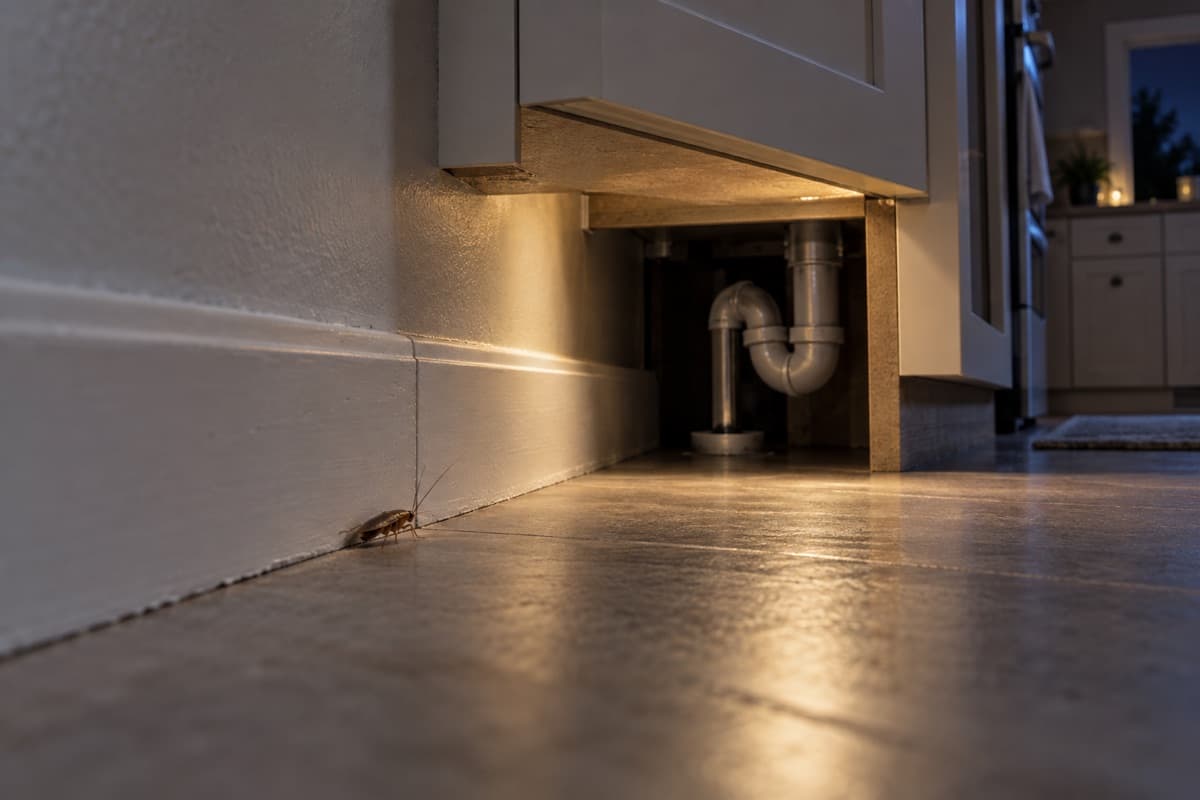
If a roach touches you, wash the spot with soap and water and move on: a single brief contact is very unlikely to hurt you. Cockroaches do not sting, and bites are rare. They can carry bacteria and other microbes on their bodies, and a 2026 review in *Insects* describes that spread as predominantly mechanical, meaning microbes are passed along by contact, droppings, and regurgitated material rather than by infecting the person. The World Health Organization's *Public Health Significance of Urban Pests* adds that "definitive evidence that cockroaches are vectors for human disease is still lacking." The better-documented health problem is allergen exposure and asthma, and that comes from living with roaches, not from being touched by one.
The earlier version of this guide said roaches "don't bite" at all and suggested a mattress cover to keep them off sleepers. The first claim was too absolute and we found no support for the second, so both are gone. The sections below stick to what the sources support and say plainly where the evidence runs out.
What To Do Right Now
The steps are simple, and none of them require alarm.
- Wash the skin that was touched with soap and water. The CDC's handwashing guidance is wet, lather, scrub for at least 20 seconds, rinse, and dry. It says an alcohol-based sanitizer with at least 60% alcohol is a fallback when soap and water are not available, so use it only until you can get to a sink.
- Do not touch your mouth, eyes, or food until you have washed. The realistic route from a roach to a person is through contaminated hands or food, not through the touch itself.
- Check for a scrape. If the skin looks broken, wash it thoroughly with mild soap and water. MedlinePlus lists warmth and redness, throbbing pain, swelling, a red streak, pus-like drainage, or fever as signs that a wound may be infected and needs medical attention.
- Deal with the insect and what it touched. Wipe hard surfaces it crossed with your usual cleaner. If it walked across ready-to-eat food, throwing that food out is the cautious choice, because food contamination is the mechanism the Insects review describes.
- Wash clothing only if it makes sense. We found no guidance saying clothes must be laundered after a roach crawls on them. If it was on your bedding or a towel, washing it is reasonable and costs nothing.
What Not To Do
- Do not put insecticide on yourself or your clothing. Pesticide products are not labeled for use on skin, and using a pesticide in any way its label does not describe is against the law. If you are seeing roaches on your body or bed, the fix is treating the home, not the person.
- Do not skip the wash because nothing seems wrong. Contamination is invisible. The step takes a minute and is the single most effective thing you can do.
- Do not panic about disease. The concern is real but modest and indirect, as the next section explains.
What Touching Does and Does Not Cause
No stinger. Cockroaches have chewing mouthparts, not a stinger, and nothing in the bite literature we reviewed describes venom.
Bites are rare, and mostly a shallow scrape. In their 1960 Smithsonian monograph *The Biotic Associations of Cockroaches*, Roth and Willis described about 20 reports of cockroaches biting people. They wrote that the injury is usually confined to abrasion of the callused portions of hands and feet, but may produce small wounds in the softer skin of the face and neck. They also cite a case of someone nibbled on the toes and breast during sleep on an island where Periplaneta americana and P. australasiae were known to nibble people. Our guide on what happens when a roach bites you covers how to recognize one and why most suspected roach bites turn out to be something else.
Germs are on the roach, but that is not the same as an infection in you. The Insects review says cockroaches pick up bacteria, fungi, and parasites, including drug-resistant strains, from sewage, waste, and contaminated food, and can carry them on the outside of the body and in the gut. It also states that strain-level genetic links between cockroaches and human or livestock isolates remain sporadic and that data are scarce. We could not find a study documenting illness from one brief touch. The realistic sequence is contamination of hands or food followed by a swallowed dose, which is why washing matters. Our guide on what diseases roaches carry walks through the organisms and the strength of the evidence for each.
The stronger evidence is about allergen. The EPA lists cockroaches among the allergens that drive indoor asthma problems, and the CDC's page on common asthma triggers names cockroaches as well. The WHO review notes the important role German cockroach droppings play in allergy and asthma. That exposure builds up in dust over time, so it depends on how many roaches share your home and for how long, not on one insect crossing your arm.
Who Should Be More Careful
Most people can treat a single encounter as a hygiene event. A few situations call for more caution:
- People with asthma or cockroach allergy. A single touch is not the concern. Living with roaches is, because allergen persists in dust. The CDC advises people with asthma to avoid pest sprays and foggers because they can cause asthma attacks, so seal, clean, and bait rather than spraying. See our guide on how dangerous roaches are for the allergen numbers, and on cleaning roach droppings safely so you do not stir allergen into the air.
- Anyone with an open wound, fresh scrape, or a recent surgical site. Wash the area promptly and keep an eye on it for the infection signs listed above.
- People with weakened immune systems. The Insects review raises its greatest concern about cockroaches in hospitals, where they can connect dirty areas with vulnerable patients. That does not translate directly to a single touch at home, but if you are immunocompromised, ask your clinician what they want you to watch for and address the infestation quickly.
The earlier version of this guide said young children and older adults are especially vulnerable to bacteria spread by roaches. We could not confirm that claim for touch specifically, so it has been removed rather than repeated.
If It Happened While You Slept
This is the version that unsettles people most, and the honest answer is that it is uncommon but not impossible. The Smithsonian monograph above records nibbling during sleep, and our bite guide covers the documented cases, which come from heavy infestations rather than a lone stray roach. The earlier claim that roaches are drawn to warmth and moisture on human bodies and to crumbs on skin is not something we could verify, so we have dropped it.
What we can say is practical. Repeated roaches in a bedroom is a sign to find the source, not something to manage with bedding tricks. Inspect the room for droppings, egg cases, and hiding places, and look at the kitchen and bathroom next, since roaches head toward food and water. Our guide on how to get rid of roaches lays out the full plan.
Prevention: Fewer Encounters Means Fewer Worries
The CDC and the National Pesticide Information Center give the same core advice:
- Deny roaches food and water by fixing leaks, clearing clutter, cleaning dishes and spills, and cleaning the kitchen and sink each night.
- Store food in sealed containers. NPIC notes that cockroaches can chew through paper, cardboard, and thin plastic.
- Use closed trash containers.
- Caulk or seal cracks and crevices around cabinets, backsplashes, windows, doors, crawl spaces, pipes, wires, and cables.
If baits and sanitation do not reduce sightings within a few weeks, or if you see roaches in daylight, a licensed pest professional can identify the species and find the source.
When To See a Doctor
Contact a healthcare provider if:
- A scrape or bite develops the infection signs listed above.
- Someone with asthma has increasing wheeze, coughing, or shortness of breath, which needs medical attention regardless of the cause.
- Stomach symptoms follow eating food you think a roach contaminated. This is a precaution rather than a documented pattern, but it is worth telling a clinician about.
Frequently Asked Questions
Can a roach make me sick just by touching me?
It is unlikely. Roaches can carry microbes on their bodies, but the route to illness generally runs through contaminated hands, food, or surfaces. Washing your hands and skin removes most of that risk. We found no study documenting an infection from one brief touch.
Do roaches bite or sting?
They do not sting. They can bite, but documented bites are rare, usually shallow abrasions on hands, feet, face, or neck, and tied to heavy infestations.
Do I have to throw out my clothes?
No guidance we found requires it. Laundering is a reasonable choice if the roach was on clothing you are going to wear again or on bedding.
Is it normal to feel shaken by it?
Yes. A strong reaction to roaches is common and does not mean you are overreacting to a health threat. If the fear is affecting your sleep or how you use your home, our guide on getting over a fear of roaches covers what the research supports.
Sources
- WHO, *Public Health Significance of Urban Pests* (2008), cockroach chapter: the statement that definitive vector evidence is lacking, and the role of German cockroach droppings in allergy and asthma.
- Insects 17 (2026), Cockroaches as Vectors of Pathogens and Antimicrobial Resistance: mechanical dissemination, hospital settings, and the limits of the evidence.
- Roth and Willis, *The Biotic Associations of Cockroaches* (Smithsonian, 1960): the roughly 20 reports of cockroaches biting people and the injury descriptions.
- CDC: About handwashing: five-step method and the 60% alcohol sanitizer fallback.
- MedlinePlus: Cuts and puncture wounds: cleaning with soap and water, and signs of infection.
- EPA: Indoor Environmental Drivers of Health and CDC: Common Asthma Triggers: cockroaches as asthma triggers, and the advice to avoid sprays and foggers.
- National Pesticide Information Center: Cockroaches and Read the Label First: prevention steps and label-compliant pesticide use.