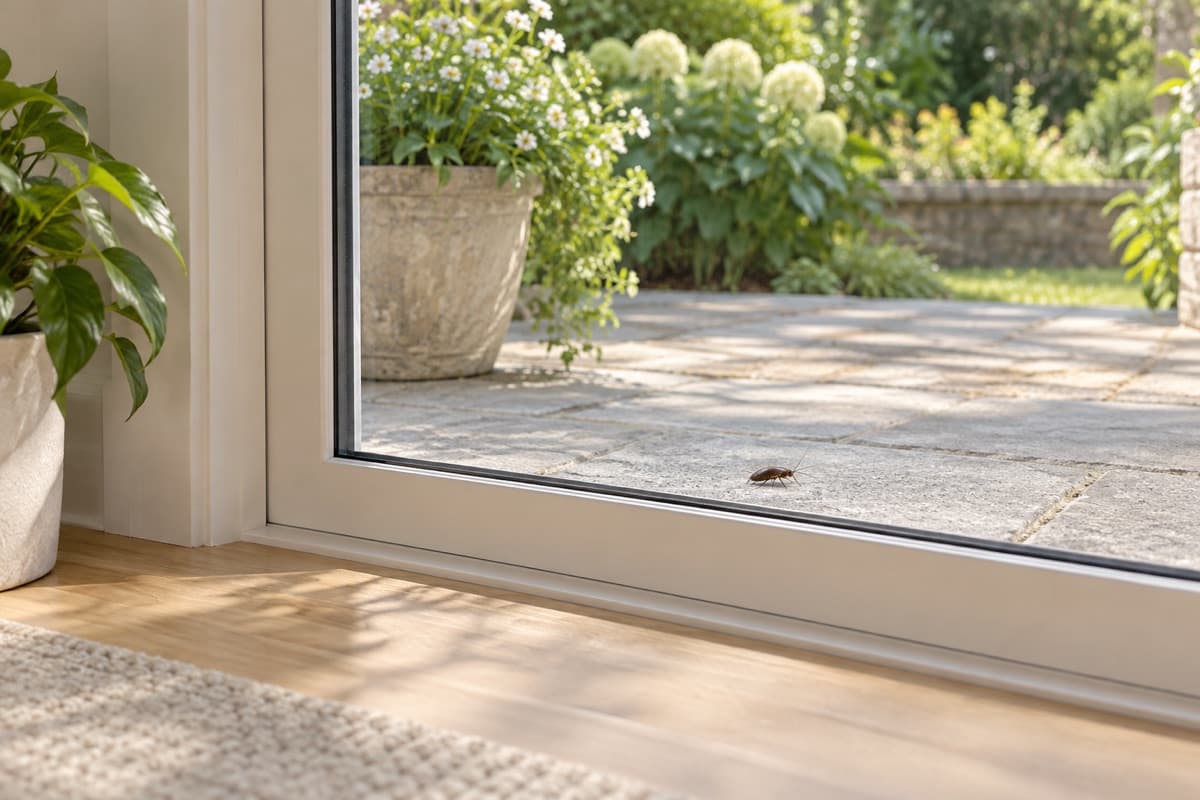
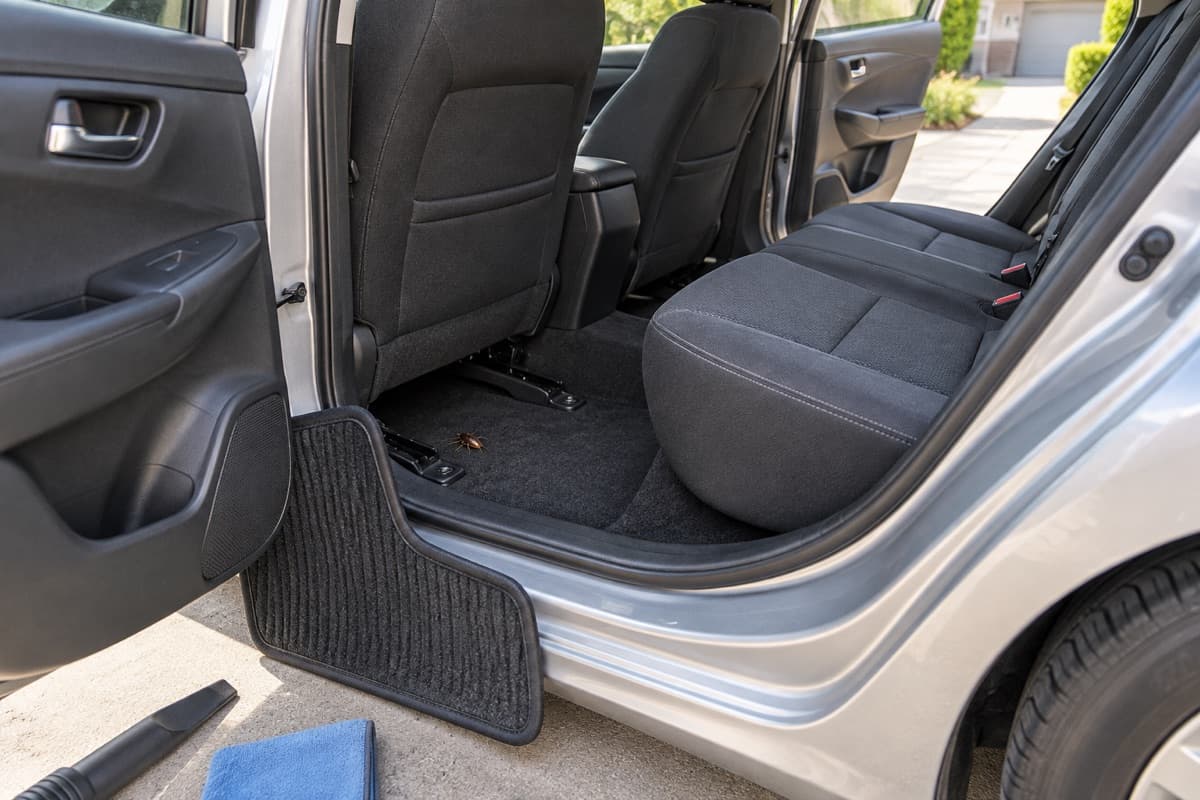
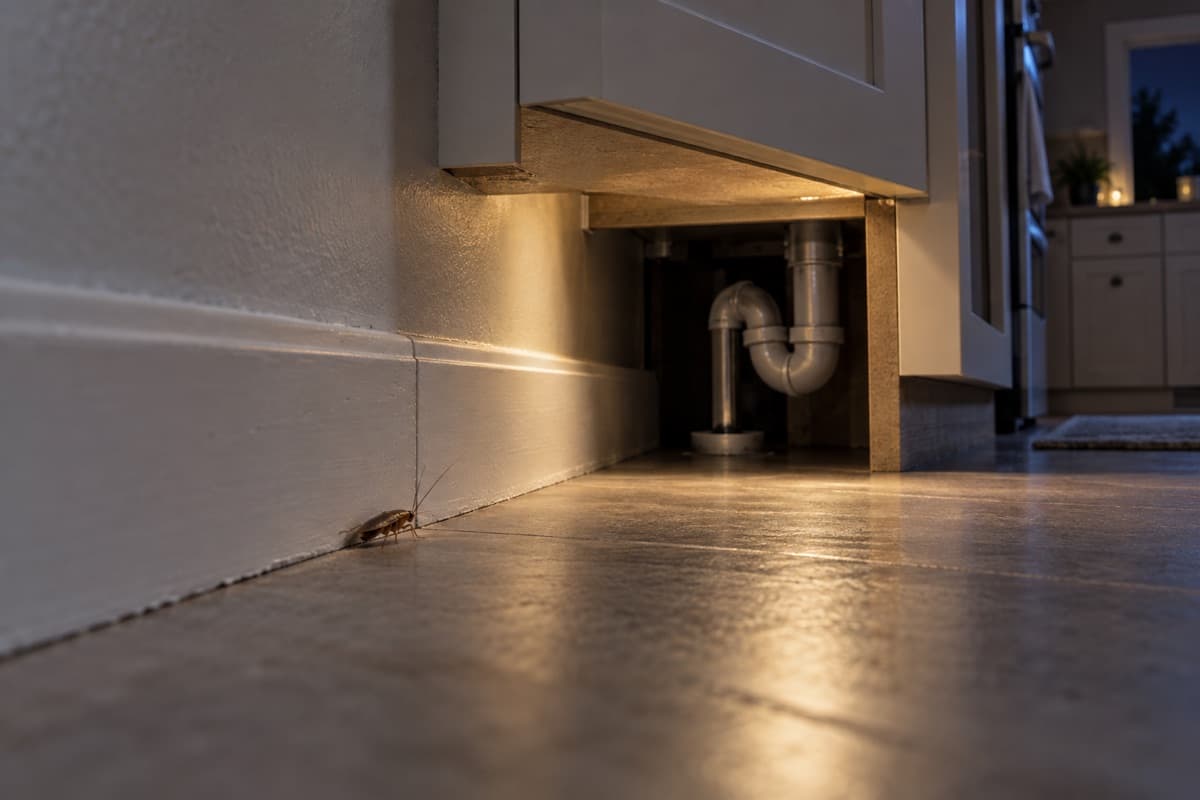
Roaches are held in a home by four things: food residue, water, warmth, and tight dark places to hide. The allergy practice parameter on cockroach exposure reduction puts it directly: cockroaches can live in any building "that has a means of ingress, a source of water, food, adequate temperature, and shelter." Removing those conditions is what makes a house inhospitable, and it is also what makes bait work, because Texas A&M AgriLife Extension notes that baits are most effective when few food alternatives are available. Sanitation alone rarely ends an infestation, but nothing else works well without it.
The earlier version of this article said a roach can squeeze through an opening as thin as a dime. That figure comes from EPA guidance about mice, not roaches. The useful number is smaller and more specific: Texas A&M reports that German cockroaches spend about 75 percent of their lives in cracks and crevices between 1/32 and 3/16 of an inch wide.
Attraction, Introduction, and Harborage Are Three Different Problems
This distinction matters more than any list of favorite foods.
- Introduction is how roaches arrive. Penn State Extension notes it is difficult to keep cockroaches from entering homes "via boxes, grocery bags, suitcases, and the like." German cockroaches almost always arrive this way rather than walking in from the yard.
- Attraction is what draws a roach toward a particular room or surface once it is inside or nearby. That is mostly odor from food and moisture.
- Harborage is what lets a population stay and grow: warm, tight, protected voids near those resources.
A spotless kitchen with a warm void behind the dishwasher and a slow supply line leak can hold a large German cockroach population. A cluttered kitchen with no moisture and sealed voids often cannot. If you only clean, you are working on one of the three.
For the biology behind what roaches will and will not eat, see our companion guide on what roaches eat. This article stays on the conditions in your house and how to remove them.
Food Residue, Especially the Kind You Cannot See
Penn State Extension describes German cockroaches as scavengers "especially fond of starches, sweets, grease, and meat products." Visible crumbs are the easy part. The residue that actually sustains a population tends to be in places nobody wipes.
Where to look, in rough order of yield:
- The sides and back of the range, the gap between range and counter, and the floor under both.
- The refrigerator drip pan, condenser coils, and the door gasket.
- Under and behind the dishwasher, including the kickplate void.
- Toaster and toaster-oven crumb trays, microwave turntable wells, and coffee machine drip trays.
- The underside of cabinet shelves, the toe kick, and the inside corners of drawers.
- Pet bowls and the floor around them, plus stored pet food.
- The trash can body, not just the bag, and the recycling bin.
How to remove it: degrease rather than just sweep, since grease films are the persistent food source. Pull appliances out once and clean behind them properly, then keep the accessible surfaces clean weekly. Store dry goods and pet food in rigid containers with tight lids. Pick up pet bowls at night, which Texas A&M lists among its core recommendations. Take trash out on a schedule and rinse recyclables. Texas A&M also notes that a vacuum cleaner removes both cockroaches and the crumbs they depend on, and recommends a HEPA filter because cockroach harborages contain allergens.
Cabinets are the single most common problem area in a kitchen, and the sequence for clearing them is specific enough that we cover it separately in how to keep roaches out of cabinets.
Water, Which Matters More Than Food
Cockroaches can go far longer without food than without water. Penn State Extension notes that oriental cockroaches with access to water "can live for a month without food; without water, they die within two weeks." A 2026 *Journal of Economic Entomology* study on German cockroach survival found that when food and water were absent, higher relative humidity extended survival, which is a direct measure of how much ambient moisture alone is worth to them.
Sources to find and fix:
- Leaking supply lines and drain traps under sinks, and the cabinet floor beneath them, which is often swollen or stained.
- Refrigerator and ice maker lines.
- Dripping faucets and running toilets.
- Condensation on cold water pipes, which responds to foam pipe insulation.
- Sweating toilet tanks and poorly ventilated bathrooms.
- Water left standing in sinks, dish drainers, mop buckets, and pet bowls overnight.
- Damp basements and crawlspaces.
EPA's pest guidance for housing is blunt about the last resort many people use: a bucket under a slow leak "provides a watering trough for rats, mice and cockroaches." Fix the leak instead. For ambient moisture, EPA recommends keeping indoor relative humidity below 60 percent and ideally between 30 and 50 percent. An inexpensive hygrometer in the worst room tells you whether a dehumidifier is warranted.
Drains are both a water source and an entry route for large roaches. Texas A&M recommends keeping P-traps filled with water so they act as a barrier between the sewer and the building, and we cover the rest in how to stop roaches from coming up the drain.
Warmth and Tight Spaces
Cockroaches are thigmotactic, meaning they seek contact with surfaces on multiple sides of their bodies. That is why crack width matters as much as darkness. Texas A&M notes that cockroaches "tend to congregate near sources of heat and moisture, which accelerate their growth and reproductive rates," and that the German cockroach optimum is around 80 degrees Fahrenheit.
The warmest, tightest spots in a typical kitchen are the ones that matter:
- Refrigerator and freezer motor compartments.
- Dishwasher and range voids.
- Under-cabinet lighting transformers and the voids around them.
- Wall voids where plumbing and electrical enter.
- The gap behind a wall-mounted microwave.
- Electronics with ventilation slots and internal warmth.
How to remove it: seal what you can and treat what you cannot. Caulk gaps around sinks, plumbing penetrations, backsplashes, and cabinet seams with a quality sealant, which Texas A&M recommends explicitly. Sealing does double duty by removing harborage and by forcing roaches into the open where baits and monitors can reach them. Texas A&M also notes that a household hair dryer will flush roaches out of a suspected harborage, because they dislike high temperatures and moving air, which is a cheap way to confirm where they are living before you seal.
Clutter and Cardboard
Clutter is not an attractant in the chemical sense. It is harborage, and it also blocks inspection and treatment. Corrugated cardboard is a particular problem because the flutes are exactly the crevice width roaches prefer and because boxes are how roaches arrive in the first place.
Housing conditions show up in the epidemiology too. A study of 644 homes in California's Salinas Valley, published in Environmental Health Perspectives, found cockroach evidence in 60 percent of dwellings and associated infestation with peeling paint (odds ratio 3.8), water damage (1.9), high residential density (2.1), and below-average cleanliness (3.7). Deferred repairs are part of the picture, not just housekeeping.
How to remove it: break down and recycle cardboard promptly rather than storing it, move stored goods into sealed plastic bins, keep a clear band of floor along walls and under sinks, and repair peeling paint and water damage rather than painting over them.
Other Roaches: Droppings Are an Attractant
Roach droppings are not just evidence. A 2015 *PNAS* study found that volatile compounds in German cockroach feces act as aggregation pheromones that attract other cockroaches to harborage sites, and that gut bacteria help produce those compounds. Leaving droppings in place leaves a chemical invitation in place.
How to remove it: vacuum droppings out of cabinet corners, drawer runners, hinge recesses, and the space under appliances, then wipe with soap and water. Use a HEPA vacuum, wear gloves, and avoid dry sweeping or brushing, which aerosolizes allergens.
How Roaches Get In
The entry routes split by species, and so does the fix.
German cockroaches are carried in. Penn State lists boxes, grocery bags, and suitcases. University of Minnesota Extension advises using boxes and packing material from a cockroach-free source when moving. Used appliances and secondhand furniture are worth inspecting before they cross the threshold, particularly motor compartments and the undersides of drawers.
American, oriental, and smokybrown cockroaches walk or fly in from outside. Texas A&M notes they commonly enter through poorly sealed doors, roof soffits, and floor drains. Fixing that means door sweeps and thresholds, screened soffits and vents, sealed utility penetrations, filled P-traps, and moving mulch, leaf litter, and woodpiles back from the foundation. Our guide to how roaches get in your house goes through the exterior inspection step by step.
A Working Order for Removing Attractants
Doing these in sequence produces better results than doing them all at once and badly.
- Identify the species. Small tan roaches with two dark stripes are German cockroaches and the problem is indoors. Large dark roaches point you outside.
- Monitor before you treat. Place sticky traps in corners, under sinks, behind the refrigerator, near doors, and in the utility room. Texas A&M notes they are most useful for monitoring and less effective as control, but they tell you where the population actually is.
- Fix water first. It is the resource roaches can least afford to lose and the repair with the longest-lasting benefit.
- Deep clean the appliance zone. Grease and crumbs behind and under the range, refrigerator, and dishwasher.
- Remove harborage. Declutter, remove cardboard, then caulk cracks and seal voids around plumbing.
- Bait, correctly. Many small pea-sized placements near harborage rather than a few large ones, per Texas A&M, kept fresh and replaced when dried out. Keep bait away from children and pets or use enclosed stations.
- Reassess at two to three weeks. Texas A&M advises trying a different bait with a new active ingredient if a bait has not controlled the population in that window.
For a fuller treatment plan including product classes and follow-up, see how to get rid of roaches.
What Does Not Work
- Total-release foggers. Texas A&M states that bug bombs "generally do not eliminate cockroaches because they do not penetrate the cracks where most cockroaches hide." Penn State goes further and says indoor foggers can worsen an infestation by dispersing the insects.
- Spraying near bait. Cockroaches avoid contaminated bait, so a perimeter spray applied over your gel placements can undo the whole treatment.
- Boric acid as the only measure. The allergy practice parameter notes that boric acid used alone has been associated with increased allergen production by surviving cockroaches. It is a useful tool in voids, not a standalone plan.
- Deterrent scents as a substitute for the work. Bay leaves, cucumber, coffee grounds, and essential oils do not remove food, water, or harborage. A 2025 *Insects* study tested 16 essential oils against German cockroaches under realistic spray conditions and found highly variable results, and volatile oils leave little residual effect. If you want to know which claims have any basis, see what smells roaches hate.
Whatever product you use, read and follow the label. It is the legal instruction set, and it specifies where the product may be applied, how much, and what precautions apply around children, pets, and food-preparation surfaces.
When To Call a Professional
- You live in an apartment or multi-unit building. The practice parameter notes that treating a single unit fails when adjacent units remain infested.
- You have removed food, water, and harborage and are still catching roaches after three to four weeks.
- Someone in the home has asthma or a diagnosed cockroach allergy. Cockroach allergen exposure is linked to worse asthma outcomes in sensitized children, and a professional using an integrated program plus allergen cleanup is the better path.
- You are seeing roaches in the open during the day, which Texas A&M says usually indicates a large population.
- You need structural repairs, such as fixing water damage or sealing large voids, which are often what keeps an infestation alive.
Frequently Asked Questions
Does a clean house prevent roaches?
It helps a great deal but does not guarantee anything. German cockroaches arrive in boxes, bags, and used appliances regardless of how clean the destination is, and they can live on residue in voids you never clean. NC State Extension notes infestations can persist despite a stringent cleaning regimen, particularly where units share walls. Cleaning matters most because it removes competing food and makes bait the best meal available.
What smell attracts roaches the most?
There is no single answer, and the honest framing is that fermenting, greasy, and starchy food odors all work. University of Minnesota Extension notes American cockroaches like fermenting foods such as bread soaked with beer. More relevant for a homeowner: cockroach droppings themselves carry aggregation pheromones that attract other roaches, which is why cleaning them up is part of control rather than cosmetic.
Do roaches come from the drain?
Large peridomestic species do use floor drains and plumbing as entry routes, and UF/IFAS notes American cockroaches migrate into buildings from sewers via the plumbing. German cockroaches are typically already inside and use drain areas because they are damp, not because they came up from the sewer. Keeping P-traps filled addresses the first problem, not the second.
Does leaving lights on keep roaches away?
No. Roaches are nocturnal and will avoid a brightly lit open floor, but they simply stay in harborage until it is dark or move through voids and under cabinets. Smokybrown cockroaches are actually attracted to exterior lights, according to University of Tennessee Extension, so porch and landscape lighting can draw them toward a house rather than away from it.
Can roaches live in a house with no food at all?
For a while. The 2026 Journal of Economic Entomology survival study found that starving German cockroaches survived longest at lower temperatures and higher humidity, and that access to food extended survival considerably at higher humidities. A vacant, damp, cool unit can hold a population for weeks. This is why treatment plans do not rely on starving roaches out.
Are roaches attracted to cardboard specifically?
Cardboard is mostly harborage rather than an attractant. The corrugated flutes match the crevice widths German cockroaches prefer, and the paper holds moisture. Boxes also serve as the transport mechanism that brings roaches into homes. Recycling cardboard promptly addresses both problems at once.
Will removing all the attractants get rid of an existing infestation?
Usually not by itself. Sanitation reduces population growth and makes baits far more effective, and Texas A&M notes that when food and water are scarce cockroaches must forage farther each night, which increases their contact with treatments. An established German cockroach population still needs baiting, monitoring, and often professional help.
Sources
- Portnoy et al., *Journal of Allergy and Clinical Immunology* (2013): Environmental assessment and exposure reduction of cockroaches — the conditions required for infestation, integrated pest management, boric acid alone and allergens, multi-unit treatment, and asthma outcomes.
- Texas A&M AgriLife Extension: Cockroach Biology and Management (ENTO-037) — crevice widths, 80-degree optimum, entry points, sanitation, caulking, vacuuming, bait placement and rotation, foggers, and P-traps.
- Penn State Extension: German Cockroaches — diet preferences, introduction via boxes and bags, and the limited value of indoor foggers.
- Penn State Extension: Oriental Cockroaches — survival with and without water.
- University of Minnesota Extension: Cockroaches — species habitats, fermenting foods, and moving without importing cockroaches.
- UF/IFAS Extension: American Cockroach (EENY-141) — sewer and plumbing entry into homes.
- NC State Extension: Biology and Behavior of the German Cockroach — generalist omnivory, aggregation near food and water, and persistence despite cleaning.
- University of Tennessee Extension: The Smokybrown Cockroach — attraction to lights and outdoor harborage.
- EPA: Pest Control Resources for Housing Managers — integrated pest management, leaks as water sources, and vacuuming.
- EPA: Mold Course Chapter 2 — recommended indoor relative humidity range.
- Wada-Katsumata et al., *PNAS* (2015) — fecal aggregation pheromones that attract cockroaches to harborage.
- Bradman et al., *Environmental Health Perspectives* (2005) — housing disrepair indicators associated with cockroach infestation.
- Lopina, Sanderson, and DeVries, *Journal of Economic Entomology* (2026) — German cockroach survival under varying temperature, humidity, and food access.
- Manzanares-Sierra et al., *Insects* (2025) — essential oils tested against German cockroaches under practical application conditions.