Cockroaches live in kitchen cabinets because cabinets give them what every extension guide says they need: food, water, and dark, tight cracks. The steps with real support are to fix leaks, store food in sealed containers, wash cabinets with soapy water and rinse them, caulk seams and gaps, and, if you are already seeing roaches, use gel bait in small dabs rather than sprays. That combination is what the University of Florida's IFAS Extension and the EPA's smart pest control guidance describe. Bay leaves, cucumber slices, and scented sprays do not appear in that guidance, and neither does the claim that any home method cuts infestations by a set percentage.
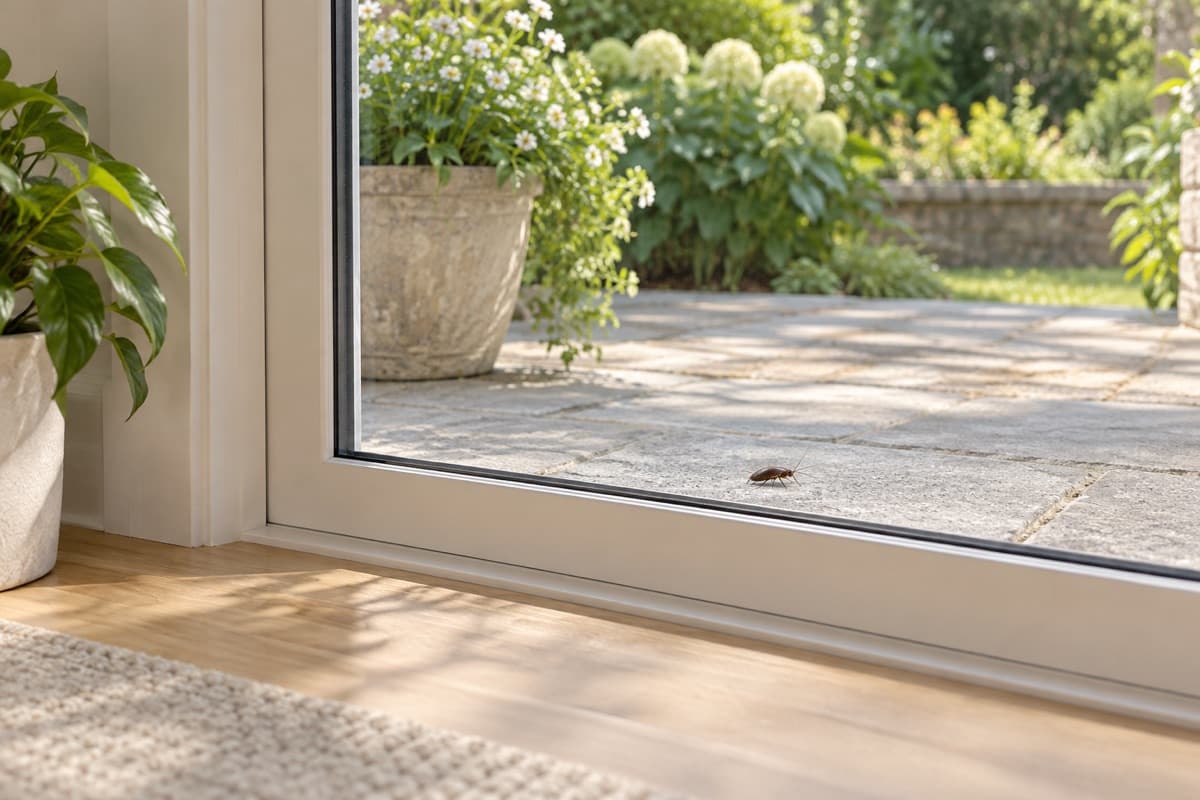
The word "keep out" is a little misleading for the most common kitchen species. UF/IFAS states that German cockroaches "do not enter structures from outdoors" and are "spread entirely by humans," on groceries, boxes, bags, and belongings. Larger species such as American cockroaches do come in from outside, through gaps around doors, vents, and utility openings, according to University of Kentucky Extension. Either way, the cabinet is where the population settles or hides, so most of the work is making that space a poor place to live.
First, Confirm What Is In The Cabinet
Before you spend money, find out whether you have an active problem. Droppings, a musty smell, or one dead roach do not tell you how many are living there. Sticky monitors do. UF/IFAS recommends placing them along walls and where surfaces meet, near heat-producing appliances, and recording where you find insects. Its guidance is that several life stages on one monitor point to an established infestation, while a few adults suggest a recent arrival. The University of Minnesota advises setting them tight against edges where walls meet floors, in cupboards, and around the refrigerator, stove, and sinks.
If you are not sure what you are looking at, our guide to how to know if you have roaches covers the signs that actually confirm it.
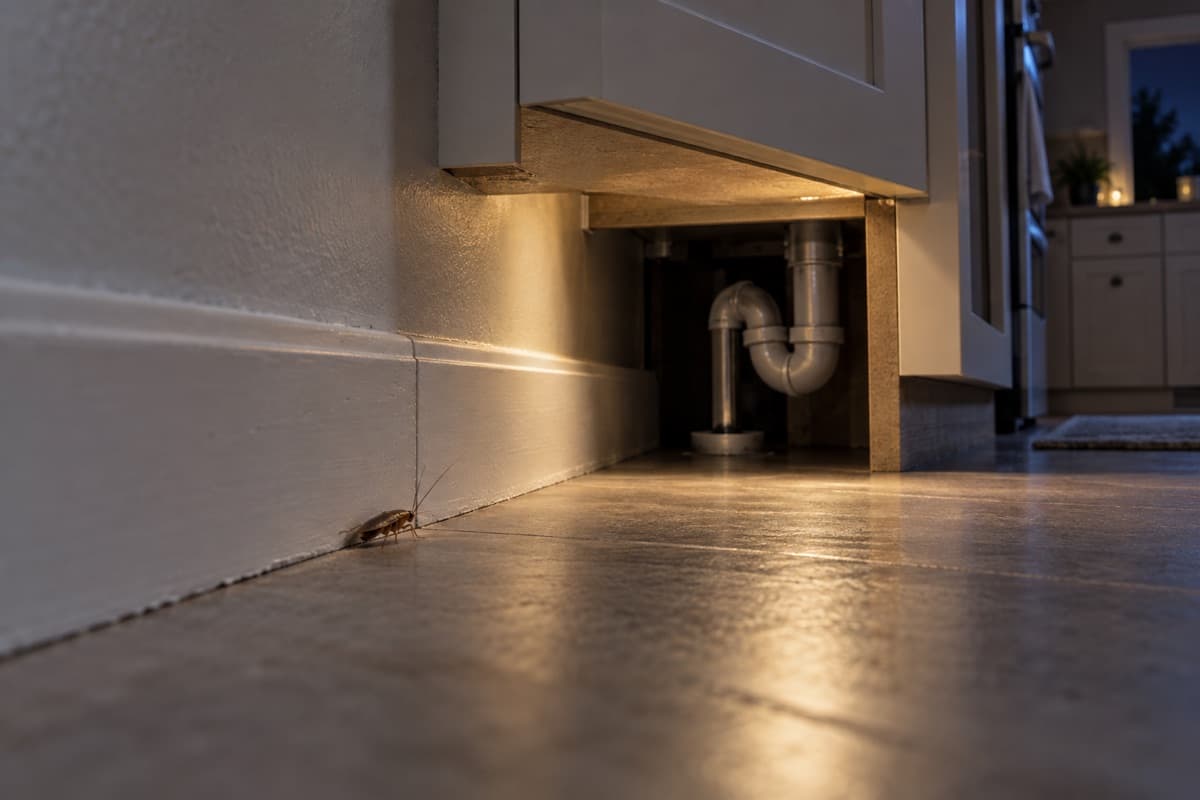
Rutgers Extension lists the common hiding places inside a kitchen: door moldings, hinges of kitchen cabinets, corners inside cabinets, drawers, and the back of the refrigerator. Check the hinge areas and back corners of your cabinets with a flashlight, and look at the sink base first.
Take Away The Water
Water is often the limiting factor. UF/IFAS lists leaking pipes and refrigerator or freezer drains among the moisture sources to correct, and it treats mold on walls or ceiling tiles as a sign of an excessive moisture problem. Under the sink, that means:
- Check supply lines, drain connections, and the disposal for slow drips, and repair them rather than hiding them.
- Wring out and hang sponges and dishcloths instead of leaving them in the cabinet.
- Dry the cabinet floor after any spill or leak.
- If the base is swollen, stained, or musty, treat it as a moisture repair, not a pest tip.
The old version of this guide suggested lining the sink cabinet with foil or contact paper and running a dehumidifier. We could not find a source that supports either for roach control, so we have dropped both. Fixing the leak is the step that shows up in the research.
Remove The Food
Roaches do not need much. UF/IFAS advises storing consumables in sealed containers, cleaning spills immediately, and emptying food-containing trash daily. Penn State Extension gives similar specifics: keep dry goods in airtight sealed containers, empty garbage each evening into a sturdy container with a tight lid, and do not leave dirty dishes overnight. UC IPM suggests glass jars or resealable plastic containers for food, and the EPA adds not leaving pet food and water out overnight.
A few cabinet-specific habits help:
- Move cereal, flour, sugar, pasta, and pet food into containers with tight lids. Original cardboard and thin plastic bags are easy for insects to get into.
- Wipe the shelf edges and corners where crumbs collect, especially around the hinges.
- Keep the trash can out of the cabinet run, and take out food waste every night.
Clean The Right Way, Then Cut The Cardboard
UF/IFAS makes a point that is easy to miss: no-rinse cleaners spread cockroach allergens instead of removing them, so it recommends soapy water followed by a rinse. Empty the cabinet, vacuum the corners and cracks, wash the shelves and door edges with soapy water, rinse with clean water, and dry. Wear gloves, and avoid dry sweeping if you find heavy droppings, since it puts allergen into the air.
Then look at what goes back in. UF/IFAS says German cockroaches thrive in cardboard and advises replacing it with plastic bins for anything stored more than three to six months. UC IPM also recommends removing piles of paper, cardboard boxes, and clutter, especially in kitchens. Under-sink cabinets that hold cardboard boxes of bags or cleaning supplies are a common offender.
The earlier version recommended emptying and cleaning cabinets every month. We have not found a source that sets that interval, so treat cleaning as an as-needed habit: wipe spills the same day and do a full empty-and-wash whenever you find droppings or start baiting.
Seal Gaps And Seams
Sealing does two jobs: it takes away hiding places and it makes the space easier to inspect. UF/IFAS advises caulking around sinks, cabinets, and wall-mounted fixtures, with particular attention to areas near water and food preparation. Purdue Extension says to seal cracks where kitchen cabinets meet wall and floor surfaces, and the University of Kentucky recommends sealing where plumbing pipes or wires pass through walls or floors. Rutgers adds cracks along countertops, baseboards, and plumbing chases.
Practical points:
- Use a paintable or kitchen-and-bath caulk suited to the surface, and follow the caulk label.
- Start at the sink base, where pipes pass through the back and floor of the cabinet.
- Close the seam between cabinet and wall, and along the toe-kick where it is reachable.
- Re-check after a few months, since caulk shrinks and gaps reopen.
The old guide also told readers to fill large gaps with expanding foam and claimed that roaches can use openings as small as 1/16 of an inch. None of the extension guides we reviewed name foam or give that measurement, so we describe caulk, which they do name, and leave the figure out. In a home with shared walls, pipe chases are also how roaches travel between units. Rutgers notes that German cockroaches spread through common utilities and shared walls, which is why our guide on what to do if your neighbors have roaches matters in apartments.
If You Already See Roaches: Bait, Do Not Spray
Prevention will not remove a population that is already established. Extension entomologists consistently name gel bait as the primary tool. UF/IFAS describes applying bait as numerous pea-sized dots in hiding places such as the underside of the kitchen sink, cabinet corners, and door hinges, and NC State Extension likewise says small pea-size placements in numerous locations outperform a few large ones. Rutgers describes gel bait as usually more effective than bait stations. Our step-by-step plan for getting rid of roaches walks through the full process.
Important limits:
- The label governs. For example, the label for one widely used professional gel, Advion Cockroach Gel Bait, says not to apply it to surfaces that food contacts, not to let open food touch the gel, and to place it where children and pets cannot reach. The same label says not to apply it to surfaces recently treated with residual sprays.
- Use tamper-resistant stations where children or pets can get to a cabinet. The EPA notes that bait stations pose low exposure risk when kept out of reach of children and pets and used according to label directions.
- Do not spray near bait. UF/IFAS warns that a repellent product used where bait may be applied will contaminate the bait and make it ineffective. NC State says sprays do not provide long-term control and may make things worse by repelling and dispersing cockroaches.
- Skip foggers. UC IPM advises avoiding foggers, bombs, and aerosol sprays because they can repel and scatter roaches without killing them.
- Keep dusts to the label, and away from food. Boric acid dust is slower than bait, according to Rutgers, and eXtension's German cockroach guide notes dusts can become airborne and contaminate off-target areas. Penn State warns to keep dusts away from children and pets. Do not scatter powders on shelves where food or dishes sit.
Keep monitoring while you bait. UF/IFAS advises re-applying every one to two weeks, following the label, until monitor counts drop to zero.
About The Natural Repellents
The earlier version of this guide recommended bay leaves, cucumber slices, essential oil sprays, and a baking soda and sugar mixture. We do not repeat those.
- Bay leaves and cucumber. We did not find either recommended as a control in any of the extension guides we reviewed. Our guide to how to use bay leaves for roaches explains why they do not hold up.
- Essential oils. Some oils kill German cockroaches in lab tests. A 2025 study in *Insects* of 16 oils found thyme, sweet orange, and lavender produced 100% mortality within 24 hours under direct exposure, but the authors also note the oils' high volatility means components evaporate soon after application, giving low persistence. A brief lab kill is not the same as a cabinet that stays roach-free, and the authors do not present the oils as a standalone solution. See what the lab studies found on essential oils.
- Baking soda and sugar. We could not verify this as a reliable home method, and none of the extension guides we reviewed recommends it. The eXtension German cockroach guide notes that a homemade boric acid bait is difficult to make palatable, which is why it points people to commercial products. A homemade bait also risks contaminating a real bait if you use both.
Prevention Routine That Holds
- Repair leaks and keep the sink base dry.
- Store food in tight containers, including pet food.
- Take out food trash nightly and remove cardboard from cabinets.
- Wash with soapy water and rinse, rather than using a no-rinse spray.
- Caulk gaps at sinks, pipes, cabinet-to-wall seams, and countertops.
- Keep two or three sticky monitors in the kitchen and check them weekly.
- Inspect groceries, boxes, and secondhand items that come in.
For the wider routine, see our guide to a prevention plan that holds.
When To Call A Professional
Call a licensed pest professional if you see cockroaches during the day, if monitors show several sizes of insects, if baiting for several weeks does not lower your counts, or if the problem is in a multi-unit building. UF/IFAS puts daytime sightings and multiple life stages at the point where non-chemical steps are not enough, and the University of Minnesota says it is best to hire a pest management service for thorough elimination. The EPA advises choosing a company with integrated pest management experience.
Frequently Asked Questions
Are the roaches in my cabinets always German cockroaches?
No. German cockroaches are the most common indoor species and live in kitchens permanently, but American and other larger species also come in from outdoors. Size and where they are found help, and an extension office or pest professional can identify a specimen.
Can I spray bug killer inside my cabinets?
Not as a routine step. Sprays can repel and scatter roaches, they contaminate bait, and pesticide products must be used only as their labels describe. Never spray where food, dishes, or utensils are stored or where children and pets could touch it.
Should I throw out the food in an infested cabinet?
Discard opened or unsealed packages that roaches may have touched, and wash containers and dishes from that cabinet before reuse. That is a precaution based on general food-safety sense, not a rule from a specific source.
Will caulk alone solve it?
No. Caulk reduces hiding places, but it does not remove roaches already in the wall or cabinet, and it does not address food or water. Use it with sanitation and bait.
Sources
- UF/IFAS Extension, Assessment-Based Pest Management of German Cockroaches (ENY989/IN1190): sanitation, moisture, cardboard, caulking, monitoring, bait placement, repellent contamination, and non-rinse cleaners.
- Rutgers NJAES, German Cockroach (FS1322): harborage locations, gel versus stations, dust comparison, spread between units.
- NC State Extension, German Cockroach Surveillance and Management: monitoring, pea-size placements, spray effects.
- Penn State Extension, German Cockroaches: sanitation and dust cautions.
- University of Kentucky Entomology, Cockroach Elimination in Homes and Apartments (EF-614): introduction routes and sealing.
- University of Minnesota Extension, Cockroaches: monitor placement and when to hire help.
- Purdue Extension, E-241: sealing where cabinets meet walls.
- UC IPM, Cockroaches: food containers, clutter, foggers.
- eXtension, German Cockroach Pest Control: dusts and homemade baits.
- EPA, Smart Pest Control to Protect Your Health: IPM, sealing, food storage, bait stations, reading labels.
- EPA-accepted label, Advion Cockroach Gel Bait (EPA Reg. No. 100-1484): food-contact, children and pets, and spray restrictions.
- Manzanares-Sierra et al., *Insects* (2025), Essential Oils as Bioinsecticides Against *Blattella germanica*: lab efficacy and low persistence.