There is no proven amount of time to leave vinegar on mold. The often-repeated "let it sit for an hour" is a cleaning habit, not a tested kill time, and lab evidence shows household vinegar affects some molds but not others. If you use it, use it only on a small patch of mold on a hard, sealed surface. Let it wet and loosen the growth, then scrub it off, wipe, and dry the area completely. The EPA's own advice for hard surfaces is to scrub with detergent and water and dry completely, so vinegar is optional, not required. For drywall, carpet, or anything larger than about 10 square feet, skip the spray bottle.
This is the hands-on guide: when vinegar is a reasonable choice, how to apply it safely, how long people typically leave it on, and how to tell whether the job worked. For the research behind vinegar's limits, see our evidence guide, does vinegar kill mold, and how long does it take.
Before You Start: Is This a Vinegar Job?
Vinegar is a reasonable option only when all of these are true:
- The area is small. The EPA says a moldy area under about 10 square feet (roughly 3 feet by 3 feet) is usually a job you can handle yourself. Most vinegar jobs should be much smaller than that: a grout line, a window track, or a few spots on a shower wall.
- The surface is hard and sealed. Good examples are glazed ceramic tile, glass, porcelain, many plastics, and acrylic or fiberglass shower surrounds. Mold on these surfaces sits on top and can be wiped away.
- The surface tolerates acid. Vinegar can etch natural stone and damage some grout and finishes (see the surfaces section below).
- You know why it got wet. Condensation, a dripping fixture, or a poorly vented bathroom must be fixed, or the spots will come back.
- Nobody doing the work has a higher health risk. The CDC advises that people with allergies, asthma, COPD or other chronic lung disease, or a weakened immune system should not clean up mold. Keep them and children out of the room.
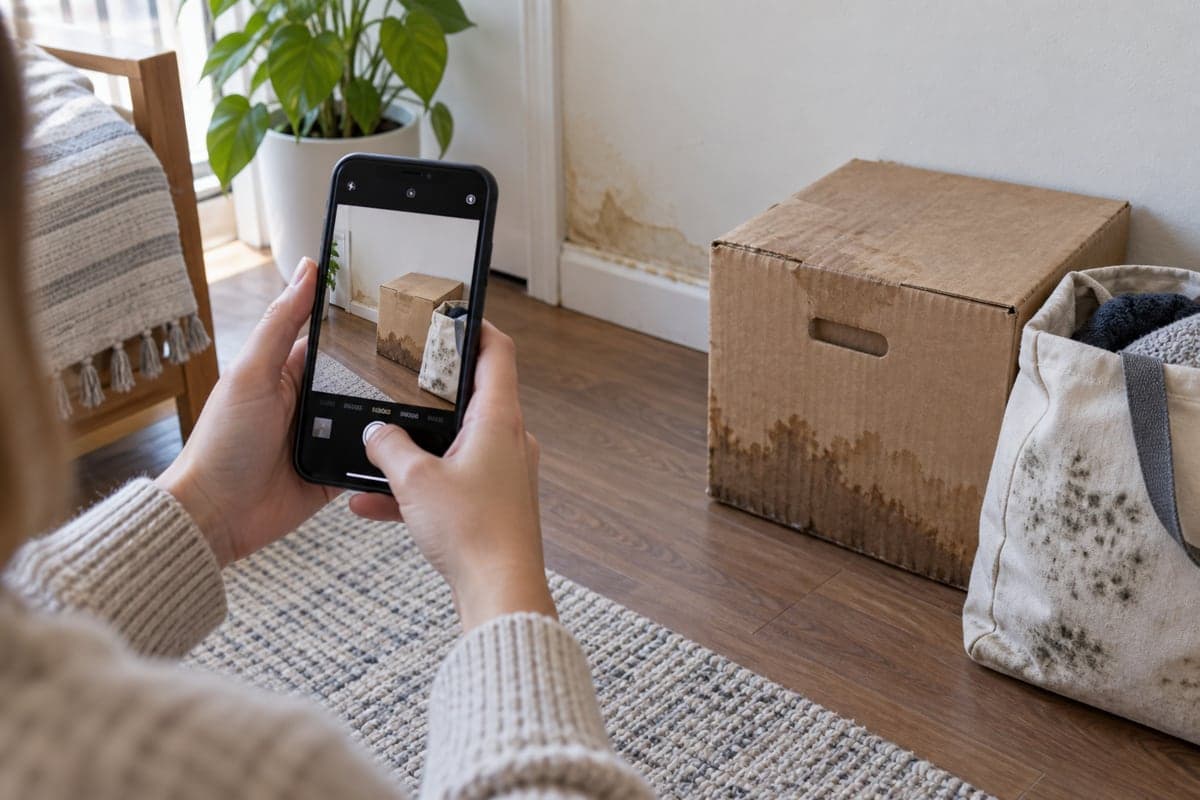
If the mold is on drywall, ceiling tile, carpet, insulation, or unsealed wood, vinegar is the wrong tool. The EPA notes that absorbent materials "may have to be thrown away if they become moldy," and soaking them adds the moisture mold needs.
What You Need
- Plain distilled white vinegar, straight from the bottle. U.S. table vinegar is generally 4% to 5% acetic acid, and cleaning vinegar is often about 6%. Don't dilute it further: the lab study that found some effect used roughly 4% vinegar. Nothing suggests stronger vinegar works better against mold, and stronger acid is harder on surfaces.
- A clean spray bottle that has never held bleach or another cleaner. Label it.
- A scrub brush or non-scratch scrubbing sponge, plus an old toothbrush for grout lines and corners.
- Disposable rags or paper towels, and a plastic bag for used ones.
- A bucket of water with a little dish detergent for rinsing and follow-up wiping.
- Protective gear. The CDC recommends at least a NIOSH Approved N95 respirator, non-latex gloves (nitrile, vinyl, or rubber), and goggles that give complete eye protection. The EPA says goggles should not have ventilation holes.
- Ventilation. Open a window or door and run the bathroom exhaust fan.
Step-by-Step: Cleaning a Small Patch With Vinegar
- Fix or pause the water source first. Stop a drip, wipe condensation, and let a recently used shower dry out so you aren't cleaning a surface that is still getting wet.
- Put on your gear and ventilate. Wear the respirator, gloves, and goggles before you disturb the growth.
- Test the surface. If you aren't sure about a finish, grout, or trim, apply a little vinegar in a hidden spot and check for dulling or discoloration before treating the whole area.
- Spray until the growth is evenly wet. Wetting mold first also helps keep dry spores from becoming airborne while you scrub. Don't flood the area, and keep spray off nearby drywall, caulked seams, and wood trim.
- Let it sit briefly. Give the vinegar time to soak in and loosen the growth (see the next section for why there's no magic number). Don't let it dry on the surface or stand in a puddle.
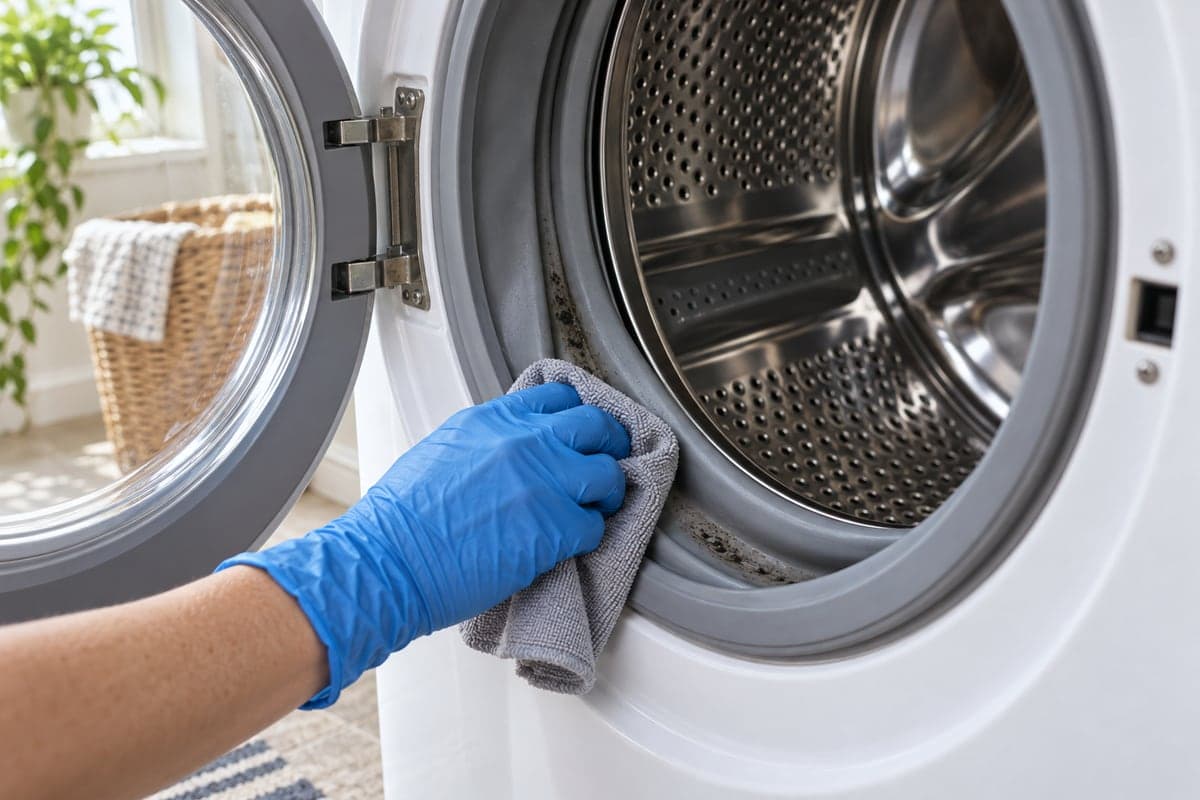
- Scrub. This is the step that actually removes mold. Work from the outside of the patch inward, and use the toothbrush on grout lines and corners.
- Wipe it away. Wipe the loosened growth off with a damp rag, then wipe again with detergent and clean water to remove residue. Turn or replace rags often so you aren't spreading growth.
- Dry the surface completely. Towel it dry, then leave the fan running or the window open. The EPA's cleanup rule for hard surfaces ends with "dry completely" for a reason.
- Bag the waste. Seal used paper towels and disposable rags in a plastic bag and throw them out. Wash reusable brushes and cloths in hot, soapy water.
- Wash up. Remove your gloves and wash your hands. Launder your work clothes if they came into contact with the growth.
If visible growth remains after one round, you can repeat the process once. If it still won't come off, it may have grown into the grout, caulk, or material underneath, and more soaking won't fix that. Replacing moldy caulk or regrouting is often the practical solution.
How Long to Leave Vinegar On, and Why "An Hour" Is a Habit
Many cleaning guides say to leave vinegar on mold for about an hour, and some suggest leaving it overnight. Those times get repeated a lot, but we could not find published research that validates them on real household surfaces.
Here is what the evidence does and doesn't show, summarized from the evidence guide linked above:
- The key lab study didn't measure contact time. Rogawansamy et al. (2015) found that 4% to 4.2% vinegar inhibited Penicillium chrysogenum but had no inhibitory effect on Aspergillus fumigatus. The test used lab agar plates, not tile or grout, and did not measure minutes to kill.
- Killing isn't the finish line. The EPA's mold course says "dead mold is allergenic" and must be removed, not just killed. It also says biocides are "not recommended as a routine practice during mold cleanup."
- Longer isn't clearly better. No study we found shows that an hour or an overnight soak removes more mold from a hard surface than a shorter soak followed by good scrubbing. A long soak does raise the risk of etching stone or grout. On anything absorbent, it adds moisture.
A practical approach: Let the vinegar sit long enough to fully wet and soften the growth, keeping the surface from drying out. That might take several minutes, or you might follow the common one-hour habit. Just don't count the wait time as proof the mold is dead. Judge the job by whether the growth is physically gone and the area stays dry.
Surfaces Where Vinegar Can Do Damage
Vinegar is an acid, so some surfaces need a different cleaner:
- Marble, limestone, travertine, and onyx. The Natural Stone Institute warns that "products containing lemon, vinegar or other acids may dull or etch" these calcium-based stones, and recommends a neutral cleaner, stone soap, or mild dishwashing detergent and warm water instead. Don't use vinegar on granite or other stone countertops either unless the stone's fabricator or manufacturer says it's safe.
- Unsealed or cement-based grout. Repeated acid contact can wear it down. Test first, or use detergent and water.
- Wood and some metal finishes. Follow the manufacturer's care instructions, and wipe any spray off promptly.
- Porous building materials. Drywall, ceiling tile, carpet and padding, insulation, and unsealed wood aren't good candidates for vinegar. Spraying the surface doesn't remove growth inside the material, and it adds water.
When in doubt, the EPA's default (detergent, water, scrubbing, and complete drying) is gentler and works on nearly any hard surface.
Never Mix Vinegar With Bleach or Hydrogen Peroxide
This is the most important safety rule in any vinegar cleanup.
- Vinegar and bleach: A New Jersey Department of Health hazard alert warns that mixing bleach with an acid releases chlorine gas. It lists vinegar specifically as producing "harmful vapors" when combined with bleach. Even low levels can irritate the eyes, nose, and throat and cause coughing and breathing problems. Very high levels can be fatal.
- Vinegar and hydrogen peroxide: The same alert warns that together they form peracetic acid, which can irritate the eyes, skin, and lungs.
- Back-to-back use counts too. If you tried a bleach-based or other mold and mildew product first, rinse the surface thoroughly with water and let it dry before using vinegar. Never pour vinegar into a bottle that held another cleaner.
If you're considering bleach instead, read what concentration of bleach to use for mold first. The CDC's limit is no more than 1 cup of bleach per gallon of water, and bleach is never mixed with other cleaners.
If you accidentally create fumes, leave the area right away, get fresh air, and call Poison Control at 1-800-222-1222.
After Cleaning: Dry, Fix the Moisture, and Monitor
Clearing off the spots is only half the job. Mold returns wherever moisture does.
- Keep the area dry. Run the exhaust fan during showers and for a while afterward, squeegee or towel off tile and glass, and fix dripping fixtures or failed caulk.
- Control humidity. The EPA recommends keeping indoor relative humidity below 60%, ideally 30% to 50%. A simple hygrometer shows where you stand. For more, see what humidity level helps prevent mold.
- Don't paint or caulk over mold. The EPA says to clean up the mold and dry the surface before painting or caulking.
- Check again over the next few weeks. Look especially after showers, humid weather, or rain. Stains that fade aren't proof mold is gone, and a leftover stain doesn't prove it's still alive. The signs that matter are new fuzzy or spotty growth, a returning musty odor, and dampness.
If spots keep reappearing in the same bathroom spot, a different cleaner won't solve the problem. Why mold keeps growing in a shower covers the usual moisture and ventilation causes.
When To Stop and Call a Professional
Put the vinegar away and get qualified help if:
- The growth covers more than about 10 square feet, or keeps spreading as you clean.
- Mold is on or in drywall, ceiling tile, insulation, carpet, subfloor, or framing, or you suspect it's behind a wall. Signs like a persistent musty smell or bubbling paint are covered in how to tell if there's mold in your walls.
- The moisture came from sewage or floodwater. The EPA recommends a professional experienced with contaminated-water damage.
- Mold may be in the heating, cooling, or ventilation system. The EPA advises not to run a system you suspect is contaminated.
- Growth returns after thorough cleaning and drying, or you can't find the moisture source.
- Someone in the home has asthma, allergies, lung disease, or a weakened immune system.
- You rent. Report the mold and the moisture problem to your landlord in writing before you treat anything significant.
To plan for professional help, see how much mold removal costs. A good contractor should explain how they will fix the moisture problem, not just treat the visible spots.
Frequently Asked Questions
Is one hour long enough for vinegar to kill mold?
Nobody can say, because no published study we found measured how long household vinegar takes to kill mold on real surfaces. In the lab, vinegar slowed one common mold and had no effect on another. An hour is a common habit. What matters is that you scrub the growth off, dry the surface, and fix the moisture.
Can I leave vinegar on mold overnight?
It isn't recommended. There's no evidence an overnight soak works better, and long contact can etch stone or grout. On porous materials, it adds moisture. Clean, rinse, and dry the same day.
Do I need to rinse vinegar off after cleaning mold?
Yes. Wipe the area with detergent and clean water, then dry it. Rinsing removes loosened growth and residue, and it's essential if you might use a different cleaner on that surface later.
Should I dilute vinegar with water for mold?
No. Household vinegar is already weak acid, about 4% to 6%, and the limited lab evidence used vinegar at about 4%. Watering it down only makes it weaker. If you'd rather use a milder approach, use detergent and water, which is what the EPA recommends for hard surfaces.
Can I mix vinegar with baking soda or dish soap?
Mixing vinegar with baking soda neutralizes the acid and mostly leaves salty water. There's no evidence it helps with mold. Vinegar and plain dish soap aren't a known hazardous combination, but there's no evidence the mix beats either one alone. Never mix vinegar with bleach or hydrogen peroxide.
The spots came back a week later. Should I use more vinegar?
Not as a long-term fix. Returning growth usually means moisture is still getting in or mold is growing into caulk, grout, or the material behind it. Find the moisture source, replace moldy caulk, and call a professional if growth keeps returning.
Sources
- EPA: A brief guide to mold, moisture and your home. Detergent-and-water cleanup, porous materials, the 10-square-foot threshold, protective gear, humidity targets, and painting over mold.
- EPA: Mold course, chapter 1. Dead mold is allergenic, and biocides are not a routine cleanup step.
- CDC: Mold clean-up guidelines. Respirator, gloves, goggles, ventilation, bleach limits, and who should avoid cleanup.
- Rogawansamy et al., 2015, IJERPH. Lab test of vinegar and other agents against Penicillium chrysogenum and Aspergillus fumigatus.
- New Jersey Department of Health: Hazard alert on mixing cleaners. Bleach with vinegar or other acids, and hydrogen peroxide with vinegar.
- Natural Stone Institute: Cleaning products for natural stone. Acid etching of marble, limestone, and other calcareous stone.