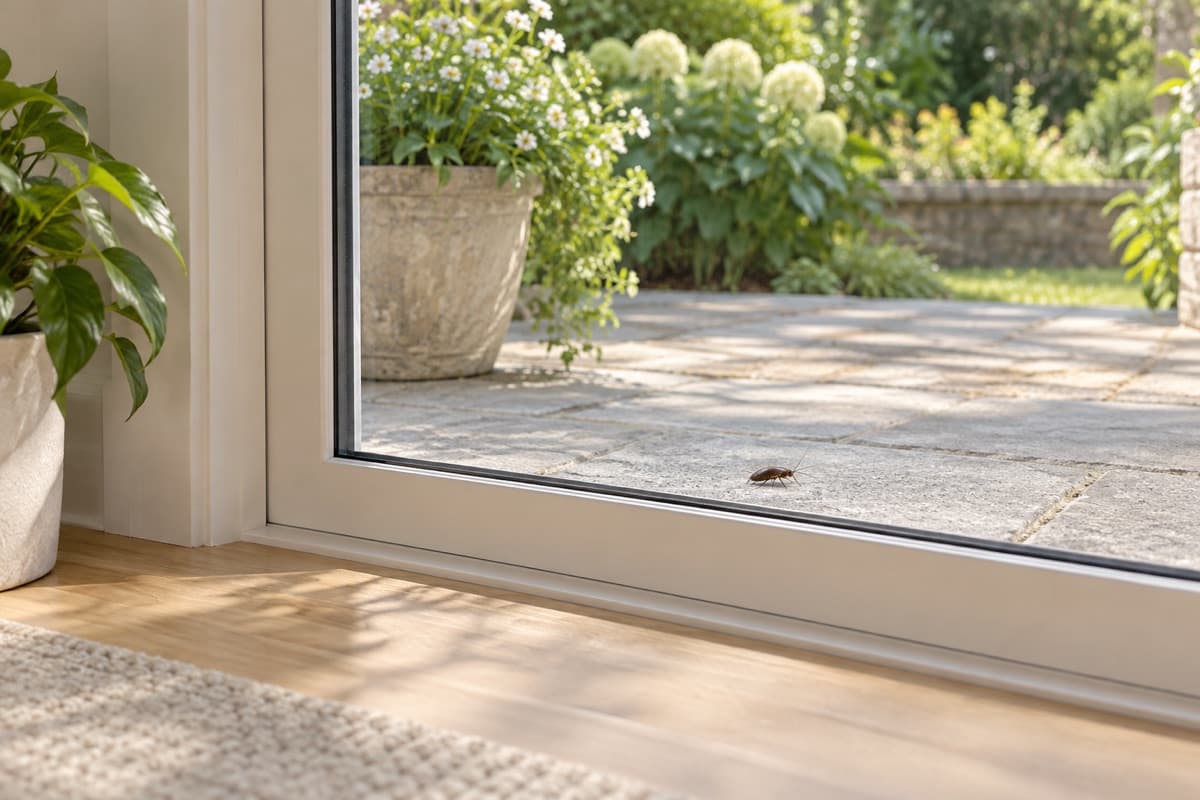
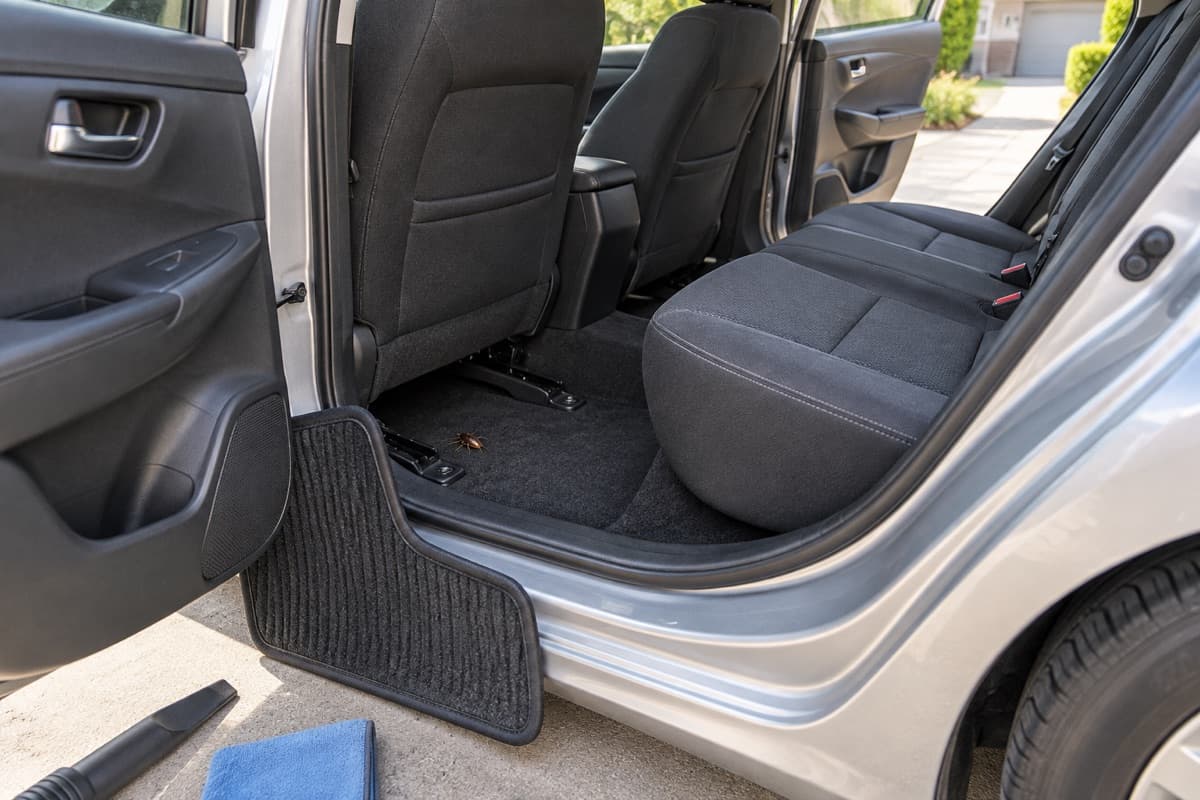
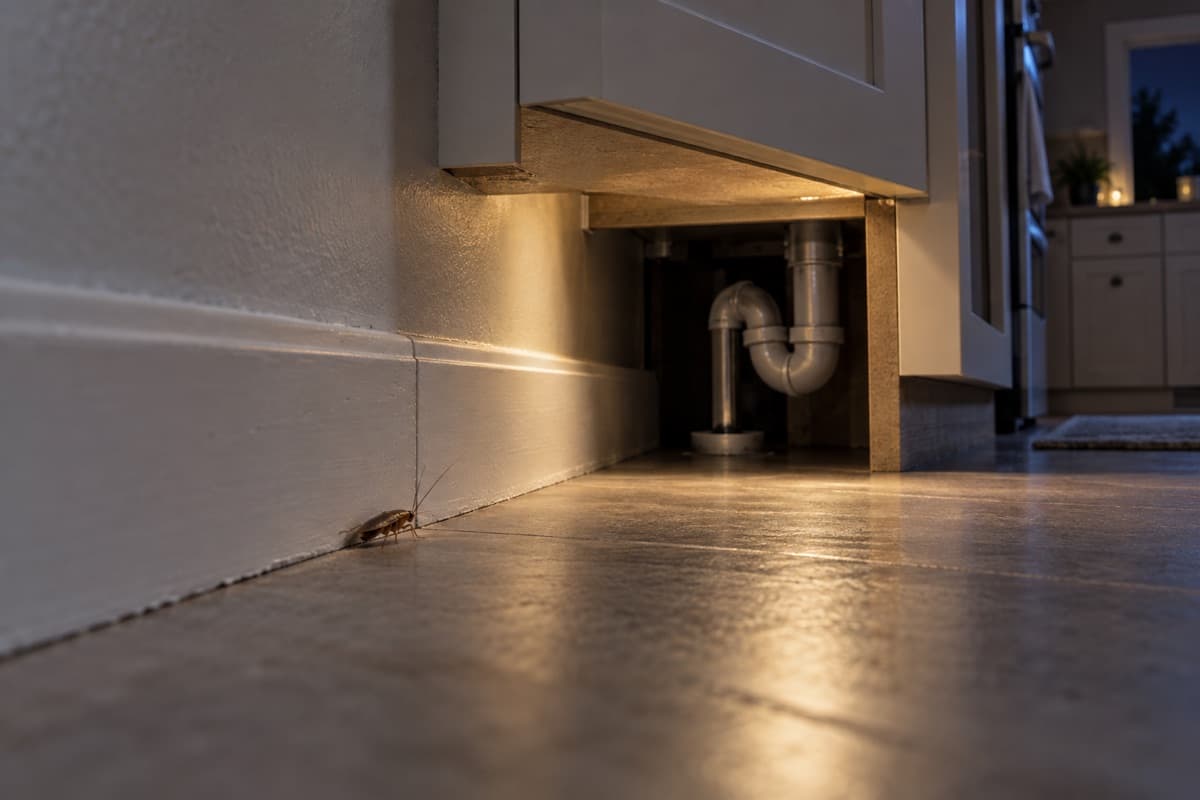
Roaches find food mainly by smell, using odor-sensing hairs on their antennae, and then decide whether to eat it by taste. Research on cockroach antennae shows that some odor receptors track whether a food smell is getting stronger or weaker, which helps an insect work its way toward the source. German cockroaches can also learn to link a food odor with a good or bad taste, and they travel along routes marked by their own droppings. For homeowners, that means two things: remove the food and residue roaches can smell, and give them a bait they will actually eat. Some German cockroach populations have evolved to taste glucose as bitter and refuse baits made with it.
The earlier version of this article said roaches can smell food from up to 30 feet away, travel about 100 feet a night, and leave pheromone trails to food like breadcrumbs. We couldn't find reliable research behind those figures, and the trail claim oversimplifies what scientists have found. This version sticks to what the research and extension sources support.
Most of the research below comes from the German cockroach, the small species that infests kitchens and bathrooms, and some antenna research comes from the larger American cockroach. Other species may behave differently.
How Roaches Smell Food
A cockroach's long antennae are its main tool for finding food. Researchers describe the antenna as covered in tiny hair-like sensilla that contain odor-sensing nerve cells.
A 2004 study in the *European Journal of Neuroscience* looked at these cells in the American cockroach. It found pairs of receptor cells in short antennal hairs that respond in opposite ways to food odor. One cell fires when the odor gets stronger, and the other fires when it gets weaker. The authors say this kind of information is "of great use to an insect orientating to an odour source" because it can help the insect pick out concentration changes in a drifting plume of scent.
In practical terms, a roach doesn't need to see a crumb. It can follow the smell of grease, sugary spills, pet food, or garbage toward the source. That's why residue you can't easily see, like the film on a stovetop or the grease behind a range, matters as much as obvious crumbs.
We didn't find a trustworthy figure for how far away a roach can smell food, so we don't give one here. It depends on the species, the odor, air movement, and many other factors.
How Roaches Taste and Choose What To Eat
Smell brings a roach to food, and taste decides whether it eats. Cockroaches have taste nerve cells that respond to sugars and others that respond to bitter, deterrent compounds such as caffeine, according to research published in *Science* by North Carolina State University entomologists.
German cockroaches are omnivores, and UF/IFAS Extension notes they eat table scraps, pet food, and even book bindings. They aren't completely indiscriminate, though. In a 2017 laboratory study, researchers gave German cockroaches two nutritionally lopsided foods, one higher in protein and one higher in carbohydrates, and found the insects adjusted how much of each nutrient they ate depending on their life stage and how far they had to walk between foods.
For a closer look at the foods that draw roaches in, see what roaches eat.
Roaches Learn Which Smells Lead to Food
Roaches don't wander at random every night. A 2021 study in *Insects* found that German cockroaches learned to associate a specific food odor with a sugar reward after a single one-hour session. They also learned to associate an odor with a bitter-tasting deterrent, though that took three sessions. The memory lasted at least three days.
This has two practical implications:
- Roaches that have fed successfully in one spot are likely to keep returning to smells and places that paid off, which is one reason you tend to see them in the same areas.
- A bad experience can carry over. The same study suggests cockroaches may generalize what they learned to baits with the same or similar attractive odors, even if those baits don't contain the ingredient they dislike.
Do Roaches Leave Trails to Food?
Not in the way ants do. German cockroach droppings carry chemical cues, and roaches respond to them, but the main job of those cues appears to be drawing roaches to shelter.
A 2015 study in *PNAS* found that compounds in German cockroach feces act as aggregation pheromones that attract cockroaches to hiding spots, and that gut bacteria help produce those compounds. The authors note that because gut bacteria reflect the local environment, these odors may help roaches stay faithful to established hiding places.
Droppings can influence movement, too. In a 2000 laboratory study, 74% of adult male German cockroaches followed paper trails treated with a fecal extract, compared with 22% on water-treated trails. Placing those trails between a harborage and a monitoring trap raised the average catch from 11 to 28 cockroaches. As droppings build up along the routes roaches use between their hiding places and food or water, those routes become easier for other roaches to follow.
That's also why cleaning up droppings is part of control, not just a cosmetic step. For how droppings and other chemical signals work, see how roaches communicate.
How Far Roaches Go for Food
The old claims about 10-foot and 100-foot foraging ranges aren't supported by the sources we reviewed. What the research does show is that German cockroaches tend to stay near resources and will move to new ones when conditions change.
A 2026 study in the *Journal of Economic Entomology* found that adult male German cockroaches in lab arenas "rapidly found and harbored near resources regardless of the resource-harborage distance." Removing their original food and water and providing new resources elsewhere caused the biggest shifts in where they hid. The authors say modifications like sanitation can increase movement between hiding places, which likely leads to more contact with traps and treatments.
Extension guidance matches that picture. Purdue University's cockroach control guide notes that cockroaches hide in dark, narrow cracks and crevices and tend to travel along edges such as baseboards. NC State Extension points homeowners to the spots where food and water meet hiding places, such as under the sink, next to the dishwasher, and behind the oven.
Why Some Roaches Refuse Bait
Most cockroach baits combine an insecticide with food ingredients that make roaches want to eat it. For a bait to work, NC State Extension says, "cockroaches must prefer to eat the bait product over surrounding, non-toxic foods."
Some German cockroach populations have evolved a way around that. Glucose aversion was first identified in the early 1990s, and according to a 2023 study in the *Journal of Economic Entomology*, it has since been found in cockroach populations around the world. Here is what researchers have learned:
- Glucose tastes bitter to these roaches. The 2013 Science study found that in glucose-averse cockroaches, glucose stimulates the bitter-sensing taste cells as well as the sugar-sensing ones. NC State entomologist Coby Schal told ScienceDaily that this causes the roach "to close its mouth and run away from glucose in tests."
- The trait is inherited. It spreads when baits containing glucose keep killing the roaches that eat them and leave behind the ones that don't.
- Saliva can widen the aversion. A 2021 study found that roach saliva breaks some more complex sugars down into glucose. Glucose-averse roaches accepted those sugars at first but stopped eating within seconds.
- It can weaken the "domino effect" of bait. Baits often kill additional roaches when nymphs eat the droppings of roaches that fed on bait. The 2023 study found that feces from roaches fed baits containing glucose, sucrose, or maltose still contained glucose, and glucose-averse nymphs ate less of it and died less often. Feces from a fructose bait didn't show that difference.
Glucose aversion is one reason bait can fail, but it isn't the only one. Bait that is old, dirty, contaminated by sprays or cleaners, placed in the wrong spots, or competing with plenty of food can fail too. UF/IFAS Extension notes that bait aversion has been known since the 1990s and can lead to control failures.
What This Means for Cleaning
Roaches follow smells, return to places that have fed them, and move when their resources change. That makes sanitation useful in two ways: it removes what attracts them, and it makes bait the most appealing food left.
- Clean up grease, not just crumbs. Degrease stovetops, the sides of the range and refrigerator, and the floor beneath them.
- Don't leave dirty dishes out overnight. Purdue suggests washing dishes regularly or at least covering them with soapy water.
- Store food in sealed containers, including cereal, flour, sugar, and pet food. Pick up pet food bowls at night if you can.
- Cover garbage and take it out regularly. Rinse recyclables before storing them.
- Fix leaks and dry wet spots. The EPA's pest control guidance emphasizes eliminating sources of food and water, and advises fixing leaking pipes and faucets quickly.
- Vacuum droppings and debris from cabinet corners, under appliances, and along baseboards. The EPA notes that a strong vacuum can pick up live cockroaches, egg cases, and droppings.
- Reduce clutter, especially cardboard and paper, so you can find and treat hiding spots.
Cabinets are one of the most common trouble spots. See how to keep roaches out of cabinets for specific steps.
What This Means for Baiting
Understanding how roaches find and choose food can help you get more out of bait.
- Monitor first. Put sticky traps in corners, under sinks, and behind appliances to see where roaches are most active. UF/IFAS calls sticky traps your "eyes" in the home, and NC State notes they only help if you check them.
- Place bait where roaches travel, close to cracks, crevices, and edges near food and water, not in the middle of open counters. Use small spots in several places rather than one large glob, and follow the product label for amount and placement. Purdue describes pea-size spots at hiding places or active areas.
- Keep sprays and cleaners away from bait. UF/IFAS warns that using a product with repellent properties where bait is applied "will contaminate the bait, making it repellent." Don't spray insecticide on or near bait, and don't wipe bait placements with cleaners.
- Keep bait fresh. UF/IFAS notes that fresh bait is more palatable to cockroaches. Store unused bait separately from products that might contaminate it, and replace dried-out or dirty placements.
- Give it time, then check. NC State says baits may take a couple of weeks to significantly reduce numbers, and Purdue recommends checking 1 to 2 weeks after treatment and reapplying if needed.
- Switch if roaches ignore it. If roaches are still active and the bait is untouched, don't keep putting down more of the same product. UF/IFAS recommends selecting a product from a different class of insecticide when control fails. You can't test your roaches for glucose aversion at home, but switching to a bait with a different active ingredient and different food ingredients is a reasonable next step.
Place bait where children and pets can't reach it, or use enclosed bait stations in those areas. For signs that treatment is working, see how to tell if roach bait is working. For a full treatment plan, including when to call a professional, see our guide to getting rid of roaches.
When To Call a Professional
Consider a licensed pest control professional if:
- You see roaches in large numbers, or out in the open during the day.
- Roaches are still active after several weeks of consistent cleaning and baiting.
- Roaches walk past bait or ignore more than one product.
- You live in an apartment or multi-unit building, where roaches can move between units and building-wide treatment works best.
- Someone in the home has asthma or allergies.
Ask the company how it handles bait aversion and resistance, and whether it rotates bait products.
Frequently Asked Questions
How far away can roaches smell food?
There's no reliable number for this. Research shows roach antennae can detect changes in food odor concentration, which helps them move toward a source, but distance depends on the species, the food, and air movement. Assume that any accessible food or grease residue in your kitchen can attract roaches.
Do roaches remember where food is?
Research suggests they can. German cockroaches in a lab study learned to associate food odors with a sugar reward within an hour and remembered for at least three days. They also tend to stay near reliable food and water.
Do roaches tell other roaches where food is?
Not directly, as far as research shows. Their droppings carry chemical cues that attract other roaches, mainly to shelter, and droppings that build up along travel routes can guide movement. There's no evidence they recruit each other to food the way ants do.
Why are roaches ignoring my bait?
Common causes include competing food, bait contaminated by sprays or cleaners, old or dried-out bait, and placement away from where roaches travel. Some German cockroach populations are glucose-averse and reject baits made with glucose. Clean up competing food, fix placement, and switch to a different product if the problem continues.
Does cleaning make roaches scatter?
Removing food and water can cause roaches to move to new areas. A 2026 lab study found that changing their resources increased movement between hiding places, and the authors suggest that can lead to more contact with traps and treatments. Cleaning works best when you bait at the same time.
Can roaches find food in sealed containers?
Food odors can escape from loosely closed bags, boxes, and containers, and roaches can crawl into packaging that isn't fully sealed. Hard plastic or glass containers with tight-fitting lids keep both the smell and the roaches out far better than original cardboard or paper packaging.
Sources
- Hinterwirth, Zeiner, and Tichy, *European Journal of Neuroscience* (2004) — antennal receptor cells that track changes in food odor concentration.
- Wada-Katsumata, Silverman, and Schal, *Science* (2013) and ScienceDaily summary — the taste-cell mechanism behind glucose aversion.
- Wada-Katsumata and Schal, *Insects* (2021): Olfactory learning — learned food-odor associations and memory.
- Wada-Katsumata and Schal, *Insects* (2021): Salivary digestion — saliva extending sugar aversion.
- McPherson et al., *Journal of Economic Entomology* (2023) — glucose aversion and secondary kill through feces.
- Wada-Katsumata et al., *PNAS* (2015) — fecal aggregation pheromones and gut bacteria.
- Miller, Koehler, and Nation, *Journal of Economic Entomology* (2000) — trail-following on fecal extract trails.
- Ko et al., *Journal of Experimental Biology* (2017) — foraging distance and nutrient balancing.
- Lopina, Sanderson, and DeVries, *Journal of Economic Entomology* (2026) — harborage choice, resource distance, and movement after sanitation changes.
- NC State Extension: The German cockroach, biology and control — sanitation, bait placement, bait competition, and monitoring.
- UF/IFAS Extension: Assessment-Based Pest Management of German Cockroaches and German Cockroach profile — diet, bait aversion, contamination, fresh bait, and product rotation.
- Purdue Extension: A Practical Guide to Cockroach Control in Multi-Family Housing Units — hiding behavior, sanitation, and bait application.
- EPA: Pest Control Resources for Housing Managers — integrated pest management, food and water sources, and vacuuming.