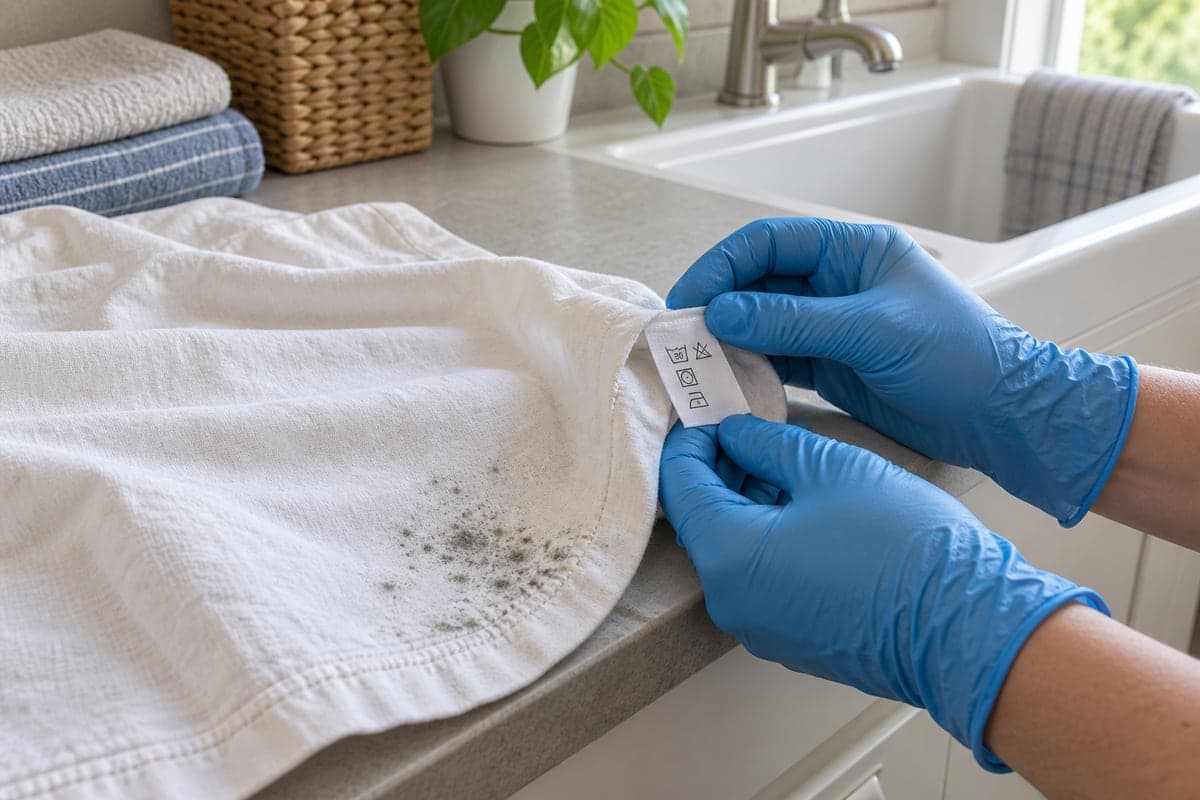
Most people don't need a home mold test kit. The CDC says plainly that it "does not recommend mold testing," because there are no standards for an acceptable amount of mold in a home and results can't predict whether anyone will get sick. The EPA says that if you can see mold growing, sampling is usually unnecessary, and that sampling should be done by professionals experienced in designing sampling plans and interpreting results. If you can see or smell mold, spend the money on finding and fixing the moisture. If you still want a kit, one that sends samples to an accredited lab tells you more than a petri dish that grows something on your counter, but no kit replaces a professional assessment when mold may be hidden, water damage was serious, someone's health is affected, or you need documentation.
The earlier version of this page ranked three kits as if we had compared them side by side. Home Safety Pros has not hands-on tested mold test kits, so this version removes the rankings. It describes two widely sold kits using the manufacturers' current information, and it corrects two claims: the Mold Armor kit does offer optional lab analysis, and My Mold Detective lab fees are charged per sample on top of the kit price.
What EPA, CDC, and NIOSH Say About Mold Testing
Government agencies are unusually consistent on this topic:
- No safe or unsafe number exists. The EPA says no EPA or other federal limits have been set for mold or mold spores, so sampling can't show whether a building meets a federal standard.
- Visible mold doesn't need a test. EPA: "In most cases, if visible mold growth is present, sampling is unnecessary." North Carolina State Extension's mold testing guidance says the same and adds that identifying the mold usually isn't necessary because all molds can cause health reactions.
- The species doesn't change what you do. The CDC says it isn't necessary to determine what type of mold you have, and that "all molds should be treated the same with respect to potential health risks and removal."
- Air samples are snapshots. NIOSH doesn't recommend routine air sampling for mold. It says short-term spore counts can't be interpreted in relation to health risks, that negative results "may not represent actual exposures," and that thorough visual inspections or tracking down musty odors are more reliable.
- Home kits specifically. The California Department of Public Health's mold FAQ says surface and air sampling kits are commercially available, "but we do not recommend their use." It says you or an expert need to find the moisture source and fix it.
Consumer testing points the same way, though it's dated. In a 2007 article, Consumer Reports said all the mold test kits it had tested "have had major problems and are not reliable."
Do You Need a Mold Test Kit at All?
Work through your situation before buying anything.
Skip the kit when:
- You can see mold. Clean it up safely and fix the water problem. See how to get rid of mold for the steps. The EPA says most people can handle an area smaller than about 10 square feet themselves.
- You want to know if the mold is "toxic." Color and species don't tell you how risky a mold is, and the CDC says to treat all molds the same.
- You want a number that proves the air is safe. No such standard exists.
- Someone is having symptoms. Talk to a doctor. The CDC says sampling results can't tell you whether a person will react to mold.
A lab-analyzed kit may be a reasonable, low-cost step when:
- You're curious whether a small stain or spot is mold, soot, or dirt, and you understand a lab result won't tell you how big the problem is.
- You want a rough comparison of indoor air against an outdoor sample and understand the limits of a single snapshot.
Call a professional instead when:
- You smell mustiness but can't find the source, or you suspect mold behind walls, under floors, in a crawl space, or in ductwork. See signs of mold inside walls.
- Water damage was extensive, wasn't dried within the 24 to 48 hours the EPA recommends, or involved sewage or floodwater.
- The source of the contamination is unclear, someone has health concerns, or litigation is involved. These are the situations where the EPA's schools and commercial buildings guide says sampling may be worth considering, as part of a professional evaluation.
- You need documentation for a home sale, a landlord, or an insurance claim.
- You need to confirm a remediation job worked. The EPA notes surface sampling may help determine whether an area has been adequately cleaned.
The Three Kinds of Home Mold Test Kits
"Mold test kit" covers very different products. What you learn depends on which kind you buy.
Petri dish or settle plate kits
You leave an open dish of growth medium exposed to the air, or swab a surface and place the sample on the dish, then watch for growth over a few days. These are the cheapest kits.
The weakness is that mold spores are nearly always present indoors, so something will usually grow. An open dish also doesn't measure how much air it sampled, so the growth can't be turned into a meaningful concentration. In its guidelines for health care facilities, the CDC recommends against using settle plates to quantify the concentration of airborne fungal spores. Growth on a dish shows mold spores landed there. It doesn't show that your home has a mold problem, where it is, or how serious it is.
Surface tape lift or swab kits with lab analysis
You press a piece of clear tape on a suspect spot or swab it, seal the sample, and mail it to a lab. A lab can tell you whether the sample contains mold and often which kinds.
This answers a narrow question about one spot: is this stain mold? It can't tell you about hidden growth or the air in the room, and it rarely changes what you should do if the answer is yes.
Air pump and spore trap kits
A small pump pulls a measured volume of air through a cassette that traps particles, and a lab counts and identifies the spores. This is the same basic method many professionals use, and the better kits include an outdoor comparison sample.
Air sampling still has the limits NIOSH describes. A short sample captures only the air at that moment, its spore counts can't be tied to health risks, and a normal-looking result can miss hidden growth. For more detail, see how accurate air mold tests are and what a high mold count means.
Two Widely Sold Kits, Based on Manufacturer Information
These descriptions come from each manufacturer's website as of September 2026. Home Safety Pros hasn't tested either kit and doesn't rank them. They're included because they represent the two most common approaches, air pump sampling and petri dish testing. Prices, contents, and lab fees change, so confirm them before you buy.
My Mold Detective Mold Test Kit (air pump)
According to My Mold Detective's product page, the kit includes:
- A reusable air sampling pump
- One indoor air cassette and one outdoor air cassette
- One tape lift for a surface sample
- Photo instructions and a prepaid return shipping label
Lab fees are extra and charged per sample. The company lists $39 per sample, paid when you register your samples online, and says results take 3 to 5 days. Its homepage lists standard turnaround as 3 business days from when the lab receives samples, with a 24-hour express option for an added fee per sample. The online shop listed the kit at $69.99 and a pump rental version at $29.99 in September 2026, and sells extra cassettes, tape lifts, and swabs, each of which adds its own lab fee. Testing more rooms raises the lab cost quickly.
Some retailers still sell older versions under model numbers such as MMD103 or MMD103A, a "3-room" kit. The manufacturer's shop doesn't show those model numbers, so check the listing's contents and fee terms before you buy.
Keep in mind: This is the most informative type of home kit, but it's still a one-time snapshot interpreted by you, not a building inspection. It won't locate hidden growth or tell you whether the levels it finds are harmful.
Mold Armor Do It Yourself Mold Test Kit (petri dish)
According to Mold Armor's product page, each kit contains a petri dish, a swab, and mold growth medium. It offers three methods: an indoor air test, a heating and air conditioning sample, and a surface sample for visible mold. The company says visible results can appear in as little as 48 hours, and that you should recheck at 72 and 96 hours before treating a result as negative.
Lab analysis is optional, not unavailable. Mold Armor's test kit page lists an optional $40 lab analysis to identify the type of mold, with results within 3 weeks.
Keep in mind: The manufacturer itself notes the kit only detects spores present in the area tested at the time of testing. The air method is a settle plate test, with the limits described above, and knowing the mold type doesn't change the cleanup, according to the CDC.
How To Choose a Kit If You Still Want One
- Know the question you're asking. "Is this spot mold?" calls for a surface sample. "Is indoor air different from outdoor air right now?" calls for an air sample with an outdoor control. "Is my home safe?" isn't something any kit can answer.
- Prefer lab analysis over do-it-yourself dish reading. The EPA says sample analysis should follow methods recommended by professional groups such as the American Industrial Hygiene Association. You can check a lab's accreditation in AIHA's accredited lab directory, which includes its environmental microbiology program (EMLAP).
- Add up the real cost. Count the kit price, the lab fee for every sample, express fees, and postage if it isn't included.
- Look for an outdoor comparison sample with air kits. Without one, an indoor spore count has little context.
- Read the report terms. Find out whether the lab explains results or only lists spore types and counts.
How To Get the Most From a Kit
- Follow the manufacturer's instructions exactly, including sample times, recheck times, and how quickly to mail samples.
- Don't open walls or pull up flooring to sample. The EPA cautions that investigating hidden mold requires care, and gives the example that removing wallpaper with mold on its underside "can lead to a massive release of spores." Leave suspected hidden mold to a professional.
- Write down the conditions for each sample: the date, weather, room, and whether windows or the heating and cooling system were running. That context helps if you later share results with a professional.
- Protect yourself around visible growth. The CDC's cleanup guidance recommends at least a NIOSH-approved N95 respirator, gloves, and goggles when working around mold. People with asthma, mold allergies, lung disease, or weakened immune systems shouldn't do the work.
How To Read Your Results
- "Mold detected" is expected. Spores are part of normal indoor and outdoor air. A positive dish or swab isn't proof of a problem.
- A negative result isn't a clean bill of health. NIOSH notes that negative air sampling results may not reflect real exposure, and a kit can miss growth inside walls.
- Compare indoor to outdoor. The EPA says that after remediation, the types and concentrations of mold indoors should be similar to local outdoor air. Indoor results that are clearly higher, or dominated by different types than outside, are a reason to look for moisture, not a diagnosis.
- Let the building guide you. Musty odors, water stains, peeling paint, and a history of leaks matter more than a spore count. If results worry you, or conflict with what you see and smell, move on to a professional assessment.
When a Professional Assessment Makes More Sense
A good mold assessment starts with a visual inspection and moisture investigation, then uses sampling only when it answers a specific question. That's the approach NIOSH and the EPA describe. It's worth paying for when mold may be hidden, water damage was significant, the moisture source is unclear, growth keeps coming back, someone's health is a concern, or you need a written report for a sale, lease, insurer, or remediation contractor.
To find the right person, see who to call for a mold inspection. It explains the difference between an inspector, an industrial hygienist, and a remediation company, and why the person who tests shouldn't also be the one selling the cleanup. For typical prices and when to skip testing, see how much a mold inspection costs.
Frequently Asked Questions
Are home mold test kits accurate?
They can accurately show that mold spores are present, but that's nearly always true. Petri dish kits don't measure how much air was sampled, and any air sample is a brief snapshot. The CDPH doesn't recommend home sampling kits, and the CDC doesn't recommend mold testing in general.
What is the best type of home mold test kit?
If you're going to buy one, a kit that sends air samples with an outdoor comparison, or surface samples, to an accredited lab gives you more usable information than reading a petri dish yourself. It still can't tell you whether your home is safe or where hidden mold is.
Can a mold test kit detect mold inside walls?
Not reliably. An air sample might show indoor spore levels that differ from outdoors, but it can't locate the source, and a normal result doesn't rule out hidden growth. Musty odors, stains, and moisture readings are better clues, and suspected hidden mold calls for a professional.
Do I need to know what type of mold I have?
No. The CDC says it isn't necessary to identify the type, and that all molds should be treated the same for health risks and removal. Fix the moisture and remove the growth regardless of species.
Are the lab fees included in mold test kits?
It depends on the kit. My Mold Detective lists lab fees separately, per sample. Mold Armor's analysis is an optional added fee. Read the listing carefully and count every sample you plan to send.
Will a home mold test kit hold up for insurance or a real estate deal?
Don't count on it. A kit sample collected by a homeowner doesn't come with the building inspection and documentation an insurer, landlord, or buyer is likely to want. Ask the other party what they require before you pay for any testing, and consider an independent professional.
Sources
- CDC: Mold — CDC's position on mold testing and the lack of standards.
- CDC: Facts About *Stachybotrys chartarum* — identifying mold type and treating all molds the same.
- CDC: Mold Clean-Up — protective equipment and who should avoid cleanup.
- CDC/NIOSH: Mold Testing and Remediation — limits of air sampling and the value of visual inspection.
- CDC: Recommendations for Environmental Infection Control in Health-Care Facilities — recommendation against settle plates for quantifying airborne fungal spores.
- EPA: Mold Testing or Sampling — when sampling is unnecessary, who should sample, analysis methods, and surface sampling after cleanup.
- EPA: A Brief Guide to Mold, Moisture and Your Home — federal limits, the 10-square-foot guideline, and hidden mold.
- EPA: Mold Remediation in Schools and Commercial Buildings, Chapter 3 — when sampling may be considered and indoor/outdoor comparison.
- California Department of Public Health: Frequently Asked Questions About Mold — position on home sampling kits.
- NC State Extension: Mold Testing — visible mold, threshold limits, and identification.
- Consumer Reports: Be on the lookout for mold (2007) — results of its mold test kit testing.
- AIHA Laboratory Accreditation Programs: Find an Accredited Lab — lab accreditation lookup.
- My Mold Detective: Mold Test Kit, homepage, and shop — kit contents, lab fees, turnaround, and prices as of September 2026.
- Mold Armor: Do It Yourself Mold Test Kit and Mold Armor Test Kit — kit contents, methods, and optional lab analysis.