"Mold count" means two different things. On a weather or allergy report, it is the number of outdoor mold spores in a cubic meter of air over a day. The scale used by National Allergy Bureau counting stations calls 13,000 to 49,999 spores per cubic meter high and 50,000 or more very high. On a home mold test, there is no agreed "high" number. The EPA says no standards or threshold limits have been set for airborne mold, and NIOSH says short-term spore counts can't be interpreted as a health risk. Indoor results are judged mainly by comparing them with outdoor air, and moisture and visible growth still matter more than any lab number.
If you have allergies or asthma and the daily report says mold is high, the steps are about limiting outdoor exposure and managing symptoms. If an inspector or test kit told you your home's count is "elevated," the real question is whether something inside is wet and growing mold. The sections below cover both.
Outdoor Mold Counts: What Counts as High
Outdoor counts come from certified counting stations, often run by allergy practices, universities, or health departments. They report to the National Allergy Bureau (NAB), part of the American Academy of Allergy, Asthma & Immunology. A station pulls outdoor air through a sampler over 24 hours, and a trained analyst counts spores under a microscope. The Houston Health Department, for example, runs a Burkard spore trap on its laboratory roof continuously for 24 hours.
The mold spore categories published by stations using the NAB scale are:
- Low: up to 6,499 spores per cubic meter of air
- Moderate: 6,500 to 12,999
- High: 13,000 to 49,999
- Very high: 50,000 or more
The labels vary a little by station. Houston calls the top two levels "heavy" and "extremely heavy," while St. Louis County's Pollen and Mold Center uses "high" and "very high." The numbers are the same. Check the scale on the source you're reading, because some apps and websites use their own indexes or forecasts instead of measured counts.
A few things to keep in mind:
- Higher counts mean more likely symptoms, not guaranteed ones. AAAAI says the higher the count, the more likely people with hay fever are to have symptoms outdoors. Some mold-allergic people react at moderate levels, and others barely notice a high day.
- Measured counts and forecasts are different. AAAAI notes that actual NAB counts reflect what was measured, while many forecasts rely on historical data and weather predictions.
- Counts can lag. A 24-hour sample has to be collected and analyzed, so a posted count may describe the previous day's air.
- These categories are for outdoor air only. They were built from outdoor 24-hour samples and shouldn't be used to judge a short indoor air test.
What Drives Outdoor Mold Counts Up
Outdoor spore levels rise and fall with the season and the weather. Different molds respond to different conditions, so no single weather rule applies to all of them.
- Season. The Asthma and Allergy Foundation of America (AAFA) says mold allergy symptoms from outdoor spores are most common from July until the first hard frost. In many places, fallen leaves and decaying plants keep counts up into autumn. Our guide to the time of year mold is worst covers seasonal patterns in more detail.
- Dry, warm, windy weather. AAFA notes that some spores spread in dry, windy conditions. Research on Alternaria and Cladosporium, two of the most common allergenic outdoor molds, links higher counts to warmer temperatures and lower humidity. A 2012 study of summer storms found counts of both rose sharply in the warm hours before thunderstorms, then fell as humidity climbed during and after the storm.
- Rain, fog, and dew. Other spores spread when humidity is high. A study of airborne ascospores found rain duration was the weather factor most strongly tied to their counts, and that concentrations in wet weather could exceed the total of dry-weather spores on a typical high summer day.
- Heat and humidity over time. The American College of Allergy, Asthma and Immunology (ACAAI) notes that molds grow quickly in heat and high humidity. A rainy season can mean a longer mold season.
The practical takeaway: a rainy week, a humid spell, or a dry, windy afternoon can all push counts up. If you are mold-sensitive, check the measured count rather than guessing from the weather.
What To Do When the Outdoor Mold Count Is High
For people with mold allergies or allergic asthma, these steps, drawn from AAFA and ACAAI guidance, can reduce exposure:
- Check the count before planning outdoor time. Local weather reports and NAB-certified station reports carry it during allergy seasons.
- Limit time outdoors on high days, especially for yard work or long exercise.
- Keep windows and doors closed at home and in the car.
- Avoid raking leaves, mowing, turning compost, or handling mulch. If possible, have someone without mold allergies do it. If you must, wear a well-fitting mask such as an N95.
- Shower, wash your hair, and change clothes after spending time outside.
- Keep up with your treatment. If your doctor has prescribed allergy or asthma medicine, follow your plan, and ask how to time it around your usual mold season.
- Clear dead leaves and plant debris near the house, and make sure water drains away from the foundation.
A high outdoor count is not a reason to test your home. Outdoor spores come indoors on air, clothes, and pets, so indoor levels will partly follow outdoor levels on those days.
Indoor Mold Test Results: What "High" Does and Doesn't Mean
Indoor air tests use the same unit, spores per cubic meter, but that's where the similarity ends. No health-based "high" threshold exists for indoor mold:
- EPA: Standards or threshold limit values for airborne mold have not been set, and there are no EPA regulations or standards for airborne mold.
- CDC: The CDC does not recommend mold testing. It says there are no set standards for what is and isn't an acceptable amount of mold in a home.
- NIOSH: It does not recommend routine air sampling. It says spore counts from short-term air samples can't be interpreted in relation to health risks, and that negative results may not represent actual exposure.
- AIHA: The American Industrial Hygiene Association's consumer fact sheet on mold says there are no standards for "acceptable" indoor mold levels, and that air sampling does not evaluate health risks for occupants.
- WHO: The World Health Organization's guidelines on dampness and mould concluded that no quantitative health-based guideline values or thresholds could be recommended, because the links between dampness, microbial exposure, and health effects can't be measured precisely.
So if a website, test kit, or company says a specific indoor number such as 1,000 spores per cubic meter is "high" or "toxic," treat that as its own rule of thumb, not an official standard. People also vary widely in how they react to mold. A count that causes no problems for one person may bother someone with mold allergies or asthma.
What indoor sampling can do is help a trained investigator tell whether indoor air looks different from outdoor air, which may point to a hidden source.
How To Read a Mold Air Test Report
A typical spore trap report from an accredited lab lists each sample location in columns, with at least one outdoor sample for comparison. A sample report from EMLab P&K shows the usual parts:
- Spore types. Spores are grouped by appearance, such as Cladosporium, Alternaria, basidiospores (largely mushroom spores), ascospores, Stachybotrys, and Chaetomium.
- Raw count and spores/m³. The raw count is how many spores the analyst actually saw. The lab scales that up to spores per cubic meter based on how much air was sampled. A small raw count becomes a much bigger per-cubic-meter number, so one or two spores can look significant on paper.
- Sample volume. Indoor samples often collect something like 75 liters of air, a few minutes of pumping. That is far less than an outdoor station's 24-hour sample.
- "Penicillium/Aspergillus types." These small, round spores can't be told apart under the microscope, so they are reported together. The lab notes that some very small spores can be missed or undercounted.
- Background debris. A rating, often from 1+ to 4+, of how much dust was on the sample. At high debris levels, counts may be understated, because spores can be hidden.
- Total spores/m³. Useful for comparing samples, but it isn't a health score.
Investigators typically interpret a report in two ways, both described in guidance from EPA and AIHA:
- Compare indoor totals with outdoor totals. EPA's mold remediation guide says that after remediation, the types and concentrations of mold in indoor air should be similar to local outdoor air. In a normal building, indoor totals are often similar to or lower than outdoor totals.
- Compare the mix of spore types. AIHA notes that in a clean, well-maintained building, the fungal types indoors should be similar to those outside. It is a potential red flag when indoor samples are dominated by types that are minor outdoors, such as Penicillium/Aspergillus types, or when molds associated with water-damaged materials, such as Stachybotrys or Chaetomium, appear indoors but not outside.
These are professional interpretation practices, not pass-fail standards. EPA says sampling should be designed and interpreted by experienced professionals, and that "for someone without experience, sampling results will be difficult to interpret."
Why One Test Can Mislead
Air samples have real limitations. For a deeper look, see how accurate air mold tests are.
- They're a snapshot. EPA's mold course says air sampling provides information only for the moment it was taken. Spore levels can change within hours.
- Activity matters. Vacuuming, walking, opening doors, running HVAC, or disturbing a moldy area just before or during sampling can raise counts. A still, closed room can lower them.
- Outdoor air changes, too. An outdoor control taken on a rainy or windy day may be unusually high or low. EPA lists missing outdoor control samples as a common sampling problem.
- Hidden growth may not show up. Mold inside a wall cavity may release few spores into room air. NIOSH cautions that negative results may not represent actual exposure.
- Lab counts have limits. Spore grouping, background debris, and small sample volumes all add uncertainty.
- DIY settle plates can't produce a meaningful count. Mold spores are in nearly every home, so a dish that grows something mostly confirms what's already known.
When "Elevated" Indoor Readings Warrant Action
Take an elevated result seriously when it lines up with what you can see, smell, or measure. Action is more clearly warranted when:
- Indoor totals are clearly higher than outdoor, or the indoor mix is dominated by types that are minor outside.
- The report finds water-damage-associated molds indoors that weren't present outdoors.
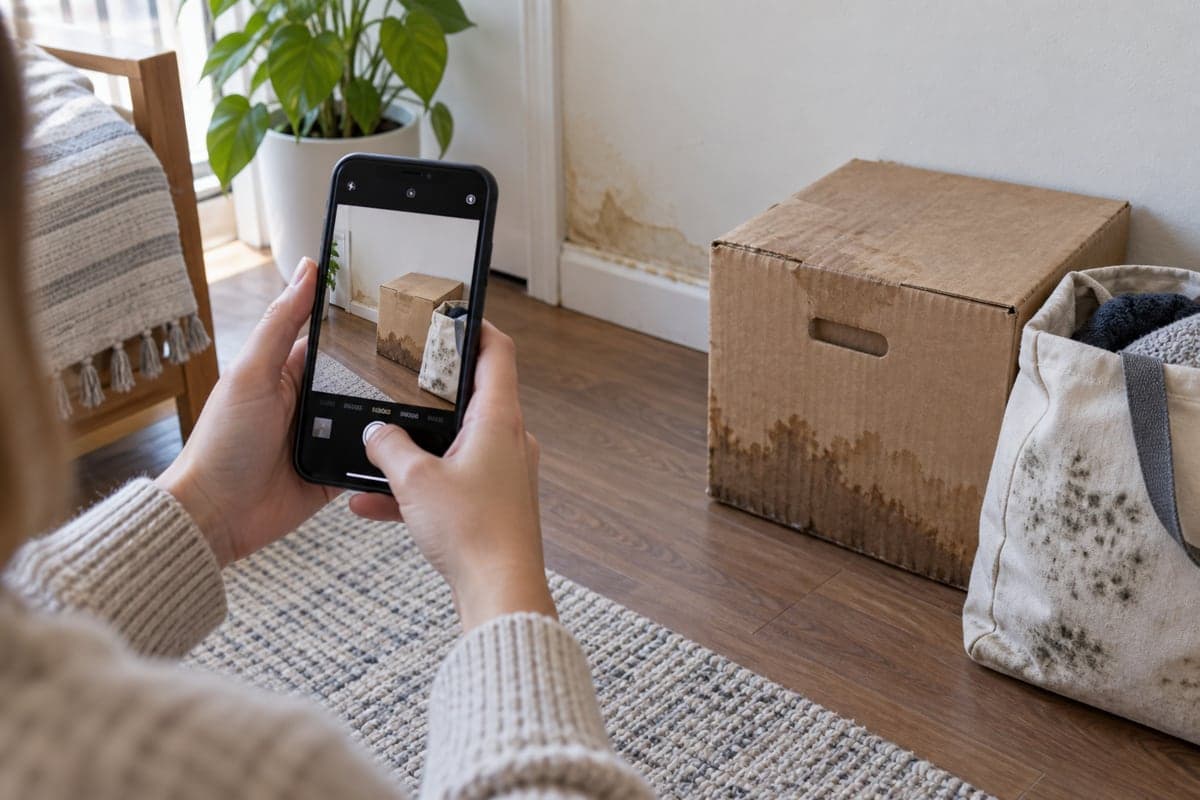
- There is a musty odor, past water damage, a known leak, condensation, or high humidity.
- The high reading is limited to one room or area, which can point toward a source.
- Occupants have symptoms that improve away from home.
Here's what to do with an "elevated" report:
- Ask for the full lab report, including the outdoor sample, sample volumes, and the lab's name and accreditation.
- Look for moisture first. Check for leaks, condensation, damp basements or crawl spaces, and HVAC drain problems. Growth indoors means something is staying wet. Keeping indoor humidity in check helps; see what humidity level helps prevent mold.
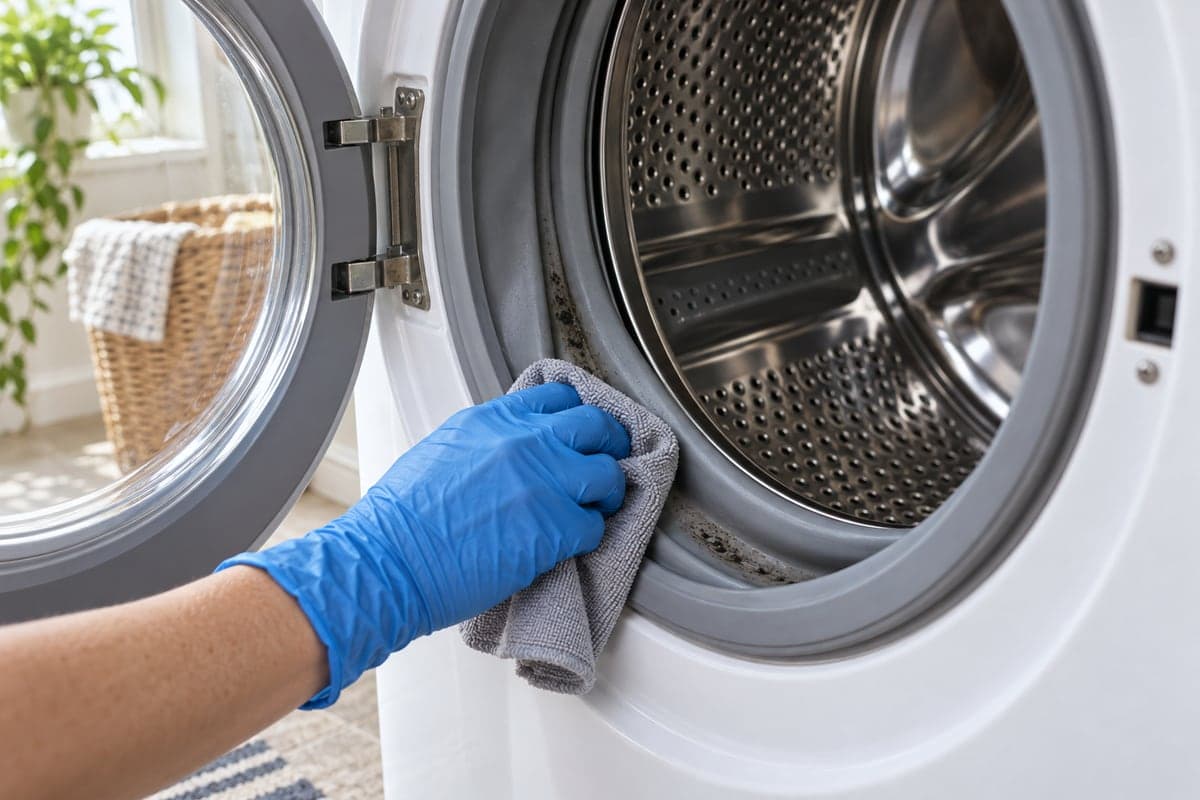
- Remove the growth and fix the water source. The species name doesn't change the plan. Any indoor mold growth should be cleaned or removed, and the moisture fixed.
- Get an independent opinion on anything major. Be cautious if the company that tested also wants to sell remediation based on counts alone. Our guide on who to call for a mold inspection explains how to find a neutral assessor.
- Don't chase a number. Retesting until you get a "good" result rarely helps. After cleanup, a qualified assessor may use visual inspection, moisture readings, and sometimes sampling to confirm the work.
If a report shows indoor counts similar to or below outdoor, with a similar spore mix and no moisture problem, that is generally reassuring. It doesn't rule out a hidden problem if there are other warning signs.
When To See a Doctor or Call a Professional
See a doctor or allergist if:
- You have a runny or stuffy nose, sneezing, itchy eyes, or coughing that returns in damp weather, during mold season, or in certain buildings. An allergist can test for mold allergy and help you plan treatment.
- Your asthma is harder to control, or you're using your rescue inhaler more often.
- Anyone in the home has a weakened immune system and has been exposed to a moldy space, especially with fever, cough, or chest pain.
Get emergency care for severe trouble breathing or chest tightness that doesn't respond to usual medication. A mold test can't diagnose illness, and your doctor doesn't need a home spore count to evaluate you.
Call a professional if:
- You smell mustiness or suspect hidden mold but can't find the source.
- Growth covers more than about 10 square feet, which is roughly a 3-by-3-foot patch. EPA suggests considering professional help at that size.
- Water damage involved sewage or floodwater, or materials stayed wet for days.
- Mold keeps coming back after cleaning.
- You need documentation for a landlord, insurer, or home sale.
If you're weighing whether an assessment is worth it, see how much a mold inspection costs.
Frequently Asked Questions
Is 1,000 spores per cubic meter a high mold count?
Not by any official standard. Outdoors, 1,000 spores per cubic meter falls in the low range of the NAB scale. Indoors, no agency has set a threshold. Whether a result like that means anything depends on the outdoor comparison sample, the spore types, and whether there's a moisture problem.
What is a normal indoor mold spore count?
There's no single normal number, because indoor levels follow outdoor levels, the season, and activity in the home. Investigators generally expect indoor air in a building without a mold problem to have a similar or lower total and a similar mix of spore types compared with outdoor air sampled at the same time.
Why is the mold count high today when it isn't raining?
Many common outdoor molds, including Cladosporium and Alternaria, release more spores on warm, dry, breezy days. Rain tends to raise other types, such as ascospores. Both conditions can produce a high count.
Can I have a mold problem if my air test came back low?
Yes. Air tests can miss mold hidden inside walls or under flooring, and a short sample may not catch it. NIOSH says negative results may not represent actual exposure. A musty odor, water stains, or visible growth deserve attention no matter what the test said.
Should I test my home if the outdoor mold count is high and I have symptoms?
Usually not. High outdoor counts alone can explain symptoms, and outdoor spores naturally come inside. Testing makes more sense if symptoms clearly track with being in your home, or you notice odors, leaks, or signs of hidden moisture. Otherwise, talk with your doctor and focus on limiting exposure.
Is an ERMI dust test better than an air test?
Not for making decisions about a home. EPA describes ERMI as a research tool and does not recommend it for other uses.
Sources
- AAAAI: Mold counts defined: what a mold count measures, measured counts vs. forecasts, and the NAB.
- Houston Health Department daily pollen and mold count and St. Louis County Pollen and Mold Center: NAB-based mold spore categories and 24-hour sampling.
- AAFA: Mold allergy and ACAAI: Seasonal allergies: mold season, weather, and exposure-reduction tips.
- Grinn-Gofroń and Strzelczak, *International Journal of Biometeorology*, 2012 and Magyar, *Acta Microbiologica et Immunologica Hungarica*, 2002: weather effects on airborne spore counts.
- EPA: Mold testing or sampling, Mold Course Chapter 3, and Mold remediation guide, Chapter 3: no airborne standards, indoor/outdoor comparison, and sampling limits.
- CDC: About mold and NIOSH: Mold testing and remediation: testing positions and why spore counts can't be read as health risk.
- AIHA: Facts about mold: no acceptable-level standards and how air testing compares indoor and outdoor spore types.
- WHO guidelines for indoor air quality: dampness and mould (2009): why no health-based thresholds were set.
- EMLab P&K sample spore trap report: typical lab report fields and grouping of Penicillium/Aspergillus types.
- EPA: ERMI testing in homes: ERMI as a research tool.